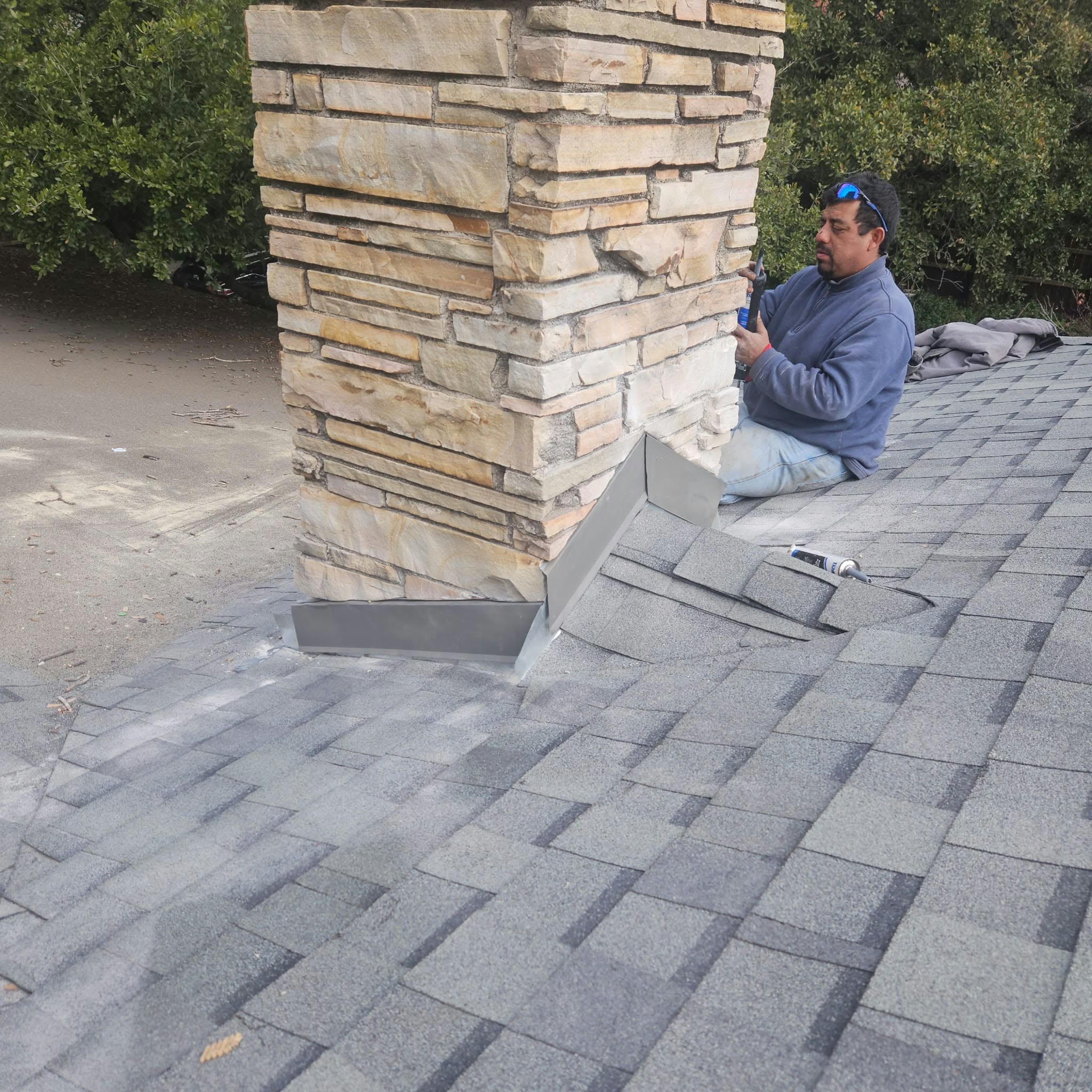


New Jersey winters expose roofs and chimneys to snow, ice, wind, cold rain, and repeated cycles of freezing and thawing. These conditions can be especially hard on chimney flashing, the metal system that seals the joint where the chimney passes through the roof.
When flashing loosens, corrodes, cracks, or separates from the roof or masonry, melting snow and rain may enter the home. A small leak can damage roof decking, attic insulation, ceilings, walls, and the chimney structure before it becomes obvious indoors. Understanding how winter weather affects flashing can help homeowners recognize warning signs and schedule timely repairs.
What Is Chimney Flashing?
Chimney flashing is a layered water-management system installed around the base of a chimney. Its purpose is to direct water over roofing materials and away from the gap between the chimney and roof.
A typical system may include:
- Base flashing: Installed where the lower side of the chimney meets the roof
- Step flashing: Woven with shingles along the sides of the chimney
- Counter flashing: Embedded into or attached to the masonry so water flows over the step flashing
- Back pan or cricket: Directs water around the uphill side of the chimney, depending on the roof and chimney configuration
These components must overlap correctly. Sealant may be used at certain joints, but caulk alone is not a substitute for properly installed flashing.
Why Winter Is Hard on Chimney Flashing
Flashing sits at the intersection of several different materials. Metal, masonry, mortar, roofing, and sealants expand and contract at different rates as temperatures change. During a New Jersey winter, these movements may happen repeatedly.
Snow and ice also hold moisture against the roof and chimney for extended periods. When temperatures rise, meltwater searches for openings. Even a narrow gap can allow water beneath shingles or behind counter flashing.
The most common winter-related stressors include:
- Freeze-thaw cycles
- Snow accumulation
- Ice buildup
- Wind-driven precipitation
- Temperature-related expansion and contraction
- Aging sealants
- Corrosion
- Pre-existing masonry cracks
Freeze-Thaw Cycles Can Enlarge Small Gaps
Water can enter tiny cracks around flashing, mortar joints, and roofing materials. When temperatures fall below freezing, the trapped water expands. After it thaws, more water may enter the enlarged opening.
Repeated cycles can gradually:
- Widen cracks in mortar
- Loosen flashing edges
- Break the bond between sealant and masonry
- Lift or distort metal components
- Damage nearby shingles
- Create channels for roof leaks
A flashing system that appears functional during a light autumn rain may begin leaking after several winter temperature swings.
Snow Accumulation Can Trap Moisture
Snow can build up on the uphill side of a chimney, particularly when the roof shape or chimney width slows runoff. As the snow melts, water collects against the chimney base.
Proper flashing should redirect this water, but damaged or poorly installed components may allow it to move beneath the roofing. A cricket or back pan may be needed on certain chimneys to divide runoff and direct it around the structure.
Heavy snow can also hide damaged flashing, loose shingles, and debris until warmer weather arrives. Homeowners should not climb onto a snowy or icy roof to investigate. A professional inspection can be arranged when access is safe.
Ice Can Lift Flashing and Roofing Materials
Meltwater may refreeze at roof edges, behind the chimney, or in shaded areas. As ice forms and expands, it can lift flashing edges or shingles. Once the ice melts, the resulting gap provides a path for water.
Ice buildup may also place physical pressure on seams, fasteners, and adjacent roofing materials. If flashing was already loose or sealant had deteriorated, winter conditions can accelerate failure.
Never chip ice away from chimney flashing with sharp tools. This can puncture metal, damage shingles, and create new leaks.
Wind-Driven Snow and Rain Find Hidden Openings
Precipitation does not always fall straight down. Winter winds can push snow and rain beneath lifted flashing, into cracked mortar joints, or under damaged shingles.
This is why a chimney may leak only during storms from a particular direction. Intermittent leaks can be difficult to diagnose because several components may be responsible, including flashing, chimney caps, crowns, masonry joints, and roofing.
Professional chimney leak repair begins with identifying the actual entry point rather than applying sealant to every visible joint.
Metal Expansion and Contraction Loosen Connections
Metal flashing expands when it warms and contracts when it cools. Roofing and masonry respond differently to the same temperature changes. Over time, movement can stress fasteners, joints, and sealant lines.
Common signs include:
- Counter flashing pulling away from masonry
- Gaps at corners
- Cracked or missing sealant
- Raised flashing edges
- Loose metal sections
- Rust around fasteners
Correct installation allows the components to manage movement while maintaining the necessary overlap and water path.
Road Salt and Coastal Air May Accelerate Corrosion
Some New Jersey homes face additional exposure to salt, whether from coastal air or nearby surfaces treated during winter weather. Salt and moisture can accelerate corrosion on vulnerable metal components.
Corroded flashing may develop pits, holes, or weakened seams. Once the metal has deteriorated significantly, coating it with sealant is unlikely to provide a lasting repair. Damaged sections may need professional replacement with a suitable material.
Masonry Damage Can Affect the Flashing Seal
Counter flashing is commonly connected to the chimney masonry. If mortar joints crack or bricks become loose, the flashing may lose a secure connection.
Winter moisture can worsen existing masonry deterioration. Warning signs include:
- Crumbling mortar
- Spalling or flaking bricks
- Open joints
- Loose masonry near the roofline
- White mineral deposits
- Cracks in the crown or chimney walls
In these cases, flashing work may need to be coordinated with fireplace masonry or exterior chimney masonry repairs. Reattaching flashing to unstable material will not provide a reliable seal.
Aging Sealant Can Become Brittle
Sealants used at flashing joints are exposed to sunlight, rain, snow, and temperature changes. Over time, they may shrink, crack, or separate.
A deteriorated sealant line can be part of the leak, but covering it with a thick layer of new caulk is not always the correct solution. The underlying flashing may be loose, incorrectly overlapped, or corroded. New sealant applied over wet, dirty, or failing material may not adhere properly.
A professional should evaluate the assembly before deciding whether resealing, partial replacement, or full flashing replacement is appropriate.
Signs Chimney Flashing May Be Leaking
Flashing damage is not always visible from the ground. Watch for signs inside and outside the home.
Interior warning signs
- Water stains on the ceiling or wall near the chimney
- Damp drywall or peeling paint
- Moisture in the attic around the chimney
- Wet insulation
- Musty odors after rain or snowmelt
- Dripping sounds near the chimney chase
Exterior warning signs
- Rusted, bent, or missing flashing
- Gaps where metal meets masonry
- Loose shingles around the chimney
- Cracked sealant
- Staining below the chimney
- Deteriorated mortar near the roofline
- Recurring ice buildup behind the chimney
Because water can travel along framing before becoming visible, the location of an indoor stain may not be directly below the entry point.
Chimney Flashing Leak vs. Other Chimney Leaks
Not every leak near a chimney is caused by flashing. Water may enter through several areas:
- A cracked chimney crown
- Missing or damaged chimney cap
- Open mortar joints
- Porous or deteriorated masonry
- Damaged roof shingles
- Condensation inside the chimney
- Flashing failure
Accurate diagnosis is essential. For example, chimney cap installation may help when water enters through an uncovered flue, but it will not repair flashing that has separated from the roof. Likewise, replacing flashing will not correct a cracked crown.
Comprehensive chimney services evaluate the entire water path instead of assuming that the most visible component is the source.
How Professionals Inspect Chimney Flashing
A chimney and roof inspection may include:
- Checking the base, step, and counter flashing
- Looking for lifting, corrosion, gaps, and missing pieces
- Examining sealant condition
- Inspecting nearby shingles and roof decking
- Evaluating the uphill side for water accumulation
- Checking the chimney crown and cap
- Inspecting masonry joints near the roof
- Looking inside the attic for moisture patterns
Water testing may sometimes help identify the source, but it should be performed carefully by qualified professionals. An uncontrolled test can introduce additional water into the building.
Common Chimney Flashing Repair Methods
The appropriate chimney repair depends on the cause and extent of damage.
Resealing limited joints
If the flashing is secure and intact but a compatible sealant has failed in a small area, cleaning and resealing may be appropriate.
Refastening loose flashing
Loose metal may need to be secured correctly without creating new leak paths. Fasteners and methods should match the roof and flashing design.
Replacing damaged sections
Corroded, bent, or improperly overlapped sections may require removal and replacement.
Full flashing replacement
If the system was installed incorrectly or has extensive deterioration, complete replacement may provide a more durable result than repeated patching.
Masonry and roof repairs
Flashing repair may need to be coordinated with repointing, brick repair, crown repair, shingle replacement, or fascia and decking work.
A written scope should clearly explain which components will be repaired and which underlying conditions are excluded.
How to Reduce Winter Flashing Problems
Preventive maintenance cannot stop all weather-related wear, but it can identify weaknesses before winter.
Schedule an inspection before cold weather
An autumn inspection can reveal loose flashing, deteriorated sealant, cracked mortar, or damaged caps before snow and ice arrive.
Keep roof drainage clear
Clogged gutters can contribute to ice and water buildup near roof edges. Maintain gutters and downspouts so meltwater can leave the roofline.
Repair masonry defects
Open joints and damaged bricks allow water to enter the chimney structure. Timely masonry repairs help support the counter-flashing connection.
Maintain the crown and cap
A sound crown sheds water from the top of the chimney, while a properly fitted cap helps keep precipitation and debris out of the flue.
Address attic insulation and ventilation concerns
Uneven roof temperatures can contribute to snowmelt and ice formation. Roofing or insulation professionals can evaluate recurring winter ice problems.
Avoid temporary DIY patches
Roof cement or caulk applied without proper preparation may conceal the defect temporarily while allowing water to continue entering elsewhere.
Chimney Cleaning and Fireplace Safety
Flashing maintenance addresses exterior water entry, while chimney cleaning addresses soot, creosote, and certain flue obstructions. These are separate services, but both contribute to responsible chimney care.
Before using a fireplace regularly, homeowners should consider an appropriate inspection and cleaning schedule based on the appliance, fuel, usage, and chimney condition. Professional fireplace cleaning may include accessible firebox areas, while chimney sweeping focuses on the venting system. Service terminology can vary, so confirm what is included.
Good fireplace safety also includes:
- Using the correct fuel
- Keeping combustibles away from the hearth
- Monitoring the chimney for unusual odors or smoke
- Ensuring smoke and carbon monoxide alarms are installed and working
- Stopping use if the chimney or fireplace shows signs of damage
A flashing leak should be repaired promptly because moisture can affect masonry, metal components, and interior materials.
When to Schedule Chimney Services in New Jersey
Arrange an inspection if you see water stains, damaged flashing, deteriorated masonry, or leaks after snowmelt. Service may also be appropriate after severe storms or when purchasing a home with an unknown chimney history.
Do not wait for steady dripping. Early moisture may appear only as discoloration, damp attic materials, or a musty odor. Timely chimney services in New Jersey can help identify the source before damage spreads.
Protect Your Chimney With Emerson Pro Services
New Jersey winter weather can expose small weaknesses in chimney flashing through snow accumulation, wind-driven moisture, ice, and repeated freeze-thaw cycles. Once gaps form, water can reach roofing, masonry, attic materials, and finished interior surfaces.
Emerson Pro Services provides chimney services for New Jersey homeowners, including chimney flashing inspections, chimney leak repair, masonry repairs, chimney cap installation, chimney cleaning, and other fireplace and chimney maintenance.
Contact Emerson Pro Services to schedule an evaluation if you notice water stains, loose flashing, damaged masonry, or other signs of a chimney leak.
Frequently Asked Questions
Can snow damage chimney flashing?
Yes. Snow can hold moisture against the chimney, while melting and refreezing water can enter small gaps, expand, and loosen flashing or nearby roofing materials.
How can I tell whether chimney flashing is leaking?
Common signs include water stains near the chimney, damp attic insulation, peeling paint, musty odors, rusted flashing, cracked sealant, and visible gaps where the metal meets the masonry.
Can chimney flashing be repaired in winter?
Some repairs may be possible during safe, dry conditions, but snow, ice, cold temperatures, and wet surfaces can affect access and material performance. A professional should determine the safest temporary or permanent solution.
Will caulk stop a chimney flashing leak?
Sealant may correct a limited failed joint when the underlying flashing is sound. It will not provide a reliable repair for corroded, loose, missing, or incorrectly installed flashing.
Is a chimney cap the same as chimney flashing?
No. A chimney cap covers the flue opening, while flashing seals the joint between the chimney and roof. Either component can contribute to water entry when damaged or missing.
Should chimney flashing be inspected every year?
Regular inspection is helpful, especially before winter, after severe storms, or when the chimney has a history of leaks. The appropriate schedule depends on the system’s age, condition, and exposure.