


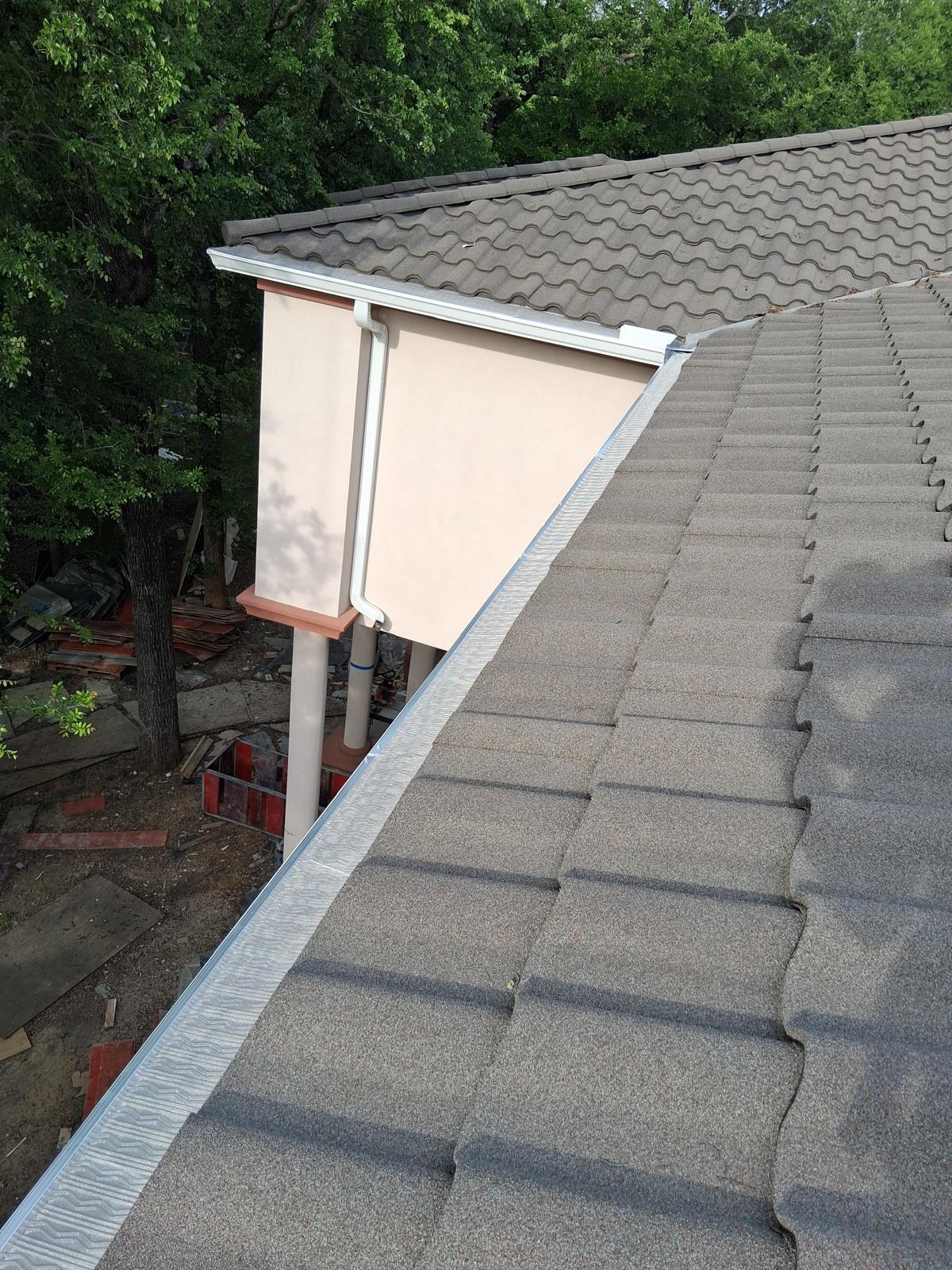
Gutters are designed to collect rainwater from the roof and guide it safely through the downspouts. When leaves, twigs, roof granules, and other debris obstruct that path, water can spill over the edges or collect inside the system.
Ignoring clogged gutters may eventually cause more than an inconvenient overflow. Persistent blockages can damage gutters, fascia boards, exterior walls, landscaping, and drainage components. During Fort Worth’s heavy rain, a neglected clog can quickly expose problems that were developing unnoticed.
Understanding the potential consequences can help homeowners recognize why timely gutter cleaning and maintenance matter.
1. Rainwater Overflows the Gutter Edges
Overflow is often the first visible sign of a clog. Debris may fill the channel or block the opening leading into a downspout. Once water has nowhere to go, it spills over the front or back of the gutter.
Overflowing water may:
- Stain siding, brick, or stucco
- Soak the fascia and roof edge
- Flatten plants and wash away mulch
- Create slippery walkways
- Form puddles beside the house
- Contribute to soil erosion
Cleaning the gutters promptly helps restore their capacity before repeated overflow causes additional damage.
2. Gutters Begin to Sag or Pull Away
Dry leaves may not seem heavy, but they absorb water and form dense, compacted material. Standing water adds even more weight.
Overloaded gutters place pressure on hangers and fasteners. The system may eventually sag, bend, or separate from the fascia. Once the gutter loses its proper slope, additional water collects in low areas, worsening the problem.
Minor sagging may be corrected through professional gutter repair. Severely distorted sections or damaged fascia may require partial or complete replacement.
3. Fascia Boards Can Rot
Fascia boards are located directly behind the gutters. When rainwater spills over the back edge or remains trapped against the roofline, these boards may stay wet for extended periods.
Signs of moisture damage include:
- Peeling or bubbling paint
- Dark streaks beneath the gutters
- Soft or crumbling wood
- Mold or mildew
- Loose gutter fasteners
- Visible gaps along the roofline
Rotten fascia cannot securely support a gutter system. The damaged wood usually needs to be repaired before the gutters can be reattached.
4. Water May Reach the Roof Edge
Water backing up inside clogged gutters may reach the roof edge and surrounding components. Over time, persistent moisture can contribute to the deterioration of the roof decking, underlayment, or nearby wooden materials.
This does not mean every clogged gutter immediately causes a roof leak. However, repeated exposure increases the risk, especially when the drip edge is missing, damaged, or incorrectly positioned.
Homeowners who notice stains near the roofline or moisture entering the attic should arrange a roof and gutter inspection.
5. Exterior Walls Become Stained or Damaged
Water spilling from the gutters often runs down the side of the house. Repeated exposure may leave streaks on paint, siding, brick, or stucco.
Moisture can also enter gaps around windows, trim, and exterior joints. Depending on the material and severity, homeowners may eventually face peeling paint, mildew, damaged finishes, or hidden moisture problems.
Restoring proper gutter flow is essential before cleaning or repairing the affected exterior surface.
6. Landscaping and Soil Erode
Gutters are intended to control water that would otherwise fall along the entire roof edge. When they overflow, concentrated streams can strike flower beds and exposed soil with considerable force.
This may:
- Wash away mulch
- Damage plants
- Expose roots
- Create channels in the soil
- Move decorative gravel
- Form low areas that collect water
Professional gutter cleaning and appropriate downspout placement help direct runoff toward safer discharge areas.
7. Water Collects Near the Foundation
When gutters overflow or downspouts become blocked, roof runoff may be deposited beside the house. The soil surrounding the foundation can become excessively wet, particularly when the yard does not drain well.
Gutters cannot prevent every foundation problem, but they are an important part of controlling moisture. A complete water-management plan may require:
- Clean, properly pitched gutters
- Functional downspouts
- Downspout extensions
- Underground drainage pipes
- Catch basins or surface drains
- Yard-grading improvements
If water remains near the home after the gutters are cleaned, professional drainage services may be necessary.
8. Downspouts Become Completely Blocked
Debris from the gutters often travels toward the downspouts. Leaves and sediment can become trapped inside an outlet, elbow, vertical section, or underground connection.
Signs of a clogged downspout include:
- Little water leaving the bottom outlet
- Water leaking from downspout joints
- Gurgling sounds during rain
- Overflow near the upper outlet
- Water backing up from an underground drain
- Standing water remaining in the gutter
Severe clogs may require sections to be disconnected and cleaned. Damaged or separated components may also need downspout repair.
9. Mosquitoes and Other Pests May Be Attracted
Standing water and decomposing organic matter can create favorable conditions for mosquitoes, insects, and other pests. Birds and rodents may also use the debris as nesting material.
Removing the blockage allows the system to dry between rain events. Gutter guards may reduce larger debris, although they still require periodic inspection and cleaning.
10. Mold and Mildew Can Develop
Persistent moisture around the roofline, fascia, and exterior walls may support mold or mildew growth. Organic debris trapped in gutters can also begin to decompose.
Visible discoloration or musty odors should not be ignored. The underlying moisture source must be corrected; otherwise, surface cleaning alone will not prevent the problem from returning.
11. Gutter Seams and End Caps May Leak
Standing water places prolonged pressure on gutter seams, corners, and end caps. Sealants can deteriorate, and sectional connections may begin to separate.
Even seamless gutters have joints at corners and outlets. These areas can leak when water remains trapped or debris prevents proper drainage.
Small leaks may be repairable, but widespread corrosion or separation may indicate that installing new gutters is more practical.
12. Underground Drainage Can Become Clogged
Some downspouts connect to underground drainage pipes. When leaves, roof granules, and sediment enter these lines, they may become trapped at bends or damaged sections.
Underground blockages may cause water to rise at the downspout connection or emerge from unexpected parts of the yard. Clearing the visible gutters will not solve a clog located below ground.
A drainage professional may need to inspect the pipe, locate the obstruction, and determine whether cleaning or repair is required.
13. Repair Costs May Increase
A routine cleaning generally costs less than repairing sagging gutters, deteriorated fascia, damaged siding, or drainage problems. Delaying service allows water and debris to place continued stress on the system.
What begins as a basic cleaning problem may eventually require:
- New hangers and fasteners
- Resealed seams
- Replacement gutter sections
- Fascia repairs
- Downspout replacement
- Underground drain cleaning
- New seamless gutters
- Landscape restoration
Regular gutter maintenance helps identify concerns while they are still easier to address.
How Often Should Gutters Be Cleaned?
Many homes benefit from gutter cleaning once or twice per year. Properties surrounded by mature trees may require more frequent service.
Consider scheduling an inspection:
- After major leaf fall
- Before periods of heavy rainfall
- Following severe wind or hail
- When plants begin growing from the gutters
- When water overflows during rain
- After roofing work
- When downspouts drain slowly
The right schedule depends on the property’s trees, roof condition, gutter guards, and history of blockages.
Can Gutter Guards Prevent Clogs?
Gutter guards can reduce the amount of large debris entering the system. They may be especially helpful for Fort Worth homes beneath mature trees.
However, guards do not make gutters maintenance-free. Leaves can collect on top, while pollen, roof granules, seeds, and small particles may pass through openings. Guards and downspouts must still be inspected periodically.
The product should also be compatible with the roof and gutter size and able to handle heavy rainfall.
When Is Cleaning No Longer Enough?
Cleaning may restore water flow when the system is structurally sound. Additional repair may be necessary when you find:
- Sagging or bent channels
- Loose or missing hangers
- Cracks or open seams
- Rust or extensive corrosion
- Rotten fascia boards
- Detached downspouts
- Incorrect gutter pitch
- Overflow after all debris is removed
If the damage affects multiple sections, replacing the system with properly sized seamless gutters may provide better long-term value.
Schedule Gutter Cleaning in Fort Worth
Ignoring clogged gutters can lead to overflowing water, damaged fascia, landscape erosion, pest activity, and moisture problems around the foundation. Prompt cleaning and maintenance help keep water moving through its intended path.
Emerson Pro Services offers gutter services in Fort Worth, including cleaning, maintenance, repair, seamless installation, downspout repair, and drainage services. The team can clear the blockage, inspect the system, and recommend repairs or drainage improvements when necessary.
Contact Emerson Pro Services to schedule a professional gutter inspection before the next heavy Texas storm.
For Fort Worth residents, Emerson Gutters & Drainage is the go-to solution for all your gutter maintenance needs. Located at 702 Houston St, Suite 128, Fort Worth, TX 76102, they are just a call away at 817-623-4668. For a fuss-free installation, visit their website at www.emersonproservices.com to learn more about their services and schedule an appointment online.
Frequently Asked Questions
What is the first sign of clogged gutters?
Overflow during rainfall is one of the most common signs. Other warnings include standing water, sagging sections, leaking joints, and little water leaving the downspouts.
Can clogged gutters damage a roof?
Persistent water backup can expose the roof edge, fascia, and nearby wooden components to moisture. The risk increases when the drip edge or roofline is already damaged.
Can clogged gutters affect a foundation?
Yes. Overflowing gutters may deposit roof runoff beside the house, contributing to saturated soil, erosion, and drainage problems around the foundation.
Will gutter guards prevent every clog?
No. Gutter guards reduce larger debris, but smaller particles can still enter and leaves may collect on top. Periodic cleaning and inspection remain necessary.
How often should gutters be cleaned in Fort Worth?
Many homes benefit from cleaning once or twice per year. Homes surrounded by trees or experiencing recurring clogs may need service more frequently.
When should clogged gutters be professionally cleaned?
Professional service is advisable when the gutters are difficult to reach, downspouts remain blocked, the home has multiple stories, or the system is sagging or pulling away.