

Dallas heating and cooling systems work hard during long, hot summers and changing seasonal conditions. When excessive dust, construction debris, pet hair, or other material obstructs ductwork or HVAC components, airflow may become restricted and the system may struggle to distribute conditioned air effectively.
Professional air duct cleaning can help restore cleaner airflow pathways when a duct system has substantial contamination or debris. However, cleaning alone does not automatically reduce every homeowner’s energy bill. HVAC performance also depends on filter condition, equipment maintenance, duct sealing, insulation, system sizing, refrigerant charge, and the physical condition of the ductwork.
The EPA states that there is limited evidence that cleaning only the ducts improves system efficiency. However, research suggests that cleaning dirty HVAC components such as cooling coils, fans, and heat exchangers may improve performance. For this reason, duct cleaning is most useful when it is based on an inspection and coordinated with appropriate HVAC maintenance. (EPA)
How an HVAC Duct System Works
A forced-air HVAC system moves air through a network of supply and return ducts.
Return ducts pull indoor air back toward the air handler. The air passes through a filter and is heated or cooled by the equipment. Supply ducts then distribute the conditioned air to rooms throughout the property.
The system may include:
- Return grilles
- Supply registers
- Main trunk lines
- Branch ducts
- Plenums
- Flexible or rigid ductwork
- Air filters
- Blower assemblies
- Cooling coils
- Drain pans
- Heat exchangers
- Air-handler housings
These components function together. Cleaning visible vent covers without evaluating the return ducts, supply ducts, blower area, and other accessible components may leave much of the system unchanged.
How Dirty Ducts Can Affect Airflow
A light layer of settled dust inside a duct is common and does not necessarily interfere with HVAC operation. Problems are more likely when debris becomes excessive, blocks a duct, restricts a register, or accumulates on important equipment components.
Possible sources of contamination include:
- Construction and remodeling dust
- Damaged or missing filters
- Gaps around the filter rack
- Pet hair
- Pollen
- Insulation particles
- Pest activity
- Deteriorating duct materials
- Moisture
- Debris entering through open registers
Heavy debris can reduce the open area through which air travels. When airflow is restricted, rooms may receive less conditioned air and the HVAC system may take longer to reach the thermostat setting.
Cleaning may help when the restriction is caused by removable material. It will not correct ducts that are crushed, disconnected, leaking, undersized, poorly designed, or inadequately insulated.
When Air Duct Cleaning May Improve Efficiency
The greatest potential for an efficiency improvement occurs when contamination is interfering with normal airflow or affecting HVAC components.
Professional cleaning may be beneficial when:
- Ducts contain excessive visible debris
- Registers release particles into rooms
- Construction material entered the system
- Return openings are heavily obstructed
- Blower components are dirty
- Cooling coils contain significant buildup
- Debris is blocking a branch duct
- Pest contamination has been addressed
- The system has not been protected during renovation
- Airflow improves after accumulated material is removed
A contractor should inspect the system before promising performance improvements. If the ducts contain only a normal amount of settled household dust, cleaning may produce little or no measurable efficiency change.
Air Duct Cleaning and Cooling-Coil Performance
The cooling coil is an important part of an air-conditioning system. Air must pass across the coil so heat can be removed from the home.
When the coil becomes dirty, airflow and heat transfer may be affected. The system may operate longer or have difficulty cooling and removing moisture effectively.
The EPA notes that cleaning dirty cooling coils, fans, and heat exchangers may improve system efficiency. This does not mean that every duct-cleaning appointment includes those components. The service scope should clearly identify what will be inspected and cleaned. (EPA)
Coil cleaning should be completed using methods suitable for the equipment. Delicate fins, electrical components, refrigerant lines, and drain systems must be protected.
Air Duct Cleaning and Blower Performance
The blower moves air through the HVAC system. Dust can accumulate on the blades, housing, or nearby components.
A heavily contaminated blower may move air less effectively. Buildup can also create imbalance or place additional strain on the motor.
When appropriate, cleaning may help restore the blower assembly to a better operating condition. However, mechanical defects, damaged motors, failing bearings, electrical issues, and incorrect fan settings require HVAC repair rather than ordinary duct cleaning.
This distinction is one reason air duct services and mechanical HVAC services should be coordinated when performance problems are present.
Cleaner Registers Can Support Air Distribution
Supply registers and return grilles can collect dust, lint, pet hair, and other debris. Return grilles may become especially dirty because air is continuously pulled through them.
Cleaning heavily obstructed grilles can improve the open airflow area. Registers should also be inspected for:
- Closed dampers
- Bent components
- Loose mounting
- Blocked openings
- Furniture covering the register
- Damaged seals
- Incorrect placement
Dust on a return grille does not automatically mean the entire duct system is heavily contaminated. The grille can often be removed and cleaned separately. An inspection can determine whether contamination extends farther into the ductwork.
Why Airflow Matters in Dallas Homes
Dallas homeowners rely heavily on air conditioning during extended periods of high heat. Restricted or uneven airflow may become more noticeable when the HVAC system operates for long hours.
Possible signs of airflow trouble include:
- Weak air at certain registers
- Rooms that remain warmer than others
- Long cooling cycles
- Excessive dust near vents
- Unusual duct noises
- A filter that becomes dirty very quickly
- High humidity
- Frequent system cycling
- Increasing energy use without an obvious explanation
These symptoms have many possible causes. Dirty ducts are only one possibility.
Other causes may include:
- A clogged filter
- Duct leakage
- Crushed flexible ducts
- Disconnected sections
- Poor insulation
- Incorrect system sizing
- Dirty coils
- Blower problems
- Closed dampers
- Refrigerant issues
- Air leaks in the building
- Inadequate return airflow
A complete evaluation can help identify whether cleaning, repair, sealing, balancing, or duct replacement is the appropriate solution.
Duct Cleaning Is Not the Same as Duct Sealing
Duct cleaning removes dust, debris, and other material from the inside of accessible HVAC components and ductwork.
Duct sealing addresses gaps, holes, and loose connections that allow conditioned air to escape. These are different services.
Leaking ducts may:
- Waste conditioned air
- Pull attic dust into the system
- Reduce comfort
- Create pressure imbalances
- Increase moisture concerns
- Make certain rooms difficult to cool
- Increase HVAC operating time
ENERGY STAR emphasizes that properly sealed ducts reduce air leakage, comfort problems, and unnecessary energy expense. It also notes that correctly sized, installed, insulated, and tested ductwork helps air move more freely and efficiently throughout a home. (ENERGY STAR)
Cleaning cannot seal an air leak. If an inspection reveals contamination and leakage, the system may need both services.
Duct Cleaning Is Not a Substitute for HVAC Maintenance
Professional HVAC maintenance generally focuses on the heating and cooling equipment rather than only the duct interiors.
Maintenance may include:
- Replacing or cleaning the filter
- Inspecting the cooling coil
- Checking the condensate drain
- Evaluating the blower
- Inspecting electrical connections
- Reviewing refrigerant conditions
- Testing system operation
- Inspecting heating components
- Checking temperature changes
- Evaluating airflow
Air duct cleaning may complement maintenance when the duct system contains excessive debris or contamination. It should not replace routine equipment inspection and service.
A clean duct system cannot compensate for a dirty coil, clogged filter, refrigerant problem, damaged blower, or incorrectly sized HVAC unit.
How Air Filters Affect Efficiency
The air filter protects the HVAC system by capturing airborne particles before they reach sensitive components.
A clogged filter can restrict airflow and contribute to:
- Longer operating cycles
- Uneven temperatures
- Reduced comfort
- Added blower strain
- Coil problems
- Higher energy use
Use a filter that meets the equipment manufacturer’s requirements. A filter with very high resistance may interfere with airflow when the system was not designed for it.
The filter should fit properly so air cannot bypass it through gaps. Homeowners should inspect filters regularly and replace them according to the manufacturer’s directions, household conditions, and system use.
Homes with pets, renovation dust, smoking, or heavy outdoor particle exposure may require more frequent filter changes.
Air Duct Cleaning and Indoor Air Quality
Duct cleaning is often marketed as a complete solution for indoor air quality, but the relationship is more complicated.
The EPA explains that duct cleaning has not been proven to prevent health problems and that household dust inside ducts does not necessarily enter occupied rooms. Indoor particles can also come from cooking, cleaning, smoking, pets, open doors, outdoor air, furniture, and everyday activity. (EPA)
Cleaning may still be appropriate when ducts contain:
- Excessive dust and debris
- Visible mold growth on suitable hard surfaces
- Pest contamination
- Material released through supply registers
- Construction debris
- Contamination caused by water damage
Potential indoor-air improvements depend on removing the contamination source and correcting the condition that allowed it to develop.
Cleaning ducts without repairing moisture intrusion, pest access, filter bypass, or damaged materials can allow the problem to return.
When the EPA Suggests Considering Duct Cleaning
The EPA recommends considering air duct cleaning when:
- There is substantial visible mold growth inside hard-surface ducts or on HVAC components
- Ducts are infested with rodents or insects
- Ducts are clogged with excessive dust and debris
- Particles are visibly released from supply registers
The service provider should show the homeowner the condition that justifies cleaning. Sweeping claims about health benefits or guaranteed energy savings should be treated cautiously.
If material that looks like mold is present, the underlying moisture source must be corrected. Wet or mold-contaminated fiberglass duct material generally cannot be cleaned effectively and may require replacement.
Why Moisture Inside Ducts Is a Concern
Moisture should not remain inside an air duct system. It can enter through roof leaks, plumbing problems, damaged insulation, unsealed ducts, poor equipment drainage, condensation, or improper installation.
Warning signs include:
- Water stains near vents
- Wet insulation
- Condensation on duct surfaces
- Standing water in a drain pan
- Musty odors
- Visible deterioration
- Recurring biological growth
- Rust or corrosion
Cleaning alone will not solve a moisture problem. The leak, condensation issue, drainage problem, or insulation defect must be corrected first.
The EPA identifies moisture control as the most effective way to prevent biological growth in duct systems. It also recommends that ducts in unconditioned spaces be properly sealed and insulated to help prevent condensation. (EPA)
When Duct Replacement May Be Necessary
Not every duct can be restored through cleaning. Duct replacement may be more appropriate when the material is severely damaged or contaminated.
Possible reasons for replacement include:
- Crushed flexible ductwork
- Disconnected sections
- Torn duct liners
- Collapsed ducts
- Wet or moldy fiberglass insulation
- Extensive pest damage
- Severe deterioration
- Improper duct sizing
- Repeated contamination
- Sections that cannot be cleaned safely
- Major air leakage
- Poorly routed ducts
Replacing one damaged section may be sufficient when the rest of the system is in good condition. Widespread deterioration, poor design, or inadequate sizing may require a broader improvement plan.
A contractor should explain why cleaning is unsuitable and identify the sections proposed for replacement.
How Air Duct Cleaning Is Performed
The exact procedure depends on the HVAC system, duct material, accessibility, and contamination level.
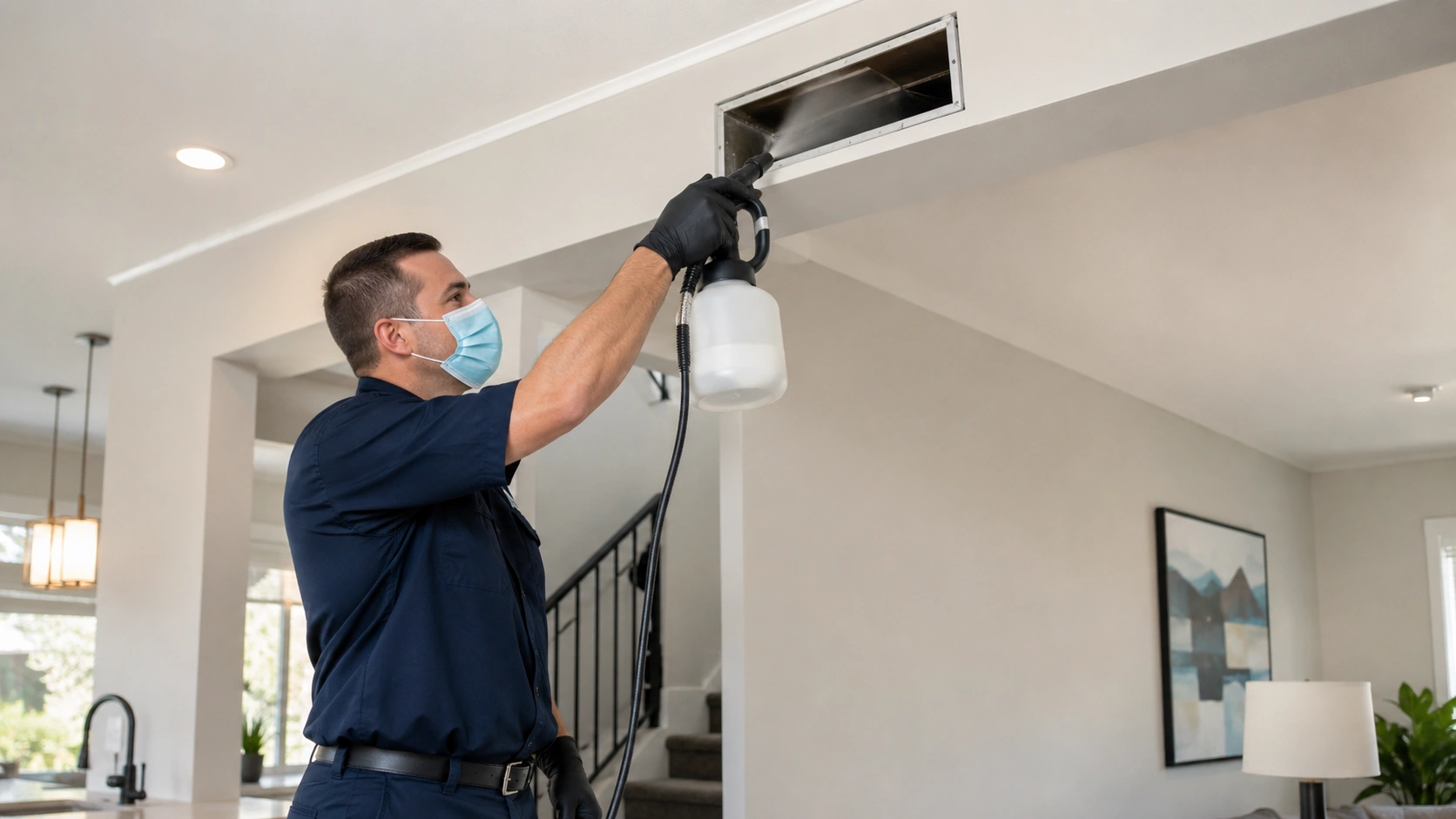
A professional service may include:
- Inspecting the HVAC system and ductwork
- Identifying the duct material and condition
- Protecting floors, walls, and furnishings
- Turning off or isolating the system
- Creating or opening appropriate access points
- Connecting collection equipment
- Placing the system under negative pressure
- Cleaning supply and return ducts
- Dislodging debris with suitable tools
- Cleaning registers and grilles
- Inspecting accessible HVAC components
- Removing collected material
- Closing and sealing access openings
- Reattaching registers
- Verifying system operation
- Providing post-cleaning documentation when available
The EPA advises using vacuum equipment that exhausts outdoors or HEPA-filtered equipment when the vacuum exhaust remains indoors. Cleaning tools should be suitable for the duct material to avoid tearing flexible ductwork or damaging fiberglass liners. (EPA)
Why Negative Pressure Is Important
Negative-pressure collection helps keep loosened particles inside the controlled cleaning system.
Without proper collection, brushing or agitation may release dust into rooms or redistribute debris throughout the ductwork.
The contractor should explain:
- Where the vacuum equipment will be placed
- How the duct system will be isolated
- Which access points will be used
- How registers will be protected
- How removed debris will be contained
- How access openings will be sealed afterward
Improper cleaning may damage ducts or worsen indoor dust conditions. Equipment and methods should match the construction of the system.
Air Duct Cleaning After Remodeling
Construction and renovation can generate large amounts of drywall dust, sawdust, insulation particles, and other debris.
Before remodeling begins:
- Turn off the HVAC system when appropriate
- Cover supply and return openings
- Isolate construction areas
- Use dust-control methods
- Clean the work area before operating the system
- Replace the filter after dusty work
The EPA recommends sealing supply and return registers during dust-producing renovation work and avoiding HVAC operation until the dust has been cleaned. (EPA)
A post-construction inspection can determine whether debris entered the duct system and whether professional cleaning is warranted.
Air Duct Maintenance Between Cleanings
Good air duct maintenance can reduce contamination and support HVAC performance.
Homeowners can:
- Replace filters as recommended
- Keep return grilles unobstructed
- Vacuum registers carefully
- Prevent furniture from blocking supply vents
- Address roof and plumbing leaks promptly
- Keep the condensate system maintained
- Inspect accessible ducts for damage
- Seal registers during renovation
- Control pest entry
- Schedule regular HVAC maintenance
- Monitor unusual dust or odors
- Repair damaged insulation
- Have duct leakage evaluated
Preventive care is more effective than repeatedly cleaning a system without correcting the source of contamination.
Air Duct and Dryer Vent Cleaning Are Different
Air duct and dryer vent systems perform different functions and should not be treated as the same service.
Air ducts distribute heated and cooled air throughout the home. Dryer vents carry hot, moisture-laden air and lint from the clothes dryer to an exterior outlet.
A restricted dryer vent may cause:
- Longer drying times
- Excessive heat
- Clothes remaining damp
- A hot laundry room
- Lint around the dryer
- Dryer shutdowns
- Increased fire risk
Cleaning the HVAC ducts does not clean the dryer vent. Each system requires separate equipment, inspection procedures, and maintenance.
Homeowners requesting both services should confirm that the estimate identifies the air duct system and dryer exhaust system separately.
Signs That Air Duct Cleaning May Be Needed
Consider scheduling an inspection when:
- Debris is visibly released from vents
- Ducts contain heavy visible buildup
- Construction dust entered the system
- There has been pest activity
- A musty odor appears when the system operates
- Water damage affected the ductwork
- Registers repeatedly become dirty
- Airflow is weak in several rooms
- The system has not been inspected after renovation
- Contamination is visible inside accessible ducts
These signs do not automatically confirm that cleaning is the only solution. An inspection may instead reveal damaged ducts, filter bypass, moisture, air leakage, or mechanical HVAC problems.
How Often Should Air Ducts Be Cleaned?
There is no universal schedule that applies to every home. The EPA does not recommend cleaning air ducts routinely; it advises cleaning them as needed based on actual conditions.
The appropriate timing depends on:
- Visible contamination
- Construction history
- Water damage
- Pest activity
- Filter performance
- Household conditions
- Duct material
- System condition
- Previous cleaning quality
A visual inspection is more useful than automatically scheduling service based on the age of the home.
Choosing Air Duct Services in Dallas
Before hiring a provider of air duct services, ask:
- Will the system be inspected before cleaning?
- Can the contractor show the contamination?
- Which components are included?
- Are supply and return ducts both covered?
- Will the blower and coil be inspected?
- What collection equipment will be used?
- How will the home be protected?
- Are the tools appropriate for the duct material?
- How will access openings be closed?
- Is post-cleaning documentation available?
- Does the company carry appropriate insurance?
- Are repairs or replacement quoted separately?
- Will chemical products be used?
The EPA advises homeowners to obtain written estimates, check references, and avoid companies that make broad or unsupported health claims.
Homeowners should also understand any proposed chemical treatment. A provider should not apply biocides, sealants, or other substances without identifying the product, explaining the purpose, and providing relevant instructions and limitations.
Professional Air Duct Cleaning in Dallas
Appropriate air duct cleaning can support HVAC performance when excessive debris, construction material, pest contamination, or other buildup interferes with the system. The greatest benefit comes from identifying the actual problem and coordinating cleaning with filtration, HVAC maintenance, moisture control, duct sealing, or duct replacement when needed.
Emerson Pro Services provides air duct cleaning, inspections, maintenance, and dryer vent services in Dallas, along with related duct solutions throughout the Dallas–Fort Worth Metroplex.
The team can inspect the system, document visible conditions, and recommend cleaning, repair, or replacement based on the ductwork’s condition.
Contact Emerson Pro Services to schedule an air duct inspection for your Dallas home.
Choosing the right air duct cleaning service involves careful consideration of certification, reviews, equipment, and adherence to guidelines. Emerson Air Duct & Dryer Vent meets all these criteria and more. We are committed to providing high-quality air duct cleaning services to ensure our clients have a healthy home environment.
Location: 2043 Empire Central Pl Ste 109, Dallas, TX 75235
Contact: 972-433-9632
Website: www.emersonproservices.com
Frequently Asked Questions
Does air duct cleaning lower energy bills?
Air duct cleaning does not guarantee lower energy bills. It may support airflow when excessive debris is creating a restriction. Equipment maintenance, filter condition, duct sealing, insulation, system sizing, and mechanical performance also affect energy use.
Can dirty ducts make an HVAC system work harder?
Excessive debris may restrict airflow or contaminate HVAC components, potentially affecting performance. A normal light layer of settled dust usually does not create the same concern.
Is air duct cleaning part of regular HVAC maintenance?
Not necessarily. The EPA recommends cleaning ducts as needed rather than automatically. Routine HVAC maintenance generally includes filters, coils, drain pans, heating equipment, electrical components, and system operation.
How do I know whether my air ducts need cleaning?
Possible signs include excessive visible debris, particles coming from registers, pest contamination, visible mold on appropriate duct surfaces, or construction material inside the system. Ask the contractor to show you the conditions supporting the recommendation.
Will air duct cleaning improve indoor air quality?
It may help when a confirmed contaminant inside the system is being distributed into the home. However, duct cleaning has not been proven to prevent health problems, and many indoor particles come from sources outside the ductwork.
When should damaged ducts be replaced?
Replacement may be needed when ducts are crushed, torn, disconnected, severely deteriorated, extensively contaminated, incorrectly sized, or made with wet or mold-damaged fiberglass material.
Are air duct cleaning and dryer vent cleaning the same?
No. HVAC ducts distribute conditioned air, while dryer vents exhaust heat, moisture, and lint. The two systems require separate inspections and cleaning procedures.
How often should Dallas homeowners clean their air ducts?
There is no universal cleaning interval. Ducts should be inspected and cleaned when actual conditions justify the service, such as excessive debris, pest contamination, water damage, or construction dust.