

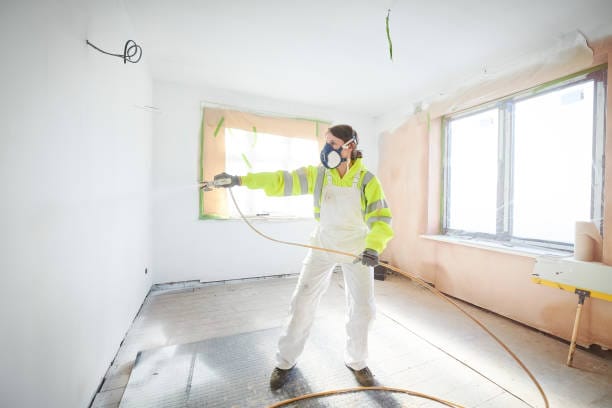
The cost of drywall repair and interior painting in Plano depends on the size and type of damage, wall texture, ceiling height, paint quality, number of coats, accessibility, and whether damaged drywall must be replaced. A small nail-hole repair costs considerably less than restoring a ceiling affected by a plumbing leak or repainting an entire home.
As a broad national reference, professional drywall repairs commonly range from approximately $380 to $1,436, while interior house painting may range from about $2 to $6 per square foot. These figures are planning estimates—not fixed prices for Plano homes. Local labor, materials, preparation requirements, and the exact scope of work determine the final cost. HomeAdvisor and Angi provide additional national cost data.
The best way to establish an accurate budget is to request an on-site evaluation from a contractor offering coordinated paint and drywall services.
Average Drywall Repair Cost
HomeAdvisor reports a national average drywall repair cost of approximately $907, with many projects falling between $380 and $1,436. Individual drywall-only repairs may fall below or above that range depending on their complexity.
General national planning ranges include:
| Type of drywall damage | Possible planning range |
|---|---|
| Small holes | $50–$300 |
| Large holes | $150–$400 |
| Stress cracks | $100–$150 |
| Water-damage repair | $300–$700 |
| General drywall repair project | $300–$880 |
| Extensive or complex repair | $1,000 or more |
These estimates should be used carefully. A contractor may have a minimum service charge that covers travel, setup, protection, materials, cleanup, and the multiple visits sometimes required for joint compound to dry.
A small patch may also require texture matching, primer, and repainting beyond the damaged spot. These finishing steps can make the complete project cost higher than the patch alone.
Average Interior Painting Cost
National interior painting estimates commonly fall between $2 and $6 per square foot, although the way contractors calculate square footage can vary. Some estimates are based on home floor area, while others account for the actual walls, ceilings, doors, and trim being painted.
Angi reports a national average of approximately $2,022 for interior house painting, with a broad total range of roughly $350 to $5,800. Large homes, premium coatings, extensive preparation, and projects that include ceilings and trim may cost considerably more.
Typical cost categories include:
| Interior painting component | Possible planning range |
|---|---|
| Walls | $1–$2 per square foot |
| Smooth ceilings | $1–$3 per square foot |
| Baseboards and trim | $1–$3 per linear foot |
| Accent walls | $2–$6 per square foot |
| Whole-home interior painting | $2–$6 per square foot |
| Surface preparation | $0.50–$0.75 per square foot |
These are broad national figures. An interior painting service in Plano should inspect the property before providing a project-specific estimate.
Why Plano Painting and Drywall Prices Vary
No single price applies to every property. Two rooms with the same floor dimensions may have very different costs because of ceiling height, wall condition, trim details, furniture, and paint selections.
Important cost factors include:
- Type and extent of drywall damage
- Number of damaged areas
- Wall or ceiling location
- Existing texture
- Required texture matching
- Water or mold concerns
- Ceiling height
- Furniture and access
- Amount of preparation
- Number of coats
- Paint brand and product line
- Wall, ceiling, door, and trim coverage
- Color changes
- Specialty primers
- Cleanup and disposal
- Project minimums
A detailed estimate from professional paint contractors in Plano should identify what is included instead of presenting one unexplained total.
Cost by Type of Drywall Damage
The cause and location of the damage have a major effect on repair cost.
Nail Holes and Minor Dents
Small holes from pictures, shelving, or ordinary household activity are among the simplest repairs. When several minor defects are repaired as part of a larger painting project, they may be included in surface preparation or priced as a group.
The process may involve:
- Filling the opening
- Sanding the patch
- Applying primer
- Matching the existing texture
- Repainting the affected surface
Even small patches can remain visible if they are not properly primed and finished.
Small and Medium Holes
Holes that extend through the face paper may require backing material or a fitted drywall patch. The repair must be taped or reinforced, coated with joint compound, sanded, textured, and primed.
Cost generally increases with:
- Hole size
- Number of holes
- Difficult access
- Texture complexity
- Paint-matching requirements
If the existing paint has faded, touching up only the patch may produce a noticeable difference. Repainting the full wall can provide a more consistent result.
Large Holes and Missing Sections
Large openings caused by plumbing work, electrical work, impact, or remodeling usually require new drywall material.
The contractor may need to:
- Square the damaged opening
- Inspect the framing or wall cavity
- Add backing or framing
- Cut and install new drywall
- Tape and finish the seams
- Match the texture
- Apply primer
- Repaint the wall
Large repairs cost more because they require additional material, labor, drying time, and finishing.
Drywall Cracks
A simple hairline crack may be inexpensive to repair, but repeatedly returning or widening cracks may indicate movement that should be evaluated before cosmetic work begins.
Possible causes include:
- Normal settling
- Seasonal movement
- Poorly finished seams
- Loose drywall
- Framing movement
- Foundation movement
- Moisture
- Structural problems
Covering a crack with compound and paint will not solve an underlying problem. The cause should be addressed when signs suggest more than ordinary cosmetic damage.
Loose or Peeling Drywall Tape
Tape may loosen because of improper installation, moisture, building movement, or inadequate compound coverage. Repair often requires removing the loose portion, applying new tape and joint compound, sanding, matching the texture, priming, and painting.
Ceiling tape and high-wall repairs may cost more because of access and protection requirements.
Water-Damaged Drywall
Water damage can significantly increase the cost of drywall repair. Before restoration begins, the source of the moisture must be identified and corrected.
Common sources include:
- Plumbing leaks
- Roof leaks
- Window leaks
- Air-conditioning problems
- Bathroom moisture
- Appliance leaks
- Drainage problems
Drywall that is stained but structurally sound may require drying, stain-blocking primer, and paint. Soft, swollen, crumbling, or contaminated material may require drywall replacement.
Plumbing, roofing, remediation, insulation, or framing work is usually separate from the drywall estimate unless specifically included.
Ceiling Drywall Damage
Ceiling repairs often cost more than comparable wall repairs because overhead work is slower and may require ladders, scaffolding, additional protection, and careful blending.
Ceiling costs may rise because of:
- High or vaulted ceilings
- Large damaged areas
- Heavy texture
- Water staining
- Sagging material
- Insulation above the drywall
- Light fixtures or ceiling fans
- Difficult room access
If the ceiling has a continuous texture, a small repair may require work across a larger area to make the result less noticeable.
When Is Drywall Replacement More Cost-Effective?
Patching is appropriate for many isolated defects, but repeated repairs may not be the best solution when damage is widespread.
Drywall replacement may be recommended when:
- Water has weakened a large area
- Several repairs overlap
- Panels are severely cracked or sagging
- Previous patches are failing
- The drywall has been removed for plumbing or electrical work
- The surface is extensively damaged
- Contaminated material must be removed
- A remodel changes the room layout
Replacing a section creates a stable surface, but the surrounding seams still need to be taped, finished, sanded, textured, primed, and painted.
How Much Does New Drywall Installation Cost?
The cost of drywall installation depends on the square footage, drywall thickness, number of openings, ceiling height, finish level, texture, and complexity of the room.
New drywall work may include:
- Material delivery
- Panel installation
- Fastening
- Corner bead
- Joint tape
- Multiple coats of compound
- Sanding
- Texture
- Primer
- Cleanup and waste removal
Small installations may cost more per square foot than large open areas because setup, transportation, and finishing are distributed across fewer panels.
Ask whether an estimate includes only hanging the panels or the complete process through paint-ready finishing. A low installation quote may not include texture, primer, painting, or disposal.
How Texture Matching Affects Cost
Texture matching is one of the most important parts of an invisible drywall repair. Common finishes may include:
- Smooth walls
- Orange-peel texture
- Knockdown texture
- Hand-applied texture
- Popcorn-style ceilings
- Custom decorative finishes
The contractor may need to test the texture, adjust the application, and blend beyond the immediate patch. Perfect duplication can be difficult when the original finish was applied many years ago or has been painted repeatedly.
Smooth walls can also require extensive finishing because even small ridges, pinholes, and sanding marks may remain visible after painting.
Why Paint Matching Can Increase the Price
A homeowner may have leftover paint with the correct color name, but that does not guarantee an invisible touch-up.
Paint appearance can change because of:
- Sunlight exposure
- Age
- Previous cleaning
- Different paint batches
- Different application methods
- Changes in sheen
- Wall texture
- Smoke or cooking residue
- Manufacturer formula updates
When a touch-up remains visible, repainting the entire wall from corner to corner may be necessary. In some rooms, several walls or the full room may need repainting for consistent color and sheen.
Cost of Painting One Room
The cost to paint one room depends on its dimensions and included surfaces. A basic bedroom with standard-height walls costs less than a living room with vaulted ceilings, extensive trim, built-ins, or several colors.
A room estimate should clarify whether it includes:
- Walls
- Ceiling
- Baseboards
- Crown molding
- Doors
- Door frames
- Windows
- Closets
- Drywall repairs
- Primer
- Two finish coats
- Furniture moving
- Floor protection
- Cleanup
Comparing room prices without comparing the scope can be misleading.
Cost of Painting Ceilings
Ceiling painting is often priced separately from wall painting. Costs depend on surface area, height, access, texture, staining, and repair requirements.
Additional preparation may be needed for:
- Water stains
- Cracks
- Loose tape
- Previous patches
- Smoke residue
- Grease
- Peeling coatings
- Popcorn texture
A stained ceiling should be evaluated before painting. If moisture remains active, the stain may return and the drywall may continue to deteriorate.
Cost of Painting Trim and Doors
Trim and doors require detailed preparation and precise application. Existing coatings may need cleaning, sanding, deglossing, caulking, patching, or specialty primer.
Trim-related costs depend on:
- Linear footage
- Number of doors and windows
- Crown molding
- Stair railings
- Built-in shelving
- Existing coating condition
- Desired finish
- Number of coats
Semi-gloss or enamel coatings are commonly selected for these surfaces because of their durability, but the appropriate product depends on the material and existing finish.
How Color Changes Affect Painting Cost
Changing from a similar light color to another light color may require fewer coats than covering a very dark or saturated color with a pale finish.
Cost may increase when the project includes:
- Dark-to-light color changes
- Bright or saturated colors
- Multiple accent walls
- Different colors in each room
- Specialty finishes
- High-gloss coatings
- Stain-blocking primer
- Cabinet-grade coatings
The contractor should specify whether the estimate includes a fixed number of coats or enough coats to achieve uniform coverage.
Labor Is a Major Part of the Price
Paint and joint compound are only part of the project cost. Much of the price covers skilled labor and preparation.
Professional work may include:
- Protecting floors and furniture
- Setting up ladders and equipment
- Removing outlet covers
- Cleaning surfaces
- Cutting out damaged drywall
- Installing backing and patches
- Applying several coats of joint compound
- Allowing materials to dry
- Sanding
- Controlling dust
- Matching texture
- Priming
- Cutting clean paint lines
- Applying finish coats
- Completing touch-ups
- Reinstalling hardware
- Cleaning the work area
Drywall work may require more than one visit because finishing compounds need adequate drying time between stages.
Why Small Repairs May Have a Minimum Charge
A repair that takes less than an hour at the wall may still require:
- Travel
- Material pickup
- Furniture and floor protection
- Tool setup
- Drying time
- A return visit
- Texture application
- Priming
- Painting
- Cleanup
For this reason, contractors may use a minimum service charge rather than pricing solely by the dimensions of the hole.
Combining several small repairs into one appointment can be more efficient than scheduling each defect separately.
Is It Cheaper to Combine Paint and Drywall Services?
Bundling paint and drywall work may reduce duplicated setup and improve coordination. One contractor can organize the repair, texture, primer, and finish-painting sequence.
Potential advantages include:
- One project schedule
- One written scope
- Coordinated materials
- Fewer separate service calls
- Consistent surface preparation
- Clear responsibility for the final finish
- Reduced risk of scheduling delays
Bundling does not automatically guarantee a lower price, but it can make the estimate easier to understand and the project easier to manage.
What Is Usually Included in a Drywall and Painting Estimate?
A complete estimate may include:
| Estimate category | Details to review |
|---|---|
| Site protection | Floor coverings, plastic barriers and furniture protection |
| Demolition | Removal of damaged drywall and debris |
| Drywall materials | Panels, backing, fasteners, tape and corner bead |
| Finishing | Joint compound, sanding and seam finishing |
| Texture | Type, application area and blending |
| Primer | Spot priming or complete-surface priming |
| Paint | Brand, product line, color and sheen |
| Coats | Number of primer and finish coats |
| Surfaces | Walls, ceilings, trim, doors and closets |
| Cleanup | Dust control, daily cleanup and final disposal |
| Schedule | Start date, duration and drying requirements |
| Warranty | Coverage, duration and exclusions |
Ask for clarification if an estimate says only “repair and paint” without describing the individual tasks.
Costs That May Not Be Included
Some conditions require services outside normal drywall and painting work.
Possible additional expenses include:
- Leak detection
- Plumbing repair
- Roof repair
- Electrical work
- Structural evaluation
- Foundation repair
- Mold assessment or remediation
- Insulation replacement
- Framing repair
- Wallpaper removal
- Popcorn-ceiling testing or removal
- Moving unusually heavy furniture
- After-hours or emergency work
The underlying problem must be resolved before the drywall is closed and painted. Otherwise, the damage may return.
How to Compare Paint Contractors in Plano
Do not compare estimates based only on the final total. Review whether each contractor has included the same preparation, materials, surfaces, and finish requirements.
Ask each contractor:
- What drywall repairs are included?
- Will damaged material be patched or replaced?
- How will the existing texture be matched?
- Is primer included?
- What paint brand and product line will be used?
- How many coats are included?
- Are ceilings, trim, doors, and closets included?
- Who moves furniture?
- How will floors and belongings be protected?
- Is daily and final cleanup included?
- How will hidden damage be handled?
- What warranty is provided?
- Are insurance details available?
A lower estimate may exclude necessary preparation, texture work, primer, or complete-wall painting.
Ways to Control Drywall and Painting Costs
Homeowners may be able to reduce labor and avoid delays by preparing the property before work begins.
Helpful steps include:
- Remove artwork and decorations
- Clear shelves and countertops
- Move small furniture
- Provide access to damaged areas
- Finalize colors before the start date
- Identify every repair during the estimate
- Combine multiple small repairs
- Keep the number of colors manageable
- Use readily available paint products
- Schedule related work together
- Repair active leaks before drywall work
- Avoid changing the scope after work begins
Do not attempt complex patches simply to reduce cost. Poorly applied compound, excessive sanding, incompatible caulk, and mismatched texture can require additional correction.
When Repairing Before Painting Saves Money
Painting over cracks, loose tape, water damage, or failing patches may create a short-term cosmetic improvement, but the defects often remain visible or return.
Completing drywall repair first can help prevent:
- Visible patch edges
- Uneven texture
- Flashing or inconsistent sheen
- Cracks showing through new paint
- Loose material beneath the coating
- Repainting after later repairs
- Additional furniture moving and setup
The most efficient sequence is usually to correct the source of the damage, complete the drywall work, apply the required primer, and then paint the finished surface.
How Long Does the Work Take?
A small repair may require several stages even when the active labor time is limited. Joint compound, texture, primer, and paint must dry between applications.
The schedule depends on:
- Size and number of repairs
- Type of compound
- Drying conditions
- Texture requirements
- Ceiling height
- Number of rooms
- Number of paint colors
- Required coats
- Crew size
- Furniture and access
- Hidden damage
A combined drywall and interior painting project may take anywhere from part of a day for limited work to several days or longer for extensive repairs and whole-home painting.
When Should You Request an On-Site Estimate?
An in-person evaluation is especially important when:
- Damage covers several walls
- Ceilings are affected
- Water damage is present
- Cracks repeatedly return
- Walls are bowed or sagging
- Texture must be matched
- Several rooms need painting
- The home has tall or vaulted ceilings
- Drywall replacement is expected
- The cause of the damage is unclear
Photos may help a contractor understand the general problem, but they may not reveal moisture, loose material, texture depth, access difficulties, or damage behind the wall.
Professional Drywall Repair and Painting Services in Plano
The total cost of drywall repair and painting depends on much more than the size of the damaged area. Preparation, texture matching, primer, paint coverage, ceiling height, accessibility, and the cause of the damage all influence the estimate.
Emerson Pro Services provides drywall and painting services in Plano and throughout the Dallas–Fort Worth Metroplex. Available services include drywall repair, drywall replacement, drywall installation, texture matching, surface preparation, interior painting, and coordinated paint and drywall projects.
Whether you need one damaged wall restored or a larger interior painting service, Emerson Pro Services can inspect the property, explain the required work, and provide a project-specific estimate.
Contact Emerson Pro Services to request an estimate for drywall repair and painting services in Plano, TX.
Contact Details:
1100 E Plano Pkwy #102, Plano, TX
972-947-5654
www.emersonproservices/plano/paint-drywall/
Frequently Asked Questions
How much does drywall repair cost in Plano?
The price depends on the size, type, location, and cause of the damage. National planning data places many professional drywall repair projects between approximately $380 and $1,436, but a local inspection is necessary for an accurate Plano estimate.
How much does interior painting cost per square foot?
National planning estimates commonly range from approximately $2 to $6 per square foot. The final price depends on how the area is measured and whether the estimate includes walls, ceilings, trim, preparation, primer, and multiple coats.
Does drywall repair include painting?
Not always. Some estimates cover only the patch and finishing work. Texture, primer, touch-up paint, or complete-wall repainting may be separate. Ask for a detailed scope before approving the project.
Is it cheaper to repair or replace drywall?
Repair is generally practical for isolated holes, cracks, and damaged sections. Replacement may be more economical when damage is extensive, panels are weak or sagging, or numerous repairs overlap.
Why does a small drywall patch cost more than expected?
Contractors may have a minimum service charge covering travel, protection, setup, materials, drying time, return visits, texture matching, painting, and cleanup. The visible patch is only one part of the process.
Will paint hide drywall damage?
Paint may change the color but will not correct holes, dents, loose tape, cracks, or uneven patches. Some imperfections become more visible after a new coating is applied.
Does water-damaged drywall need to be replaced?
Drywall that remains solid and dry may sometimes be sealed and refinished. Soft, swollen, crumbling, sagging, or contaminated material may require replacement. The moisture source must be corrected first.
Is texture matching included in drywall repair?
It depends on the contractor’s scope. Because texture matching requires additional materials and labor, it should be specifically listed in the estimate.
What makes interior painting more expensive?
High ceilings, extensive trim, damaged walls, major color changes, specialty coatings, furniture moving, difficult access, multiple colors, and additional coats can increase the cost.
How can I get an accurate drywall and painting estimate?
Request an on-site inspection and provide access to every damaged area. Compare written estimates that identify preparation, repairs, texture, primer, paint products, coats, included surfaces, cleanup, and warranty terms.