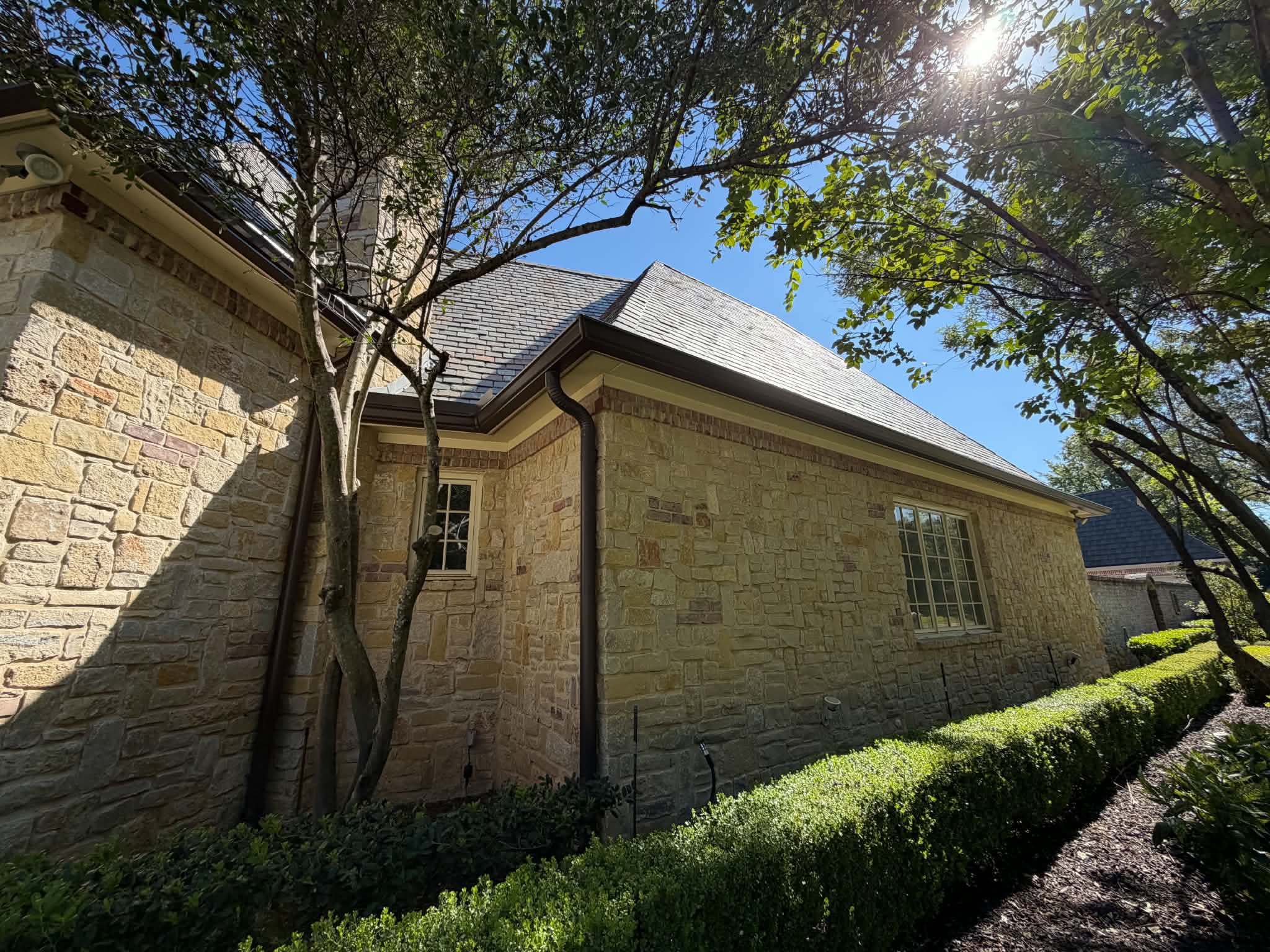


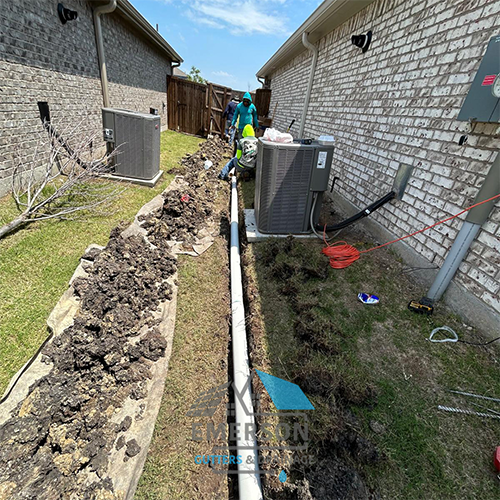
A reliable drainage system includes more than underground pipes. Gutters, downspouts, extensions, yard grading, surface drains, catch basins, and other components may all contribute to effective water management.
Rainwater should move away from your roof, exterior walls, landscaping, and foundation through a controlled route. When that route is incomplete or poorly designed, water may collect around the property and create recurring problems.
Recognizing the warning signs of poor drainage can help Dallas homeowners correct the cause before water damages landscaping, exterior materials, or structural components.
1. Water Stands in the Yard After Rain
Puddles immediately after a storm are not always unusual. However, water that remains for an extended period may indicate that the yard lacks a suitable drainage route.
Standing water can be caused by:
- Low areas in the landscape
- Compacted soil
- Poor grading
- Blocked surface drains
- Insufficient drainage outlets
- Excessive roof runoff
- Damaged underground pipes
The correct solution depends on whether the water is flowing across the surface or collecting within saturated soil. Surface drains, catch basins, French drains, or grading improvements may be considered after a professional evaluation.
2. Soil Remains Soggy Between Storms
Soil that stays wet long after rain ends may indicate poor natural drainage, an underground leak, or water being directed into the wrong area.
Persistently wet soil may lead to:
- Muddy lawn areas
- Damaged grass
- Plant-root problems
- Mosquito activity
- Soil compaction
- Unpleasant odors
- Reduced use of outdoor spaces
Irrigation leaks and broken water lines should be ruled out. If rainfall is the cause, the property may need subsurface drainage or an improved drainage route.
3. Gutters Overflow During Heavy Rain
Overflowing gutters can deposit a large volume of roof runoff beside the house. The cause may be debris, but clean gutters can also overflow when they are undersized, incorrectly pitched, or connected to too few downspouts.
Professional gutter services in Dallas may recommend:
- Gutter cleaning
- Correcting the gutter pitch
- Adding downspouts
- Installing larger gutters
- Repairing damaged sections
- Completing gutter replacement
Roof runoff should be controlled at the source before ground-level drainage improvements are installed.
4. Downspouts Discharge Beside the Foundation
A downspout that ends directly beside the house may release hundreds of gallons of roof runoff into a concentrated area over the course of a storm.
A properly placed downspout extension carries water farther from the foundation. The required distance depends on the property’s grading, soil, nearby structures, and available discharge area.
Some homes benefit from underground solid pipes that transport downspout water to a pop-up emitter or another suitable outlet. These pipes must have the correct slope and, where appropriate, include access for future cleaning.
5. Soil or Mulch Is Washing Away
Erosion is a visible sign that water is moving through the property without adequate control. You may notice:
- Channels forming in soil
- Mulch collecting on walkways
- Exposed plant roots
- Gravel moving from landscaped areas
- Soil disappearing beneath downspouts
- Bare spots developing on slopes
The solution may combine downspout extensions, surface drains, erosion-resistant landscaping, and grading changes. Simply replacing washed-out mulch does not correct the water source.
6. Water Collects Near the Foundation
Puddles or saturated soil beside the foundation should be evaluated promptly. Water may be arriving from overflowing gutters, short downspouts, poorly sloped soil, or runoff from another part of the property.
Gutters and drainage cannot prevent every foundation concern, but controlling roof and surface water is an important part of protecting the surrounding soil.
Possible improvements include:
- New or repaired gutters
- Downspout extensions
- Underground downspout drains
- Surface drains
- Catch basins
- French drains
- Grading corrections
Existing foundation movement or cracking should be evaluated by an appropriately qualified professional.
7. Water Flows Toward the House
The ground immediately surrounding a home should generally direct water away from the structure. Settled soil, landscaping changes, and poorly planned hardscaping can create a slope toward the house.
During rain, observe the direction of runoff from a safe location. Water moving toward exterior walls, doors, or the foundation indicates that grading or drainage improvements may be necessary.
A drain alone may not correct severe negative grading. Reshaping the soil and adding collection points may be more effective.
8. Water Enters a Garage or Exterior Door
Runoff may enter a garage, patio door, or low exterior opening when the surrounding surface directs water toward it.
Potential solutions include:
- Channel drains
- Catch basins
- Regrading
- Threshold improvements
- Downspout relocation
- Gutter corrections
The water source must be identified before selecting a drain. A channel drain may collect driveway runoff, while gutter work may be necessary when the problem originates from the roof.
9. Your Driveway or Patio Regularly Floods
Hard surfaces do not absorb much water. If they slope toward the house or lack suitable outlets, runoff may form large puddles.
Channel drains are commonly used across driveways, garage entrances, patios, and walkways. They collect surface water through a grated channel and direct it into a connected solid pipe.
The channel, outlet, and pipe must be sized for the expected water volume and maintained to prevent sediment and leaves from blocking the system.
10. Water Stains Appear on Exterior Walls
Streaks or discoloration on siding, brick, or stucco may indicate overflowing gutters, leaking seams, or water flowing behind the system.
Repeated moisture can contribute to:
- Peeling paint
- Mildew
- Deteriorated trim
- Stained masonry
- Damage that may require siding repair
Inspect the roof edge, drip edge, gutters, and downspouts before cleaning or repainting the affected surface.
11. Basement, Crawl-Space, or Interior Moisture Appears
Water entering a basement, crawl space, or ground-level interior can have several causes. Surface drainage, plumbing leaks, waterproofing defects, and foundation openings should all be considered.
Exterior drainage improvements may help when rainfall collects against the structure, but they should not be selected without diagnosing the entry point.
Interior water intrusion can involve electrical, mold, or structural risks and should be assessed promptly by qualified professionals.
12. Plants and Grass Are Dying in Wet Areas
Too much water can be as harmful to landscaping as too little. Saturated soil limits oxygen around plant roots and may cause yellowing, fungal growth, or root deterioration.
Recurring wet patches may indicate that the property needs a French drain, a surface drain, a grading adjustment, or an irrigation repair.
The solution should improve drainage without leaving the surrounding landscape excessively dry.
13. Mosquitoes Gather Around Standing Water
Standing water can create mosquito-breeding conditions. Common problem areas include clogged gutters, catch basins filled with debris, low lawn sections, unused containers, and poorly draining extensions.
Eliminating the source is more effective than repeatedly treating the water. Gutters, drains, and outlets should be kept clear so the property can dry after rainfall.
14. Underground Drains Back Up
Some downspouts connect to buried pipes. When these lines are obstructed, water may rise from the connection or back up into the gutter system.
Possible causes include:
- Leaves and roof granules
- Sediment
- Root intrusion
- Collapsed pipe
- Separated connections
- Insufficient slope
- Blocked pop-up emitters
Repeated backups should be professionally investigated. Clearing the visible downspout will not fix a damaged underground line.
15. Your Property Develops New Low Spots
Soil can settle over time, particularly after landscaping work, pipe installation, or repeated erosion. A new depression may begin collecting water even if the yard previously drained well.
Small areas may be corrected with appropriate grading. Deeper or expanding depressions should be evaluated to rule out pipe damage, subsurface erosion, or other underlying problems.
16. Drainage Problems Worsen After a New Roof or Addition
A home addition, patio cover, new roof configuration, or expanded hardscape changes how much water is collected and where it flows.
The existing gutters and drains may no longer have enough capacity. New roof valleys can also direct concentrated runoff toward one section.
Professional gutter installation services should calculate the roof area, pitch, gutter size, and downspout requirements rather than simply extending the old layout.
How Gutters and Drainage Work Together
The gutter system controls water at the roofline. The ground-level drainage system carries that runoff away after it leaves the downspouts.
The complete path may include:
- Roof surfaces and valleys
- Properly sized gutters
- Downspout outlets
- Downspouts and extensions
- Surface or underground drains
- A suitable final discharge point
If one component is blocked, damaged, or missing, water can overflow or return toward the house.
When Gutter Replacement May Help
Gutter replacement may be appropriate when the current system has:
- Widespread leaks
- Severe sagging
- Extensive corrosion
- Incorrect sizing
- Too few downspouts
- Repeatedly separated sections
- Frequent repair requirements
New seamless gutters contain fewer joints along their straight runs and can be fabricated to fit the roofline. Proper sizing, slope, hanger placement, and downspout design remain essential.
Can Gutter Guards Improve Drainage?
Gutter guards can reduce leaves and large debris entering the gutters, helping lower the risk of severe clogs. However, they do not increase the capacity of undersized gutters or repair a damaged drainage system.
Guards also require periodic cleaning. Leaves may collect on top, while pollen, roof granules, and smaller debris can enter the gutters.
The product should be selected according to the roof, gutter profile, nearby trees, and heavy-rain conditions.
Common Drainage Solutions
The appropriate solution depends on the source, location, and movement of the water.
Downspout Extensions
Extensions move roof runoff farther from the house. They are often the simplest solution when downspouts end too close to the foundation.
Underground Downspout Pipes
Solid buried pipes transport concentrated roof runoff to a suitable outlet. They should not be confused with perforated French drains.
Catch Basins
Catch basins collect surface water from low areas through a grated opening and connect to solid drainage pipes.
Surface Drains
Surface drains collect visible runoff from lawns, landscaping, and other areas where water pools.
Channel Drains
Channel drains intercept water moving across hard surfaces such as driveways and patios.
French Drains
French drains use gravel and perforated pipe to collect water from saturated soil. They are best suited to subsurface moisture rather than every surface-water problem.
Yard Grading
Grading reshapes the soil to encourage water to flow away from structures and toward designated drainage areas.
Many properties need a combination of solutions rather than a single drain.
What Happens During a Drainage Evaluation?
A professional assessment may include:
- Identifying the water source
- Observing slopes and low areas
- Inspecting gutters and downspouts
- Checking visible drain inlets and outlets
- Reviewing roof-valley discharge
- Evaluating erosion patterns
- Examining hard surfaces
- Locating appropriate discharge points
- Considering underground obstacles
Photos or video taken during rain can help demonstrate where water originates and how it moves across the property.
Questions to Ask a Drainage Contractor
Before approving work, ask:
- What is causing the drainage problem?
- Which areas will the proposed system collect water from?
- Where will the water discharge?
- Are gutter or downspout improvements needed first?
- What pipe and drain materials will be used?
- How will the required slope be established?
- Are cleanouts included?
- Is landscape restoration included?
- What maintenance will be required?
- What warranty covers the work?
A complete proposal should explain both how water will be collected and where it will go.
Improve Your Dallas Drainage System
Standing water, erosion, soggy soil, overflowing gutters, and short downspouts are all signs that your home may need a better drainage system. Addressing these problems early helps protect landscaping, exterior surfaces, walkways, and the soil around the foundation.
Emerson Pro Services provides drainage solutions and gutter services in Dallas, including gutter installation services, gutter replacement, seamless gutters, gutter guards, downspout extensions, catch basins, surface drains, French drains, and other water-management improvements.
Contact Emerson Pro Services to schedule an inspection and determine which drainage solution is right for your Dallas property.
At Emerson Gutters & Drainage Services, we provide expert gutter installation, repair, and maintenance solutions to protect Dallas homes from water damage year-round. Conveniently located at 16135 Preston Rd #140, Dallas, TX 75248, our experienced team is committed to delivering high-quality workmanship and dependable service. To schedule an inspection or learn more about our services, call 469-414-9191 or visit www.emersonproservices.com.
Frequently Asked Questions
What are the most common signs of poor home drainage?
Common signs include standing water, soggy soil, landscape erosion, overflowing gutters, water near the foundation, and underground drains backing up.
Can gutters cause yard drainage problems?
Yes. Clogged, leaking, undersized, or poorly positioned gutters and downspouts can deposit large amounts of roof runoff in the wrong areas.
How far should a downspout extension carry water?
It should carry water far enough that it does not collect near or flow back toward the foundation. The appropriate distance depends on the property’s grading, soil, and available outlet.
Will a French drain fix every drainage problem?
No. French drains collect subsurface moisture. Surface runoff, driveway flooding, roof discharge, and poor grading may require different solutions.
Do gutter guards improve drainage?
They can reduce debris and clogs, but they cannot correct undersized gutters, damaged downspouts, poor grading, or blocked underground drains.
When should gutters be replaced instead of repaired?
Replacement may be more practical when gutters have widespread corrosion, repeated leaks, severe sagging, inadequate capacity, or frequent repair needs.