

A brick chimney is built to withstand heat and weather, but it is not maintenance-free. Rain, snow, freezing temperatures, moisture, and time can gradually damage bricks and mortar joints. What begins as a small crack or loose piece of mortar can develop into water intrusion, unstable masonry, and more extensive chimney repairs.
For New Jersey homeowners, timely chimney brick repair is especially important because winter freeze-thaw cycles can accelerate existing damage. Inspecting the chimney and correcting problems early can help preserve its structure, appearance, and ability to vent the fireplace or heating appliance safely.
Why Chimney Bricks Deteriorate
Chimneys are exposed on all sides and often extend above the roofline, where they receive the full impact of rain, wind, snow, ice, and temperature changes. Masonry materials are durable, but they can absorb some moisture through small cracks, open mortar joints, or porous surfaces.
Common causes of brick and mortar damage include:
- Repeated freezing and thawing
- Long-term water exposure
- A cracked or deteriorated chimney crown
- Missing or damaged chimney caps
- Failed flashing around the roofline
- Aging or incompatible mortar
- Previous repairs made with unsuitable materials
- Building movement or settling
- Heat-related stress
- Severe storms and wind-driven rain
The visible damage may be only one part of the problem. A professional inspection should look for the source of moisture or movement before repairs begin.
Freeze-Thaw Cycles Make Small Problems Worse
New Jersey winters often include changing temperatures. Water enters a small masonry opening, freezes, and expands. After it thaws, more water may enter the enlarged space. Repeated cycles can gradually break brick faces, weaken mortar joints, and loosen pieces of masonry.
This process can lead to:
- Spalling bricks
- Widening cracks
- Recessed or missing mortar
- Loose masonry units
- Water reaching interior chimney components
- Faster deterioration around the crown and roofline
Delaying chimney brick repair allows another season of moisture and freezing temperatures to act on already weakened areas.
What Is Brick Spalling?
Spalling occurs when the surface of a brick flakes, chips, or breaks away. A damaged brick may look rough, pitted, cracked, or partially missing. Pieces may collect on the roof or ground around the chimney.
Spalling often indicates that moisture has entered the brick and damaged it during temperature changes. It can also result from aging materials, incompatible coatings, or improper previous repairs.
Painting over spalled brick does not restore its strength. Severely damaged units may need to be removed and replaced with compatible bricks, and the source of moisture must be addressed.
Damaged Mortar Joints Weaken the Chimney
Mortar holds the masonry units together and helps distribute loads through the chimney. Over time, weathering may cause joints to crack, crumble, or recede.
Warning signs include:
- Mortar falling out when touched
- Gaps between bricks
- Stair-step cracks
- Deeply recessed joints
- Loose bricks
- Sections with mismatched hard patching material
When deterioration is limited, repointing may be appropriate. This process removes weakened mortar to a suitable depth and replaces it with compatible material. Simply smearing new mortar over the surface—sometimes called a cosmetic skim—may hide damage temporarily without creating a durable joint.
Water Damage Can Spread Beyond the Chimney
Damaged brick and mortar allow water to move into the chimney structure. Moisture may then affect nearby roofing, attic insulation, ceilings, walls, and fireplace components.
Possible signs of a moisture problem include:
- Water stains near the chimney
- Dampness in the attic
- Peeling paint or wallpaper
- Musty odors
- White deposits on masonry
- Rust on metal fireplace components
- Dripping after rain or snowmelt
Professional chimney leak repair should identify whether water is entering through masonry, flashing, the crown, the cap, roofing, or a combination of areas. Repairing only the most visible crack may not stop the leak.
Ignored Masonry Damage Can Become a Safety Concern
Loose bricks or mortar can eventually fall onto the roof, into the fireplace, or toward the ground. Deteriorated masonry may also reduce the stability of the chimney above the roofline.
Inside the chimney, moisture and movement can affect liners, metal components, and connections. If the flue system is damaged, heat, smoke, or combustion gases may not be contained as intended.
For fireplace safety, stop using the fireplace or connected appliance if you notice falling masonry, major cracks, visible leaning, smoke entering the room, or other signs of serious damage. Arrange an appropriate professional inspection before resuming use.
Cracks Can Reveal Different Types of Problems
Not every masonry crack has the same cause or urgency.
Hairline surface cracks
Small cracks in mortar or the crown can admit moisture and should be monitored or repaired before they widen.
Stair-step cracks
Cracks that follow mortar joints may relate to movement, settlement, or localized masonry failure. The pattern should be evaluated before cosmetic work is performed.
Vertical cracks
Vertical cracking may involve masonry movement, thermal expansion, or damage within the chimney. Wider cracks require prompt professional attention.
Horizontal cracks
Horizontal cracks can indicate significant stress and should not be ignored.
Separation from the home
A visible gap between the chimney and the building may point to structural movement. A chimney professional may recommend evaluation by a structural or foundation specialist.
The repair method should address the cause instead of simply filling the visible line.
Damaged Bricks Can Affect Chimney Flashing
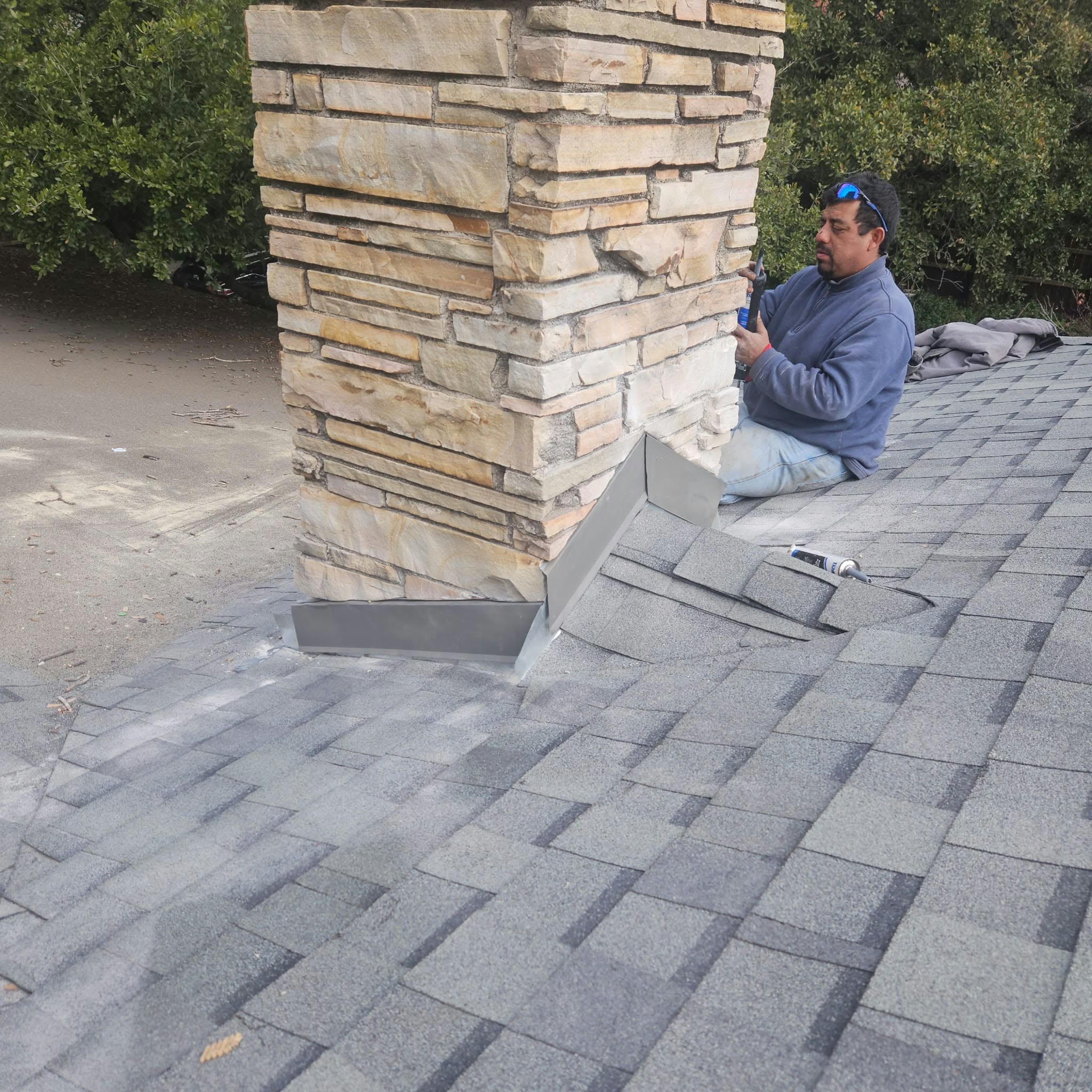
Chimney flashing seals the joint between the roof and chimney. Counter flashing is often secured into masonry joints. If those joints crumble or bricks become loose, the flashing may separate and allow water beneath the roofing.
This relationship means masonry repair and flashing repair may need to be completed together. Reattaching metal to unstable brick or mortar will not provide a lasting seal.
During an inspection, professionals should examine:
- Base and step flashing
- Counter flashing
- Mortar joints holding the flashing
- Roofing around the chimney
- Sealants and corner details
- The uphill side where water may collect
The Chimney Crown and Cap Also Matter
The crown covers the top of the masonry chimney and directs water away from its walls. Cracks, poor slope, or deterioration can allow water to enter from above.
A chimney cap covers the flue opening and helps keep out rain, snow, debris, and animals. Chimney cap installation may be recommended when the cap is missing, damaged, incorrectly sized, or insecure.
The crown and cap perform different jobs. Installing a cap will not repair a cracked crown, and crown repair will not correct damaged flashing or open mortar joints. A complete inspection helps determine which components need attention.
White Stains Can Signal Moisture Movement
White powdery or crystalline marks on brick are often called efflorescence. They appear when moisture moves through masonry, dissolves salts, and leaves the salts behind as the water evaporates.
Light surface deposits can sometimes be cleaned, but the moisture source should still be investigated. Recurring or extensive staining may indicate that water continues to enter the chimney.
Dark staining, algae, or moss may also point to prolonged dampness or poor drying conditions. Cleaning alone will not correct the underlying water path.
Why DIY Patching Often Fails
Applying caulk, roofing cement, paint, or surface mortar may seem like a quick way to stop damage. These materials can trap moisture, fail during temperature changes, or create a hard patch that behaves differently from the original masonry.
Common DIY problems include:
- Using incompatible mortar
- Covering damaged brick without replacing it
- Sealing wet masonry
- Blocking normal vapor movement
- Repairing a crack without correcting its cause
- Working unsafely on a roof or tall chimney
- Missing damage to flashing, crown, or flue components
Professional fireplace masonry repair considers brick type, mortar compatibility, joint profile, moisture sources, and the condition of the entire chimney.
What Professional Chimney Brick Repair May Include
The scope depends on the type and extent of damage. Services may involve:
Repointing
Deteriorated mortar is carefully removed and replaced with a compatible mortar. The new joint should match the surrounding profile and allow the masonry to perform properly.
Brick replacement
Spalled, cracked, or loose bricks are removed and replaced with compatible units. Matching size, color, texture, and absorption characteristics helps produce a more consistent repair.
Crown repair or rebuilding
Small crown cracks may be repairable, while extensive deterioration may require reconstruction with proper slope and overhang.
Flashing repair
Loose, corroded, or incorrectly installed flashing may need resealing, partial replacement, or complete replacement.
Water-repellent treatment
In suitable situations, a vapor-permeable masonry water repellent may help reduce water absorption after repairs are complete. It should not be used to hide active cracks or structural damage.
Partial or complete rebuilding
When deterioration is extensive, the chimney may need to be rebuilt from a stable point. This is more involved than repointing and should be based on a detailed assessment.
Repairing Early Can Help Control Costs
A few damaged joints or bricks may be relatively localized. If moisture continues to enter, the affected area can spread and eventually require larger sections to be rebuilt.
Early repair may help avoid:
- Extensive masonry replacement
- Damage to roof decking and interior finishes
- Repeated leak repairs
- Loose masonry falling from the chimney
- Damage to flashing and nearby shingles
- Premature deterioration of chimney components
The exact cost depends on chimney height, roof access, material matching, damage extent, and whether scaffolding or additional safety equipment is needed.
Chimney Cleaning and Masonry Repair Are Different Services
Chimney cleaning removes soot, creosote, and certain debris from the flue system. Masonry repair restores damaged brick, mortar, crowns, and related exterior components. One service does not replace the other.
Likewise, fireplace cleaning may focus on accessible areas of the firebox and hearth, depending on the service provider. Homeowners should confirm exactly what is included in an appointment.
A chimney may look clean inside while having severe exterior masonry damage. It may also have sound exterior brick but need flue cleaning or inspection. Comprehensive maintenance considers both the venting system and the chimney structure.
Signs You Should Schedule Chimney Services
Contact a professional if you notice:
- Cracked, flaking, or missing bricks
- Crumbling mortar joints
- Loose masonry pieces on the roof or ground
- White staining or persistent dampness
- Water stains near the fireplace or chimney
- Rust on the damper or other metal components
- A leaning chimney or separation from the home
- Cracks in the crown
- Loose flashing
- A missing or damaged cap
Timely chimney services can determine whether the issue requires repointing, brick replacement, leak repair, structural evaluation, or a broader rebuild.
How Often Should Chimney Masonry Be Inspected?
The appropriate schedule depends on chimney age, material, use, exposure, and repair history. Homeowners should visually monitor the chimney throughout the year and arrange professional evaluation when damage appears.
Inspections are especially helpful:
- Before winter
- After severe storms
- After repeated freeze-thaw periods
- When purchasing an older home
- When water stains appear
- Before major roof work
- After bricks or mortar fall from the chimney
Because much of the chimney may be difficult to see from the ground, professional access can reveal defects that are otherwise missed.
Protect Your Chimney With Emerson Pro Services
Damaged chimney masonry rarely improves on its own. Moisture, freezing temperatures, and continued weather exposure can turn small defects into larger leaks and stability concerns. Prompt chimney brick repair helps protect the masonry, roofing, interior surfaces, and overall chimney system.
Emerson Pro Services provides chimney services in New Jersey, including chimney brick repair, fireplace masonry, chimney leak repair, flashing repair, chimney cap installation, chimney cleaning, and related maintenance.
Contact Emerson Pro Services to schedule an inspection if your chimney has cracked bricks, crumbling mortar, water stains, loose flashing, or other visible deterioration.
Frequently Asked Questions
What causes chimney bricks to crumble?
Moisture absorption, freeze-thaw cycles, aging mortar, damaged crowns, failed flashing, and incompatible previous repairs can cause bricks to crack, flake, or crumble.
Can damaged chimney bricks be repaired individually?
Yes, localized damaged bricks can often be removed and replaced when the surrounding masonry remains stable. Extensive deterioration may require partial rebuilding.
Is repointing the same as chimney rebuilding?
No. Repointing replaces deteriorated mortar joints while keeping sound bricks in place. Rebuilding removes and reconstructs a larger section when the masonry is too damaged or unstable for limited repair.
Can I use my fireplace if the chimney has cracked bricks?
Do not assume it is safe. Cracks may involve only the exterior, or they may indicate deeper chimney damage. Arrange a professional inspection before using the fireplace if the damage is significant or accompanied by falling masonry, leaks, or smoke problems.
Will waterproofing fix damaged chimney bricks?
No. A suitable water-repellent treatment may help reduce absorption after repairs, but it cannot restore cracked, spalled, loose, or structurally damaged masonry.
How can I prevent future chimney brick damage?
Maintain the crown, cap, flashing, mortar joints, and surrounding roof drainage. Repair cracks early and use compatible masonry materials. Periodic inspection can identify water entry before damage spreads.