

Upgrading to seamless gutters with gutter guards can help Dallas homeowners reduce common leak points, limit debris accumulation, and improve the way roof runoff reaches the downspouts. This combination may be particularly valuable when an older sectional system frequently leaks, sags, clogs, or requires repeated maintenance.
However, no gutter system is completely maintenance-free. The best results come from properly sized gutters, professionally selected guards, adequate downspouts, and a safe ground-level drainage plan.
What Are Seamless Gutters?
Seamless gutters are fabricated in long, continuous sections that match the dimensions of a home’s roofline. A contractor typically forms the gutter material at the property using specialized equipment.
Unlike sectional gutters, seamless systems contain fewer joints along straight runs. Joints are still necessary at:
- Corners
- End caps
- Downspout outlets
- Certain roof transitions
Because straight sections have fewer seams, there are fewer areas where connections can loosen or sealant can deteriorate.
What Are Gutter Guards?
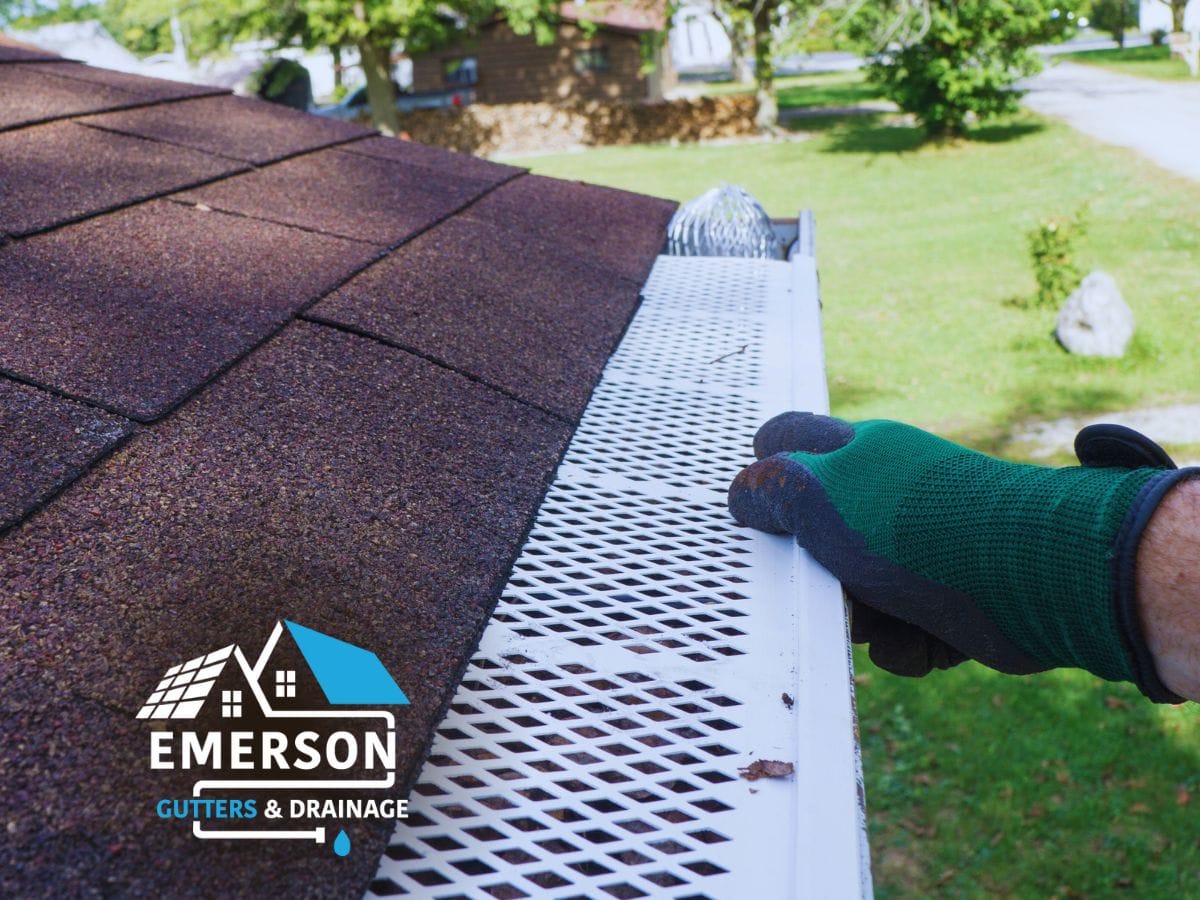
Gutter guards are covers or inserts designed to limit the amount of debris entering a gutter channel. Depending on the design, they may block leaves, twigs, pine needles, seeds, and other materials while allowing rainwater to reach the gutter.
Common types include:
- Micro-mesh guards
- Perforated metal guards
- Standard screens
- Reverse-curve guards
- Brush inserts
- Foam inserts
Each design has different water-flow and maintenance characteristics. A professional gutter contractor should consider the roof, surrounding trees, gutter capacity, and common debris before recommending a product.
Why Seamless Gutters and Gutter Guards Work Well Together
Seamless gutters and guards address two different causes of gutter problems.
- Seamless construction reduces joints along straight runs.
- Gutter guards reduce the amount of large debris entering the channels.
- Correct gutter sizing helps manage roof runoff.
- Proper downspouts transport collected water to ground level.
- Ground drainage carries or disperses the water safely.
When these components are selected and installed as one coordinated system, homeowners may experience more reliable drainage and more manageable maintenance.
1. Fewer Seams Mean Fewer Potential Leak Points
Every joint in a sectional gutter system creates an area that may eventually loosen, shift, or require resealing. Temperature changes, heavy debris, standing water, and storm activity may accelerate wear around those connections.
Seamless gutters reduce the number of joints along straight roof sections. This can provide:
- Fewer areas requiring sealant
- Reduced risk of leaks between sections
- Cleaner water flow
- Less maintenance around joints
- A more uniform appearance
Seamless gutters can still leak at corners, outlets, and end caps, so routine inspection remains important.
2. Gutter Guards Can Reduce Major Clogs
Leaves and debris can prevent water from reaching downspout outlets. When channels become obstructed, water may spill over the front edge or flow behind the gutter.
Gutter guards can reduce the entry of:
- Large leaves
- Twigs
- Seed pods
- Pine needles
- Roof debris
- Small branches
The level of protection depends on the guard design. Standard screens may block large leaves while allowing smaller debris through. Micro-mesh products can block finer material but may need periodic surface cleaning.
3. The Combination Can Make Maintenance More Manageable
Gutter guards do not eliminate gutter cleaning in Dallas, but they may reduce the amount of material accumulating inside the channels.
Maintenance may still involve:
- Removing debris from the guard surface
- Inspecting the gutters beneath the guards
- Clearing downspout outlets
- Flushing the downspouts
- Checking corners and end caps
- Looking for loose guard sections
- Confirming that water reaches the discharge point
The cleaning schedule depends on surrounding vegetation, roof condition, and the specific guard system.
4. Seamless Gutters Provide a Custom Fit
Seamless gutters are formed to match the measurements of the home. This reduces the need to connect multiple short sections along a straight roof edge.
A custom system can account for:
- Roof dimensions
- Roof pitch
- Valleys that concentrate runoff
- Gutter size
- Number of downspouts
- Downspout locations
- Fascia condition
- Ground-level drainage needs
Professional gutter installation in Dallas should be based on the property rather than a standard package.
5. The Upgrade Can Improve Curb Appeal
Old sectional gutters may develop visible gaps, uneven connections, discoloration, or sagging sections. Seamless gutters provide long, consistent lines that can complement the exterior of the home.
Potential appearance benefits include:
- Fewer visible connections
- Custom color options
- Cleaner roofline transitions
- Consistent gutter dimensions
- Better alignment
- Neater downspout placement
Appearance should not take priority over drainage performance, but a correctly installed system can provide both.
6. Better Debris Control Can Support Water Flow
A guard cannot increase the capacity of an undersized gutter, but it can help prevent leaves from blocking the available channel.
Consistent water flow is particularly important around:
- Roof valleys
- Large roof sections
- Interior corners
- Areas below mature trees
- Downspout outlets
- Low-pitch gutter runs
If the existing system overflows even when it is clean, the problem may involve gutter size, pitch, or downspout capacity rather than debris.
7. Reduced Debris May Protect Downspouts
Large debris that enters a gutter can eventually move toward the downspout. Blockages may develop at the outlet, inside an elbow, or within a connected underground pipe.
Gutter guards can reduce the amount of large material entering this path. However, smaller particles can still pass through or collect over time.
Professional downspout repair may be needed when:
- Joints leak
- Sections are dented or crushed
- Water backs up
- Wall straps loosen
- Underground connections separate
- The outlet causes erosion
- Water pools near the foundation
A new gutter-and-guard system should include an inspection of every downspout.
8. Seamless Systems May Reduce Recurring Repair Needs
A localized gutter repair may restore a relatively new system with limited damage. Repeated leaks and separated joints, however, can make ongoing repairs less economical.
An upgrade may be appropriate when:
- Several seams leak
- Multiple sections sag
- Gutters frequently separate
- Corrosion is widespread
- The system is undersized
- Previous repairs have failed
- Downspout placement is inadequate
- Gutters pull away from the fascia
A professional gutter repair service can compare the condition of the existing system with the likely value of replacement.
When Should You Consider Upgrading?
Seamless gutters with gutter guards may be worth considering if you notice:
- Frequent clogs
- Repeated overflow
- Leaking sectional seams
- Sagging gutter runs
- Water stains below the roofline
- Loose hangers
- Soil erosion
- Plants growing inside the gutters
- Water pooling near the foundation
- Downspout blockages
- Extensive storm damage
- Increasing cleaning requirements
Not every symptom requires complete replacement. Cleaning, resealing, realignment, or downspout improvements may solve an isolated problem.
When Repair May Be the Better Choice
Repair may be more practical when:
- Only one seam leaks
- Damage affects a short section
- Most gutters remain securely attached
- Corrosion is minimal
- The fascia is structurally sound
- The system is correctly sized
- The gutters are relatively new
In these cases, a contractor may reseal joints, replace hangers, correct the pitch, reconnect downspouts, or install compatible guards over the existing system.
When Replacement May Offer Better Value
Replacement may be more appropriate when:
- The system has multiple recurring leaks
- Several runs are sagging
- Long sections are corroded
- The gutters are too small for the roof
- Fascia repairs require gutter removal
- The existing system has too few downspouts
- Storm damage affects multiple areas
- Repair costs continue increasing
Replacing the system also provides an opportunity to redesign downspout locations and address drainage problems that were not considered during the original installation.
Choosing the Right Gutter Guard
The best guard depends on the type and amount of debris affecting the property.
| Guard type | Main advantage | Maintenance consideration |
|---|---|---|
| Micro-mesh | Blocks small debris | Surface may require cleaning |
| Perforated metal | Durable and stable | Fine particles may collect |
| Standard screen | Blocks larger leaves | Small debris may pass through |
| Reverse curve | Sheds some large debris | Must be positioned correctly |
| Brush insert | Easy to remove | Debris can become tangled |
| Foam insert | Simple installation | Fine material may collect inside |
A guard should also be able to manage water from the roof. If openings are too restrictive or the product is installed incorrectly, runoff may overshoot the gutter during heavy rain.
Why Professional Installation Matters
Seamless gutter installation requires specialized forming equipment and accurate measurements. The guard system must also be compatible with the gutter, roof material, and expected water flow.
A professional installation should address:
- Gutter size
- Material thickness
- Correct slope
- Hanger type and spacing
- Corner and outlet sealing
- Downspout capacity
- Guard attachment
- Roof compatibility
- Fascia condition
- Final discharge location
Poor installation can cause overflow, standing water, loose gutters, roof-edge problems, and premature system failure.
Inspect the Fascia Before Installation
The fascia must be strong enough to support the new gutters. If water has been flowing behind the existing system, the wood may have softened or deteriorated.
Possible signs of fascia damage include:
- Peeling paint
- Dark stains
- Soft wood
- Visible rot
- Loose fasteners
- Sagging gutters
- Damaged soffits
Necessary fascia repairs should be completed before the new system is attached.
Gutter Guards Are Not Maintenance-Free
Marketing claims sometimes create the impression that guards eliminate gutter cleaning permanently. In practice, every system requires inspection.
Debris may:
- Collect on top of the guard
- Gather in roof valleys
- Enter through openings
- Settle near downspout outlets
- Accumulate beneath guard sections
- Block underground pipes
The product design may reduce cleaning frequency, but actual maintenance requirements depend on the property.
How Often Should Guarded Gutters Be Inspected?
Many homes benefit from inspections during spring and fall. Additional checks may be appropriate after:
- Severe thunderstorms
- Hail
- High winds
- Falling branches
- Heavy leaf drop
- Roof work
- Nearby tree trimming
Homes surrounded by mature trees may need more frequent attention than properties with limited vegetation.
Gutter and Drainage Must Work Together
A premium gutter system cannot protect the property if downspouts release water directly beside the foundation or into low areas.
A complete gutter and drainage plan should answer three questions:
- Where is the water collected?
- How is it transported?
- Where is it safely discharged?
Ground-level solutions may include:
- Downspout extensions
- Solid underground pipes
- Catch basins
- Channel drains
- French drains
- Surface drains
- Grading improvements
Professional drainage services can determine which components are appropriate for the property.
When Are Surface Drains Needed?
Surface drains collect water that pools or flows above ground. They may be appropriate in:
- Low areas of a yard
- Patios
- Driveways
- Walkways
- Courtyards
- Areas near entrances
Surface drains do not replace gutters. Gutters manage roof runoff, while surface drains capture water that has already reached the ground.
If roof water and surface runoff connect to the same underground system, the pipes and outlet must be able to manage the combined volume.
Questions to Ask a Gutter Contractor
Before approving an upgrade, ask:
- What gutter size do you recommend?
- Why is that size appropriate for my roof?
- How many downspouts will be installed?
- Which gutter guard is best for the surrounding trees?
- Can the guard handle concentrated roof-valley runoff?
- Will the old gutters be removed?
- Is fascia repair included?
- How will the gutters be cleaned later?
- Where will downspout water discharge?
- Are drainage improvements necessary?
- What warranties apply?
- What maintenance does the system require?
A reliable gutter contractor should explain both the benefits and limitations of the proposed system.
What Should the Estimate Include?
A detailed estimate for gutter installation in Dallas should identify:
- Gutter material
- Gutter width
- Total linear footage
- Gutter guard product
- Number and size of downspouts
- Hangers and fasteners
- Corners, outlets, and end caps
- Old-system removal
- Fascia repairs
- Downspout extensions
- Underground drainage connections
- Cleanup
- Warranty information
Comparing the complete scope of each quote is more useful than comparing the total price alone.
Professional Gutter Services in Dallas
Upgrading to seamless gutters with gutter guards may provide fewer joints, improved debris control, a cleaner appearance, and more manageable maintenance. The upgrade is most effective when gutters, downspouts, guards, and ground drainage are designed as one system.
Emerson Pro Services provides gutter services in Dallas, including gutter cleaning, gutter repair, seamless gutter installation, gutter guards, downspout repair, and drainage services.
Contact Emerson Pro Services to schedule an inspection and determine whether your existing gutters can be repaired or whether upgrading to a seamless system with gutter guards would provide better long-term performance.
- 📍 Visit us at 16135 Preston Rd Ste 105, Dallas, TX 75248
- 📞 Call us at: 469-212-7906
- 🌐 Visit: www.emersonproservices.com
Frequently Asked Questions
Are seamless gutters better than sectional gutters?
Seamless gutters contain fewer joints along straight runs, reducing potential leak points. Their performance still depends on correct sizing, pitch, fastening, and maintenance.
Do gutter guards eliminate gutter cleaning?
No. Gutter guards can reduce debris inside the channels, but leaves and fine material may still collect on or beneath them. Periodic inspection and cleaning remain necessary.
Can gutter guards be installed on existing gutters?
Yes, if the gutters are structurally sound, correctly pitched, and compatible with the selected guard. Damaged or undersized gutters may need repair or replacement first.
Which type of gutter guard is best?
The best design depends on the roof, surrounding trees, debris type, and expected water flow. Micro-mesh and perforated metal guards are common options, but no single product is right for every property.
Will seamless gutters stop all leaks?
No. They reduce joints along straight sections, but corners, outlets, and end caps can still leak if seals fail or components move.
Can gutter guards cause rainwater to overshoot the gutters?
Yes, an unsuitable or clogged guard may cause runoff to overshoot, especially below steep roofs or valleys. Proper selection, installation, and maintenance are important.
Do new gutters solve yard-drainage problems?
They may solve problems caused by roof overflow, but standing water may also require downspout extensions, underground pipes, grading, French drains, or surface drains.
When should I replace gutters instead of repairing them?
Replacement may be better when leaks are widespread, several sections sag, corrosion is extensive, the system is undersized, or previous repairs repeatedly fail.