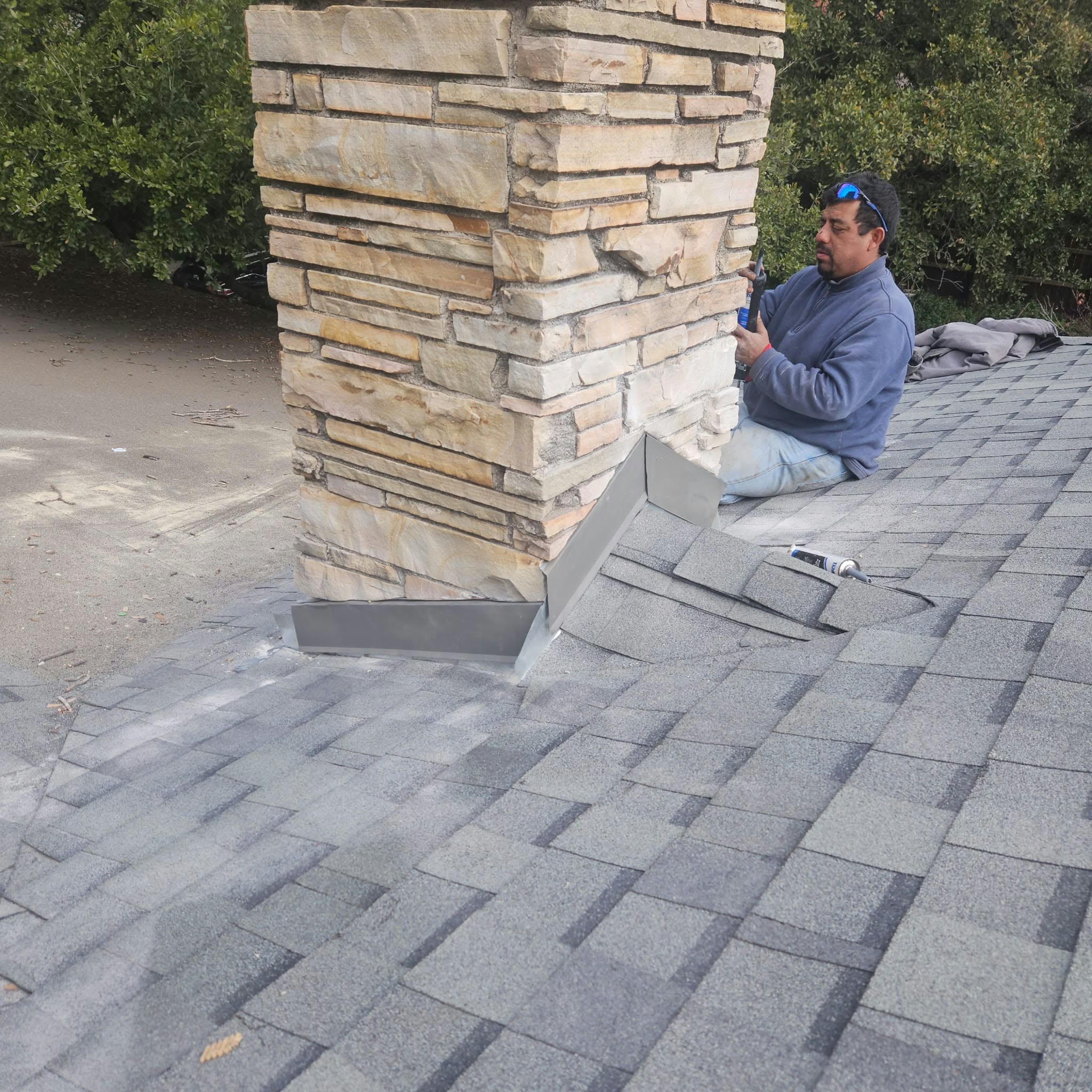


A well-designed gutter system does more than follow the edge of a roof. It must collect the rainwater produced by the roof, handle concentrated runoff, and direct it away from the property. Since every roof has a different size, pitch, shape, and material, the same gutter configuration will not work equally well for every home.
This is particularly important in Garland, where heavy rainfall can quickly overwhelm gutters that are too small, incorrectly positioned, or connected to too few downspouts. Evaluating the roof before installing gutters helps ensure the completed system can manage water efficiently.
Roof Surface Area Affects Gutter Capacity
Larger roofs collect more rainwater than smaller roofs. Even when two homes appear similar from the ground, their total roof areas may differ considerably due to attached garages, covered patios, extensions, and multiple roof levels.
A gutter professional should calculate the area contributing water to each gutter run. Long roof sections may require:
- Wider gutters
- Additional downspouts
- Larger downspout outlets
- Shorter distances between outlets
- More effective ground-level drainage
A gutter that is too small may overflow during heavy rain even when it is clean and properly pitched.
Roof Pitch Changes How Quickly Water Moves
Roof pitch refers to the steepness of the roof. Water flows more quickly from a steep roof than from a low-slope roof, creating a concentrated surge at the gutter.
The faster flow may cause water to:
- Overshoot the gutter edge
- Overwhelm narrow channels
- Splash behind the gutter
- Pour over low sections
- Back up near undersized downspouts
A steep roof may need a higher-capacity gutter system, larger downspouts, or adjustments to gutter positioning. The installer must place the gutter where it can collect runoff without interfering with the roof edge or drainage components.
Roof Valleys Concentrate Rainwater
A roof valley is the internal angle where two roof slopes meet. Valleys collect water from both surfaces and direct it toward one concentrated point along the gutter.
During heavy rain, this area may receive significantly more water than the surrounding roofline. If the gutter is too small or the downspout is too far away, water can spill over the edge.
Possible solutions include:
- Larger gutters
- Additional downspouts
- Wider downspout outlets
- Splash guards at inside corners
- Improved gutter pitch
- Better placement of drainage outlets
Splash guards can help control concentrated flow, but they should not be used to hide a gutter that lacks sufficient capacity.
Complex Rooflines Need Customized Gutters
Homes with simple gable roofs generally have straightforward gutter runs. Properties with complex roofs may contain dormers, multiple valleys, intersecting slopes, extensions, and different elevations.
Each roof section can direct water toward a different point. Without careful planning, one gutter run may receive runoff from several surfaces while another receives very little.
Complex rooflines may require:
- Multiple gutter sections
- Carefully positioned downspouts
- Custom corner connections
- Different gutter sizes
- Additional drainage outlets
- Coordination between upper and lower roofs
Professional roof and gutter services should evaluate how water moves across all roof levels rather than treating each eave as an isolated section.
Multiple Roof Levels Create Additional Runoff
On a multilevel home, upper-roof downspouts may discharge water onto a lower roof. That lower roof must then handle both direct rainfall and runoff from the upper level.
This arrangement can overwhelm the lower gutters and cause premature wear on roofing materials where the water is released.
A better design may involve extending the upper downspout directly into the lower gutter or connecting it to a continuous drainage route. The exact approach depends on the roof design and should avoid creating concentrated flow that damages the shingles or overwhelms the lower system.
Roof Material Influences Water Flow
Different roofing materials affect how water and debris move toward the gutters.
Asphalt Shingles
Asphalt shingles may release granules, particularly as they age or after severe weather. These particles can collect in gutters and downspouts, reducing capacity if they are not removed through routine gutter cleaning.
Metal Roofing
Water can move rapidly across the smooth surface of a metal roof. Gutters must be correctly sized and positioned so runoff does not overshoot the channels during heavy rain.
Snow guards are not usually a primary concern in Garland, but the slick surface and rapid water movement still require thoughtful design.
Tile Roofing
Tile roofs may have uneven edges that affect where water enters the gutters. Installers must avoid damaging the tiles and ensure that gutter placement works with the roof’s profile.
Flat and Low-Slope Roofs
Flat roofs typically use internal drains, scuppers, or specialized edge-drainage systems. These features require different planning than standard residential gutters.
Any new roof installation should consider how the chosen roofing material will interact with the home’s gutter and drainage system.
Overhang and Fascia Design Affect Placement
The roof overhang determines how far water travels before it reaches the gutter. If the gutter is installed too low or too far from the roof edge, runoff may pass behind or over it.
The fascia must also be strong enough to support the gutters when they are filled with rainwater and debris. Before installation, professionals should look for:
- Soft or rotting wood
- Loose fascia boards
- Peeling paint
- Water stains
- Previous fastener damage
- Gaps along the roof edge
Attaching gutters to deteriorated fascia can cause them to sag or separate from the home. Necessary roofline or fascia repairs should be completed before the new system is installed.
Drip Edge and Flashing Direct Water Into the Gutters
A drip edge is installed along the roof perimeter to help direct water away from vulnerable wooden components. When it is damaged, missing, or positioned incorrectly, water may travel behind the gutters.
The relationship between the shingles, underlayment, drip edge, fascia, and gutters is important. A gutter installer may identify visible concerns, but roofing defects should be addressed by a qualified roofing service provider.
Proper coordination prevents a new gutter system from being installed beneath an unresolved roof-edge problem.
Seamless Gutters Accommodate Custom Rooflines
Seamless gutters are fabricated in long sections according to the home’s measurements. Their customized construction makes them suitable for many roof configurations.
Benefits include:
- Fewer joints along straight runs
- Fewer potential leak points
- Custom lengths for the property
- A clean and consistent appearance
- Reduced debris accumulation around seams
- Compatibility with different gutter sizes
Joints are still required at corners and downspout outlets. Complex rooflines require careful sealing and maintenance in these areas.
Gutter Size Must Match the Roof
Residential gutters are available in different widths and profiles. Five-inch gutters are common, but some roofs benefit from six-inch or larger systems.
Higher-capacity gutters may be appropriate when a home has:
- A large roof area
- Steep slopes
- Long gutter runs
- Multiple roof valleys
- Concentrated runoff
- Frequent overflow from clean gutters
- Limited locations for downspouts
Larger gutters alone will not correct every problem. The system must also have adequate downspouts, correct slope, secure hangers, and effective discharge points.
Downspout Placement Begins With Roof Design
Downspouts should be positioned where they can receive water efficiently. A long gutter run with only one outlet may drain too slowly during heavy rain.
The number and location of downspouts depend on:
- Gutter length
- Roof area
- Roof valleys
- Gutter capacity
- Property layout
- Available drainage routes
- Door, window, and walkway locations
Downspouts should not release water where it can damage landscaping, cross a walking surface, or collect beside the foundation.
Damaged, disconnected, or incorrectly positioned components may need professional downspout repair.
Ground-Level Drainage Completes the System
The correct gutters and downspouts will not fully protect a home if water has nowhere safe to go after reaching the ground.
Depending on the property, professional drainage services may recommend:
- Downspout extensions
- Splash blocks
- Underground downspout drains
- Catch basins
- Surface drains
- French drains
- Channel drains
- Grading improvements
The entire drainage path should be evaluated—from the highest point of the roof to the final discharge location.
Roof Installation and Gutter Planning Should Be Coordinated
A new roof installation is an ideal time to evaluate the gutters. Roof replacement can change the drip edge, fascia condition, roof material, and runoff behavior.
Before installing the new roof, homeowners should discuss:
- Whether existing gutters will remain
- How gutters will be protected during roof work
- Whether the fascia needs repair
- How the new drip edge will interact with the gutters
- Whether the existing system has enough capacity
- Whether downspout placement should change
Coordination between roofing and gutter professionals helps prevent damage and ensures both systems work together.
Signs the Gutter System Does Not Match the Roof
A gutter system may be incorrectly sized or configured if you notice:
- Overflow despite clean gutters
- Water overshooting the gutter
- Heavy overflow beneath roof valleys
- Standing water inside gutter channels
- Water leaking behind the gutters
- Frequent downspout backups
- Erosion beneath specific roof areas
- Sagging along long gutter runs
- Water collecting beside the foundation
These warning signs require more than routine cleaning. A professional should examine the roof design, gutter dimensions, slope, outlets, and drainage system.
Routine Maintenance Preserves Performance
Even a properly designed system requires regular gutter maintenance. Leaves, twigs, roofing granules, and other debris can reduce the gutter’s effective capacity.
Maintenance should include:
- Removing debris from the gutter channels.
- Clearing downspout outlets.
- Flushing downspouts and accessible drains.
- Inspecting seams and corners.
- Tightening loose hangers.
- Checking the gutter pitch.
- Examining fascia and roof edges.
- Watching the system during rainfall.
Professional gutter cleaning is especially valuable for multistory homes, complex rooflines, and properties surrounded by trees.
When Gutter Repair Is Enough
Not every drainage problem requires a complete replacement. Professional gutter repair may correct localized concerns such as:
- One leaking corner
- A loose hanger
- A separated downspout
- Minor pitch problems
- An isolated damaged section
- A clogged outlet
- A loose end cap
However, replacement may be more appropriate when the gutters are undersized for the roof, extensively damaged, or incorrectly designed.
Choose the Right Gutter System for Your Garland Home
The correct gutter system depends on much more than the length of the roof edge. Roof area, pitch, valleys, material, overhangs, and number of levels all influence how rainwater enters and moves through the gutters.
Emerson Pro Services provides gutter services in Garland, including installation, seamless gutters, repair, cleaning, maintenance, downspout repair, and drainage services. The team can evaluate your roof and surrounding property before recommending a system designed for reliable water management.
Contact Emerson Pro Services to schedule an inspection and find the right gutter solution for your Garland home.
For gutter guards, gutter inspections, gutter cleaning, repairs, or residential and commercial gutter installations in Garland, Texas, contact Emerson Pro Services. Visit emersonproservices.com or call
(214) 972-0811 to discuss your property’s gutter and drainage needs.
Frequently Asked Questions
Does a steep roof need larger gutters?
A steep roof moves water more quickly and may require larger gutters, additional downspouts, or adjusted gutter placement. The correct design depends on the total roof area and local rainfall.
Why do gutters overflow beneath roof valleys?
Roof valleys concentrate runoff from multiple slopes into one location. The nearby gutter may be undersized, clogged, incorrectly pitched, or too far from a downspout.
Are seamless gutters suitable for complex roofs?
Yes. Seamless gutters can be fabricated to fit individual roof runs. Complex rooflines will still require joints at corners and carefully positioned downspouts.
Should gutters be replaced during roof installation?
Not always. Gutters in good condition may remain, but they should be evaluated for damage, capacity, and compatibility with the new roof and drip edge.
How many downspouts does a home need?
The answer depends on roof area, gutter length, gutter capacity, roof valleys, and rainfall. A professional should calculate the number and placement for the specific property.
Can roof problems cause water to leak behind gutters?
Yes. Damaged drip edges, deteriorated fascia, incorrect roofing installation, and poor gutter placement may allow water to travel behind the system.