

New gutters should do more than improve the appearance of your roofline. They need to collect runoff, carry it through suitable downspouts, and deliver it to an appropriate discharge location.
Professional gutter installation starts with planning that complete water path. Measurements, material selection, sound attachment, and drainage details all affect how the finished system performs.
If you are scheduling work at your home in Plano, TX, understanding the process helps you compare estimates and prepare for installation day. Here is what to expect when discussing your project with Emerson Pro Services.
1. An Assessment of Your Existing Gutters and Roofline
The first visit should establish what the home needs. A new installation on a house without gutters differs from a gutter replacement project involving damaged runs or recurring overflow.
The assessment may consider:
- Existing gutter condition and previous repairs.
- Roof edges, valleys, and areas of concentrated runoff.
- Fascia condition and suitable attachment points.
- Downspout locations and discharge routes.
- Trees and nearby sources of debris.
- Access around the home.
- Water pooling or erosion reported by the homeowner.
Point out where problems occur during rainfall. Photographs of overflow or pooling can help explain symptoms that are not visible on a dry day.
An assessment should also distinguish a blockage from a design or condition problem. Sometimes gutter cleaning or a localized repair is sufficient; replacement should have a clear reason.
2. Measurements and a System Layout
Gutters are measured along the roof edges where they will be installed. Your home’s floor area alone does not determine the required gutter length.
The contractor should plan individual runs, corners, outlets, and downspouts. Capacity depends on factors including the roof area draining to each section, roof geometry, rainfall design conditions, and outlet arrangement.
A larger gutter is not a complete solution if downspouts restrict the flow. Both components need to work together.
Downspout placement should also account for doors, paths, patios, landscaping, and where the water can discharge. This is the stage to discuss concerns about appearance or access rather than waiting until the gutters are attached.
3. Material, Profile, and Color Selection
You will usually discuss gutter material, profile, size, and finish before approving the installation.
For homeowners considering seamless gutters in Plano, continuous runs can reduce the number of intermediate joints along the roofline. The system still has connections at corners, end caps, outlets, and other necessary details.
Ask the contractor to specify the proposed material and thickness rather than describing the product only as “seamless.”
Color samples can help you decide whether to match the trim, roof, or another exterior feature. Appearance matters, but capacity, support, and compatibility with the roof edge should guide the technical choices.
4. A Written Installation Proposal
Before work begins, review a proposal that describes the full scope.
| Proposal item | What to confirm |
|---|---|
| Gutter runs | Which roof edges are included |
| Materials | Profile, size, thickness, and finish |
| Downspouts | Sizes, quantities, locations, and discharge details |
| Existing gutters | Removal and disposal arrangements |
| Fascia and roof-edge work | Repairs included or excluded |
| Gutter guards | Whether they are optional or included |
| Drainage connections | What is included beyond the downspout |
| Project schedule | Expected duration and weather considerations |
| Warranty | Product and workmanship coverage and exclusions |
Ask how newly discovered damage will be documented and priced. Written change approval helps prevent confusion if deteriorated fascia becomes visible after old gutters are removed.
When comparing gutter services in Plano, compare these details alongside the price. Different scopes can produce very different estimates.
5. Preparing Your Home for Installation Day
Your contractor should explain what access the crew needs. Common preparation includes moving vehicles away from the work area and relocating outdoor furniture, planters, or other movable items beneath the roofline.
Keep pets and children away from ladders, materials, and equipment. Let the crew know about gates, fragile landscaping, irrigation components, and areas that need special care.
Ask whether you need to be home and who will be available to approve any changes. If the proposal includes a controlled flow check, confirm whether access to an outdoor water supply is needed.
Do not climb onto the roof or remove existing gutters in advance unless that work has been specifically arranged.
6. Removing Old Gutters and Checking the Supporting Surface
During gutter replacement, existing gutters and attachments are removed as appropriate to the scope.
This can expose deteriorated fascia or other conditions that were concealed. New gutters need suitable backing, so damaged supporting material should be evaluated before installation continues.
If additional work is necessary, expect the contractor to explain the condition and proposed correction. Roof repairs, fascia replacement, and painting should not be assumed to be included unless the agreement says so.
7. Forming and Installing the Gutter Runs
For many seamless installations, the crew forms gutter lengths using equipment brought to the property. Each run is prepared to suit its location.
The installer then positions and secures the gutters using compatible components and attachment details. Alignment should direct water toward outlets, while support needs to suit the material, layout, and installation requirements.
Roof-edge integration is also important. Water should enter the channel rather than travel behind it.
Professional gutter installation involves more than attaching a visually straight run. It needs to account for how runoff reaches the gutter and moves through the system.
8. Installing Downspouts and Planning Discharge
Downspouts connect to the gutter outlets and carry collected water down to the planned discharge points. Elbows, brackets, and extensions should suit the layout and intended route.
This is where gutters connect with broader drainage solutions.
Depending on the property, the plan may involve a suitable surface discharge, extensions, or a designed connection to another drainage system. Connecting to an existing buried pipe should not be treated as proof that the pipe is clear or adequate.
If you need drainage service in Plano, TX, ask whether downstream assessment is included. The plan should identify where water will go and avoid creating pooling elsewhere or directing runoff onto a neighboring property.
9. Adding Gutter Guards, If Selected
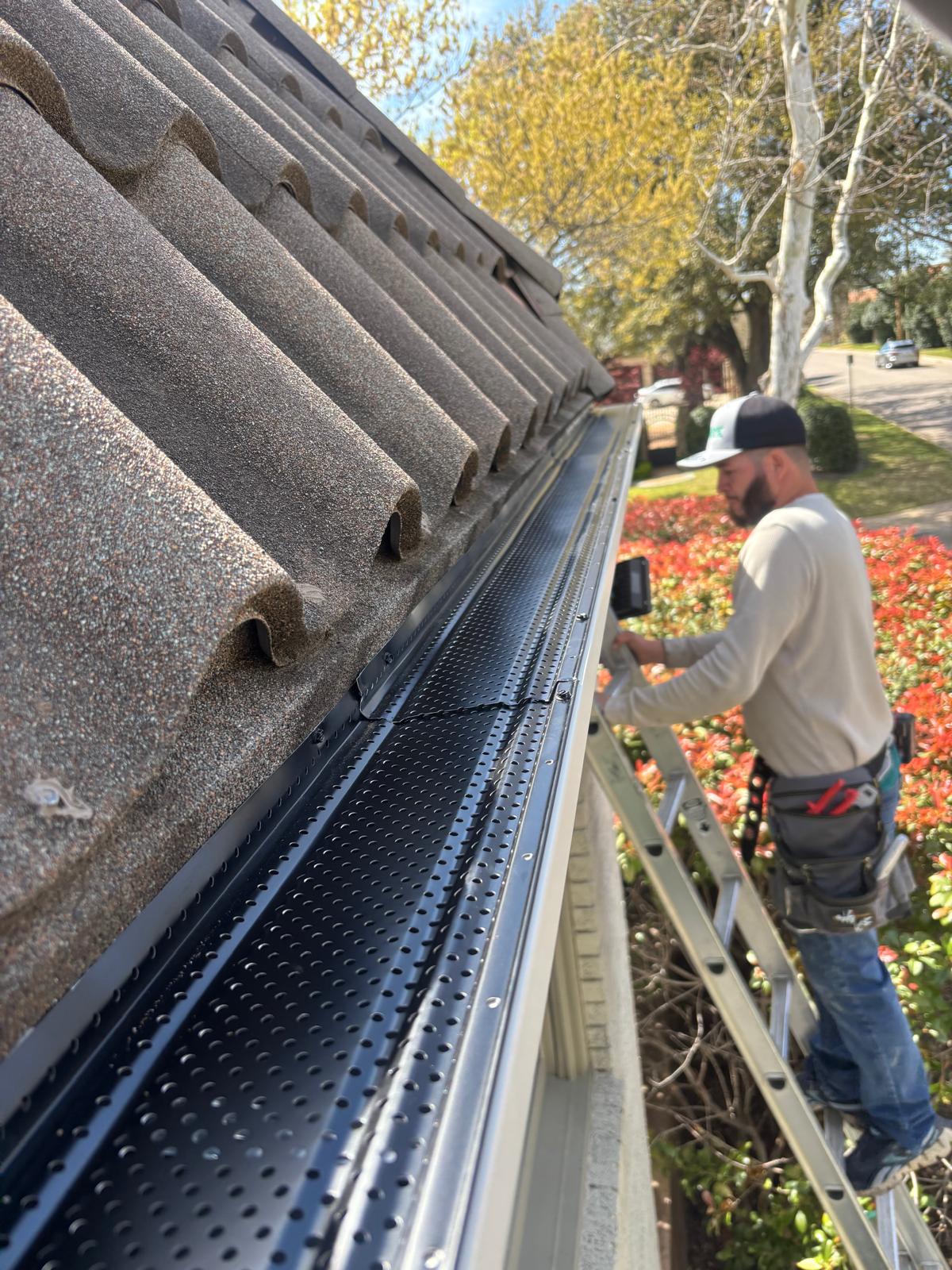
Gutter guards may be installed as part of the project when specified. Selection should account for tree debris, roof conditions, gutter profile, and maintenance access.
Guards can reduce some debris entering the channel, but they do not eliminate cleaning or inspection. Their surfaces and outlets can still need attention.
Ask how the product will be serviced and whether removing it affects any warranty. A new system should remain accessible for future gutter maintenance.
10. Final Checks, Cleanup, and Handover
Before the project is closed out, discuss the checks included in the installation.
These may involve reviewing alignment and attachment, checking connections and outlets, and performing a controlled water test where appropriate. A hose test can help reveal certain installation issues, but it does not reproduce every storm condition.
The crew should remove agreed project debris and explain any follow-up items.
During the walkthrough, confirm:
- The completed layout matches the approved scope.
- Downspouts discharge where planned.
- Any changes are documented.
- Warranty information is available.
- Maintenance and guard-care instructions are clear.
- You know whom to contact if a concern appears during rain.
Observe the system from a safe ground-level location during later rainfall. Report overflow, fresh leaks, or water traveling behind the gutter.
How Long Does Professional Gutter Installation Take?
Duration depends on gutter length, building height, access, roofline complexity, removal work, weather, and any supporting repairs.
A straightforward project may be completed in a day, while larger or more complicated work can take longer. Ask for a project-specific estimate rather than assuming every installation follows the same schedule.
Rain, high winds, or unsafe conditions can affect work. Discuss how scheduling changes will be communicated.
What Maintenance Will Your New Gutters Need?
New gutters still require attention. Leaves, seeds, twigs, and sediment can restrict flow regardless of whether the gutters are seamless.
Establish a cleaning schedule based on tree cover and actual buildup. Check from the ground after storms for displaced parts, visible debris, or changed performance.
If you have guards, follow the product’s care requirements. Do not assume that fewer leaves inside the channel means the entire system can be ignored.
Promptly reporting small problems can help prevent repeated overflow and unnecessary damage.
Plan Your Plano Gutter Installation With Emerson Pro Services
A successful installation starts with understanding the home’s runoff needs and ends with a clear maintenance plan.
Emerson Pro Services offers gutter installation, replacement, cleaning, guard, and drainage services for homeowners in the surrounding DFW area. Plano homeowners can request an assessment and discuss a layout suited to their roofline and property.
Visit Emerson Pro Services in Plano to ask about professional gutter installation, replacement options, and coordinated drainage improvements.
Frequently Asked Questions
How do I prepare for professional gutter installation?
Clear movable items from work areas, provide agreed access, move vehicles as requested, and keep pets and children away from the crew. Confirm any water-supply or on-site contact requirements beforehand.
Does gutter installation include removing old gutters?
It may, but the proposal should specify removal and disposal. Do not assume these services are included in every estimate.
Can new gutters be installed over damaged fascia?
Damaged supporting material needs evaluation and appropriate repair before new gutters are attached. Ask whether fascia work is included or priced separately.
Are seamless gutters completely leakproof?
No. They reduce intermediate joints along continuous runs but still have connections and can develop defects or damage. Proper installation and maintenance remain necessary.
Can gutter guards be installed at the same time?
Yes, compatible guards can be included in the project. Discuss debris type, roof conditions, maintenance access, and warranty terms before selecting a product.
Will gutter replacement fix yard drainage problems?
Not necessarily. Downspout discharge, grading, or existing drains may also need attention. Ask for assessment of the complete route water follows.
How much does professional gutter installation cost in Plano?
Cost depends on material, length, height, access, downspouts, removal, supporting repairs, guards, and drainage work. A measured assessment provides the basis for an itemized estimate.
Do I still need gutter cleaning after installation?
Yes. New gutters can collect debris, and guards do not eliminate maintenance. Schedule inspection and cleaning according to the conditions around your home.