

New Jersey homeowners put plenty of thought into shingles, flashing, and roof inspections. Yet one of the most important parts of managing roof runoff sits along the roof’s edge: the gutters.
When gutters work properly, they collect rainwater and direct it into downspouts, helping move water away from vulnerable roof edges and the home below. When they clog, leak, or pull away from the house, that same runoff can repeatedly soak fascia, siding, and surrounding soil.
From autumn leaves to winter freezing conditions, New Jersey homes face seasonal challenges that make gutter maintenance an important part of roof care. Here is how a functioning system helps protect your property and when professional attention may be needed.
How Gutters Help Protect Your Roof
Your roof sheds water, but that water still needs a controlled path to the ground. Gutters collect runoff along the eaves and carry it toward downspouts. The downspouts then discharge it into an appropriate drainage route.
For this process to work, gutters need sufficient capacity, secure supports, properly sealed connections, and a slope that directs water toward the outlets. A blockage or installation problem can interrupt the entire system.
Although gutters cannot fix damaged shingles or defective flashing, they help manage the water leaving the roof and reduce unnecessary wetting around its edges.
Reduce Moisture Exposure at Fascia and Roof Edges
Fascia boards run along the roofline and often support the gutters. When water overflows or leaks behind a gutter, these boards can remain wet long after a storm ends.
Repeated exposure to moisture can contribute to wood decay, peeling paint, and deterioration around the eaves. If damaged fascia can no longer hold gutter fasteners securely, sections may begin to sag or detach.
Timely gutter repair helps address leaking joints, loose brackets, and alignment issues before they cause further strain on the roofline. Water behind a gutter may also indicate a drip-edge or flashing problem, so the cause should be inspected rather than simply sealed over.
Keep Leaves and Debris From Blocking Runoff
Autumn foliage can create a substantial maintenance challenge for New Jersey properties, especially where branches extend near the roof. Leaves, twigs, and other debris can collect in gutters and block downspout openings.
During rainfall, a blocked system may overflow onto fascia, siding, walkways, and landscaping. Wet debris also adds weight to the gutter system and can conceal small leaks or corrosion.
Professional gutter cleaning should address both the channels and the downspouts. Clearing visible leaves alone may leave a blockage farther down the system. Checking water flow helps confirm that runoff can reach the intended discharge point.
Support Winter Water Management
Snowmelt and freezing temperatures create additional challenges around the eaves. Water trapped in clogged or poorly draining gutters can freeze, adding weight and obstructing drainage.
However, clean gutters alone do not prevent ice dams. Ice dams generally develop when uneven roof temperatures allow snow to melt higher on the roof and refreeze at colder eaves. Attic air leakage, insulation, and ventilation may need attention as part of a broader solution.
Keeping gutters clear helps maintain drainage when conditions allow water to flow. If ice repeatedly accumulates along your roofline, have both the roof and gutter system evaluated instead of treating the gutter as the only cause.
Protect More Than the Roofline
The value of gutters continues beyond the eaves. Without controlled runoff, water can pour off the roof and repeatedly strike the ground close to the house.
That concentrated flow can erode soil, splash moisture onto siding, and contribute to water accumulation near the foundation. A downspout that empties directly beside the home may simply move the problem from the roof edge to ground level.
This is why gutter and drainage planning should consider the full route water takes. Depending on the property, drainage services may involve evaluating downspout extensions, underground connections, discharge points, or grading concerns.
A clear gutter does little good if its outlet sends water somewhere that cannot handle it.
How Seamless Gutters Can Help
Seamless gutters are formed in continuous lengths for individual sections of the roofline. Compared with sectional systems, they have fewer intermediate seams where leaks can develop.
They still have connections at corners, outlets, and end caps, and those areas require inspection. Seamless gutters also need correct sizing, slope, and fastening to work effectively.
For New Jersey homeowners replacing a deteriorated system, seamless gutters are worth discussing during an assessment. The right design should account for the roof layout, water volume, and downspout placement rather than appearance alone.
Are Gutter Guards Worth Considering?
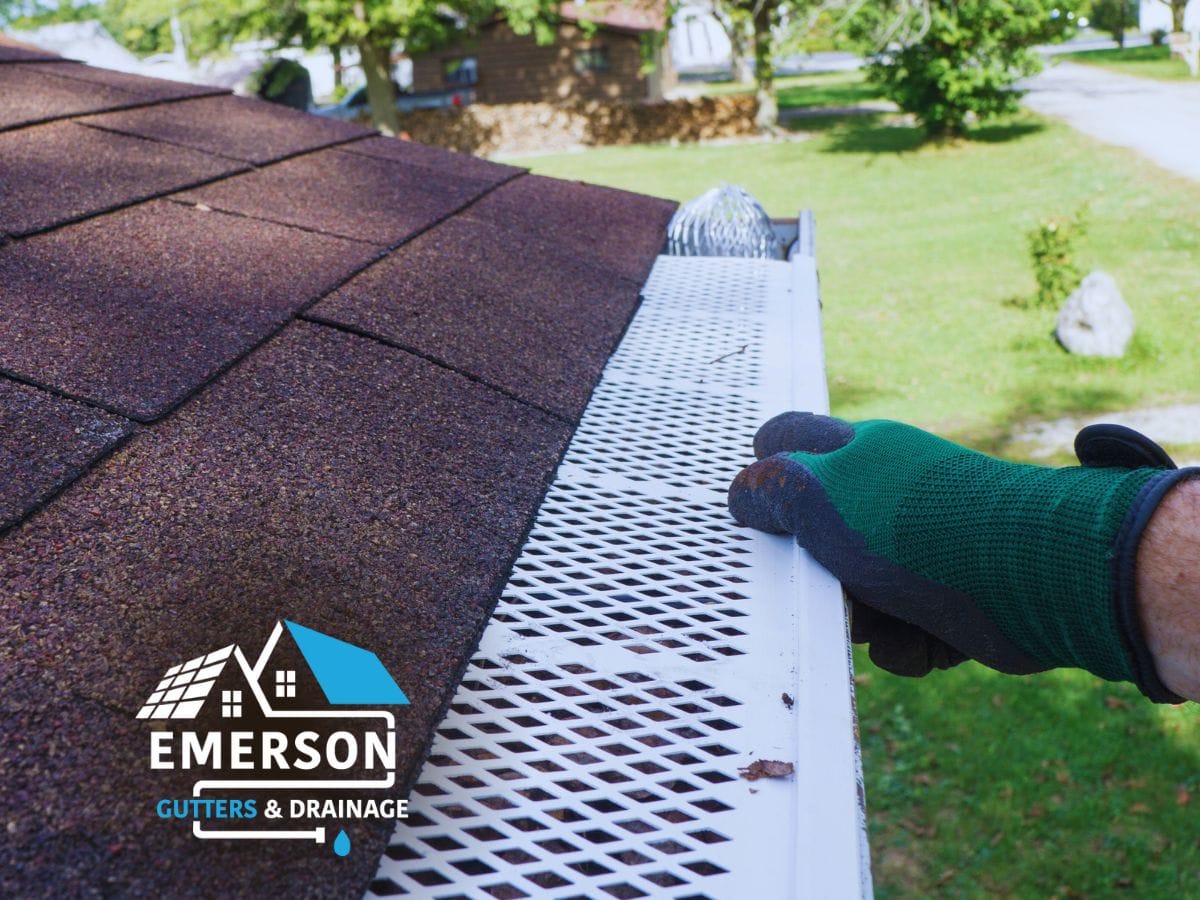
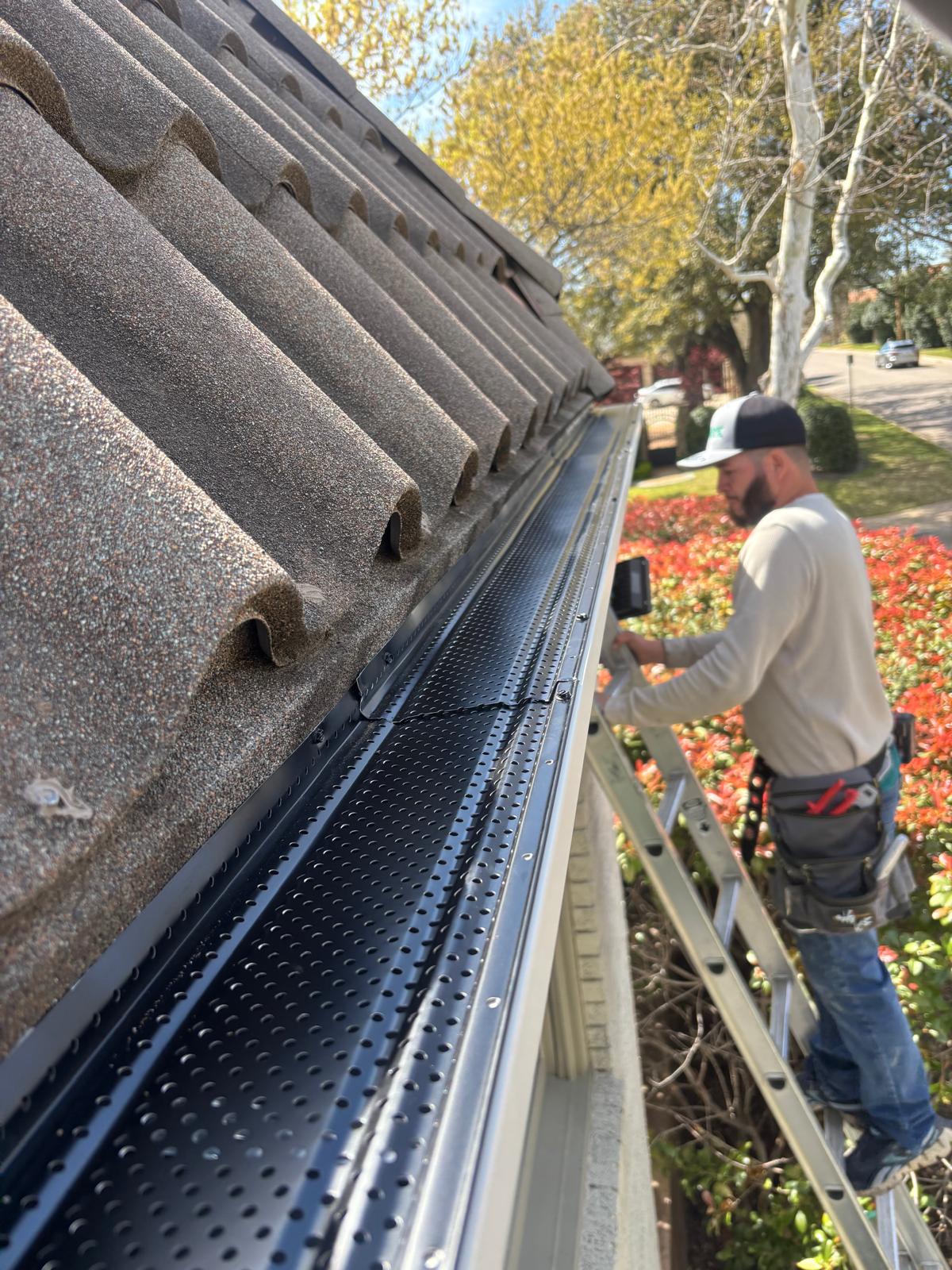
Gutter guards can reduce the amount of leaves and larger debris entering the gutter channels. They may be useful for homes near trees or properties where seasonal leaf buildup is a recurring problem.
Their performance depends on the guard design, surrounding vegetation, installation, and rainfall conditions. Fine debris may still enter some systems, and material can collect on top of the guards.
Gutter guards reduce certain maintenance demands, but they do not eliminate gutter cleaning or inspections. A professional can help determine whether guards suit your roofline and explain how the selected system should be maintained.
Signs You Need Gutter Repair
Some gutter problems are easy to spot from the ground. Arrange an inspection if you notice:
- Water overflowing during rain.
- Gutters sagging or separating from the fascia.
- Drips from seams, corners, or end caps.
- Water flowing behind the gutters.
- Rust holes, splits, or damaged sections.
- Peeling paint or dark staining near the roofline.
- Downspouts that discharge little water despite steady rainfall.
- Soil erosion or persistent puddles near discharge points.
Overflow does not always mean a gutter needs replacement. A blockage, incorrect slope, inadequate capacity, or poorly positioned outlet may be responsible. Identifying the cause helps determine whether cleaning, gutter repair, or a redesigned section is appropriate.
Plan Gutter Maintenance Around New Jersey Seasons
A practical gutter maintenance schedule should reflect the trees around your home, the condition of the system, and how quickly debris collects.
Spring and the period after the main autumn leaf fall are useful inspection points. Properties with heavy tree cover may require more frequent attention. It also makes sense to look for visible damage after strong winds or storms.
Routine care should include removing debris, clearing downspouts, checking fasteners and connections, and confirming that water reaches an appropriate discharge location. Inspecting fascia and nearby roof edges can also reveal moisture problems early.
For steep roofs, multiple stories, or difficult access, professional gutter services can help homeowners avoid hazardous ladder and roof work.
Protect Your New Jersey Home With Emerson Pro Services
Reliable gutters are an important part of protecting your roofline and managing water around your home. Cleaning blockages, correcting leaks, and improving discharge routes can help prevent recurring moisture exposure from becoming a larger repair problem.
Contact Emerson Pro Services to discuss gutter services for your New Jersey property. Whether you are considering gutter cleaning, gutter repair, seamless gutters, or gutter guards, start by assessing how your existing system handles runoff.
A thoughtful approach to gutter and drainage maintenance helps protect the roof edge, exterior, and surrounding property through changing seasons.
Frequently Asked Questions
Can clogged gutters cause roof leaks?
Clogged gutters can contribute to water backup and moisture exposure near the eaves. Whether that results in an interior leak depends on the roof’s construction, flashing, underlayment, and existing condition. A leak should be inspected to identify its actual source.
How often should gutters be cleaned in New Jersey?
The right frequency depends on nearby trees and debris buildup. Spring and late fall are useful starting points for inspections and cleaning, with additional service when leaves, storms, or visible overflow indicate a problem.
Do seamless gutters require maintenance?
Yes. Seamless gutters have fewer intermediate joints, but they can still clog, sag, or leak at connections. Regular cleaning and inspections remain necessary.
Do gutter guards eliminate gutter cleaning?
No. Gutter guards can reduce debris entering the channels, but their surfaces, gutter interiors, and downspouts still need periodic inspection and cleaning.
When should gutters be replaced instead of repaired?
Replacement may make sense when damage is widespread, multiple sections repeatedly leak, or the system cannot handle runoff even after blockages and alignment issues are addressed. An inspection can help distinguish isolated repair needs from broader design or deterioration problems.
Why should gutter and drainage systems be evaluated together?
Gutters collect roof runoff, while downspouts and the downstream drainage route determine where it goes. Evaluating the full system helps avoid redirecting water from the roofline into a problem area beside the home.
Contact Details:
769 US-9 Hwy Unit 3B, Berkeley Township, New Jersey
732-913-3871 / 732-647-9850