






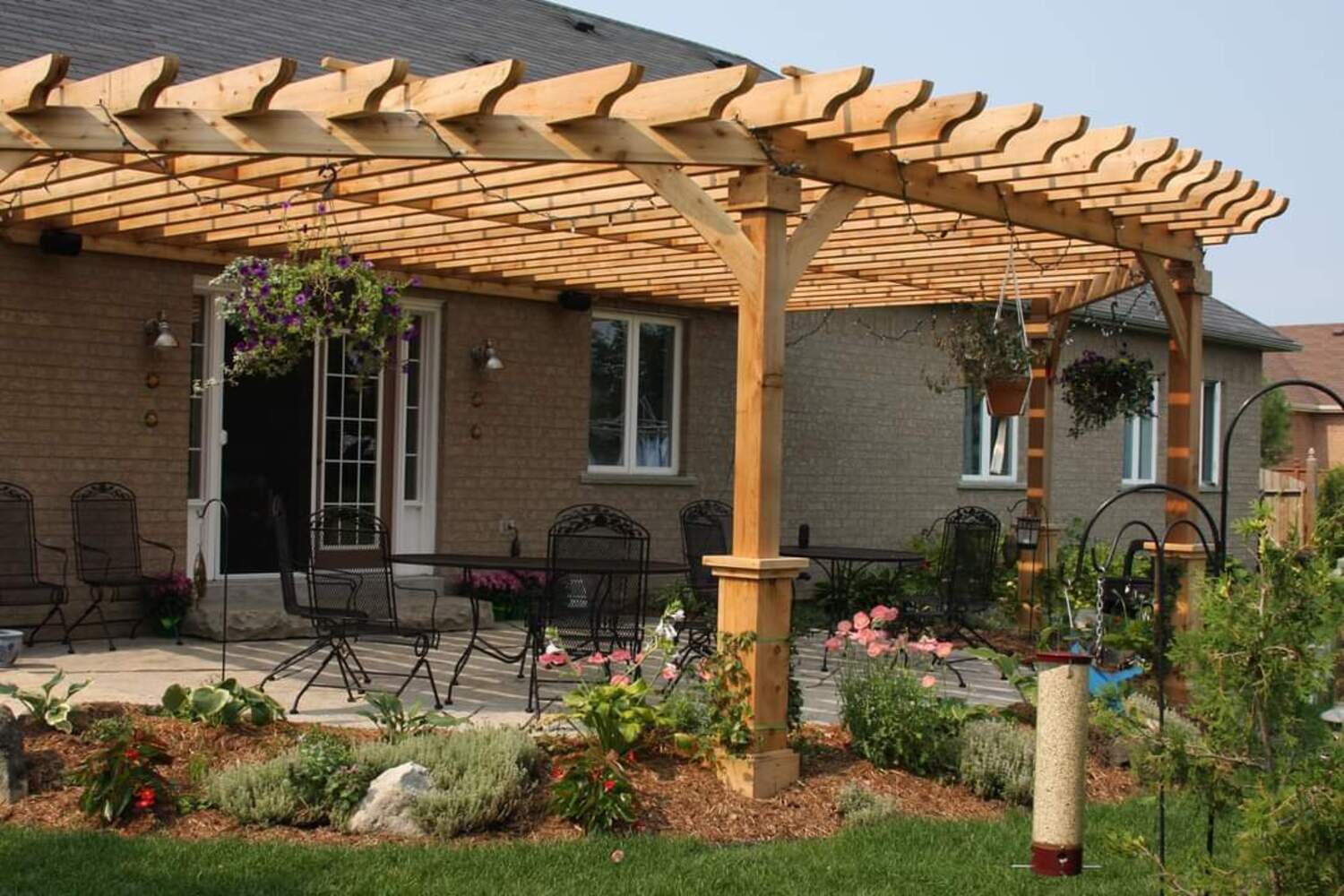
A pergola can define a seating area, provide partial shade, support lighting, and make a backyard feel like an extension of the home. One of the first decisions homeowners must make is whether to build with wood or aluminum.
Both materials can create an attractive and functional structure, but they differ in appearance, initial cost, maintenance, weight, customization, weather resistance, and long-term performance. Aluminum pergolas generally require less routine upkeep, while wooden pergolas offer natural character and extensive design flexibility.
For homeowners in Dallas and throughout North Texas, the right choice should also account for intense sunlight, high temperatures, thunderstorms, strong winds, hail, occasional freezing weather, and seasonal moisture.
What Is a Pergola?
A pergola is an outdoor structure usually built with vertical posts supporting beams, rafters, slats, or louvers. Traditional designs provide filtered shade rather than complete protection from rain.
Pergolas may be:
- Freestanding
- Attached to the house
- Installed over a patio
- Built beside a swimming pool
- Placed above an outdoor kitchen
- Used to define a garden
- Integrated with artificial turf
- Equipped with fixed slats
- Designed with adjustable louvers
- Enhanced with lighting, fans, screens, or curtains
A pergola is not automatically the same as a solid patio cover. If complete rain protection is a priority, the roof design, drainage, slope, flashing, and product classification must be considered during planning.
What Are Wooden Pergolas?
Wooden pergolas are commonly constructed from cedar, redwood, pressure-treated lumber, or another exterior-rated wood. Their appearance can range from rustic and traditional to clean and modern.
Wood can be:
- Cut into custom dimensions
- Painted
- Stained
- Sealed
- Carved or shaped
- Combined with masonry columns
- Coordinated with wood fencing or decking
- Modified later to support selected features
The performance of a wooden pergola depends on the species, grade, treatment, design, fasteners, finish, installation, and maintenance.
What Are Aluminum Pergolas?
Aluminum pergolas use extruded or formed aluminum posts, beams, rafters, slats, or louvered components. Many systems are factory-finished with a powder coating or another protective surface.
Design options may include:
- Fixed slats
- Adjustable louvers
- Motorized louvers
- Integrated drainage
- Built-in lighting channels
- Privacy screens
- Retractable shade components
- Modern colors and finishes
- Wood-look coatings
- Freestanding or attached configurations
Some aluminum systems are prefabricated, while others are custom-designed for the property.
Wood vs. Aluminum Pergolas at a Glance
| Feature | Wooden pergolas | Aluminum pergolas |
|---|---|---|
| Appearance | Natural, warm, and traditional | Clean, modern, and streamlined |
| Customization | Highly adaptable on site | Depends on the manufacturer or system |
| Initial cost | Varies by wood and design | Often higher for engineered or louvered systems |
| Maintenance | Requires regular inspection and finishing | Generally requires less routine maintenance |
| Moisture response | Can absorb water, swell, or rot | Does not rot |
| Insect concerns | Susceptible depending on wood and treatment | Not vulnerable to wood-eating insects |
| Weight | Generally heavier | Relatively lightweight |
| Finish options | Paint and stain | Factory colors and specialty coatings |
| Heat | Surface temperature varies by finish | Dark metal can become hot in direct sun |
| Repairs | Individual wood components may be replaceable | Parts may depend on the original manufacturer |
| Automation | Possible with added systems | Common in motorized louvered designs |
| Design style | Traditional, rustic, transitional, or modern | Contemporary, transitional, or architectural |
The best choice depends on how the pergola will be used and how much ongoing upkeep the homeowner is prepared to perform.
Appearance and Architectural Style
Material selection should complement the house rather than look like an unrelated addition.
The Appearance of Wood
Wood offers:
- Natural grain
- Warm color
- Traditional character
- Rustic detailing
- Decorative cuts
- Compatibility with stains
- Easy coordination with wood decks and fences
Wood can be especially suitable for traditional, farmhouse, Craftsman, rustic, and transitional homes.
The Appearance of Aluminum
Aluminum offers:
- Straight lines
- Consistent surfaces
- Slimmer-looking profiles
- Modern finishes
- Uniform colors
- Integrated mechanical features
- A clean architectural appearance
Aluminum can complement contemporary properties, but wood-look finishes and decorative profiles may also suit traditional homes.
The pergola color should coordinate with exterior paint, brick, stone, roofing, windows, gutters, fencing, and other outdoor living elements.
Initial Cost
Project cost depends on much more than the material alone.
Factors may include:
- Pergola dimensions
- Freestanding or attached design
- Site access
- Foundation requirements
- Custom fabrication
- Wood species
- Aluminum profile
- Fixed or adjustable roof
- Manual or motorized louvers
- Lighting
- Fans
- Electrical work
- Screens
- Drainage
- Permits
- Patio preparation
- Engineering requirements
A simple pressure-treated wood pergola may have a lower initial cost than a customized aluminum louvered system. However, premium hardwood, large beams, decorative details, and extensive finishing can increase the price of a wood structure.
Compare complete proposals rather than material prices alone.
Maintenance Requirements
Maintenance is one of the most significant differences between wood and aluminum.
Wooden Pergola Maintenance
Wood may require:
- Cleaning
- Inspection for rot
- Inspection for insects
- Repainting or restaining
- Resealing
- Repair of cracks or splits
- Replacement of deteriorated boards
- Fastener inspection
- Vegetation management
- Monitoring areas near the ground
The maintenance schedule depends on the wood, finish, exposure, design, and manufacturer recommendations.
Aluminum Pergola Maintenance
Aluminum generally needs:
- Surface cleaning
- Inspection of coatings
- Fastener checks
- Drainage-channel cleaning
- Louver inspection
- Seal inspection
- Motor and control checks
- Removal of leaves and debris
- Touch-up of approved coating damage
Aluminum does not rot, but it is not maintenance-free. Moving parts, drainage channels, electrical components, and finishes still require attention.
Resistance to Moisture and Rot
Wood can absorb moisture if it is not adequately protected. Repeated wetting may lead to:
- Swelling
- Warping
- Splitting
- Finish failure
- Fungal decay
- Softened material
- Loose connections
Design details can help protect wood by keeping posts away from standing water, using suitable bases, providing drainage, sealing cut ends, and selecting appropriate exterior finishes.
Aluminum does not absorb water or rot. However, drainage still matters. Standing water can stain surfaces, collect debris, affect fasteners, or enter connected parts of the structure.
Insect Resistance
Termites, carpenter ants, and other wood-damaging insects may affect wooden structures. Risk depends on the material, treatment, moisture exposure, and local conditions.
Helpful measures may include:
- Using properly treated or naturally resistant wood
- Keeping soil and mulch away from vulnerable components
- Correcting water accumulation
- Inspecting joints and posts
- Maintaining protective finishes
- Addressing insect activity promptly
Aluminum is not a food source for wood-eating insects, giving it an advantage in this category.
Performance in North Texas Sun and Heat
Pergolas in Dallas may receive prolonged direct sunlight and high summer temperatures.
Wood in Direct Sun
Sunlight can contribute to:
- Fading
- Drying
- Surface checking
- Finish deterioration
- Uneven color
- Warping
- Repeated expansion and contraction
Regular finishing can help protect the wood and maintain its appearance.
Aluminum in Direct Sun
Dark aluminum surfaces may become hot to the touch. Ultraviolet exposure can also affect lower-quality finishes over time.
When selecting aluminum pergolas, consider:
- Finish color
- Coating quality
- Product warranty
- Sun orientation
- Shade pattern
- Touch points
- Nearby seating
- Ventilation
Lighter finishes may absorb less heat than very dark colors, although actual performance depends on the product and exposure.
Wind and Storm Considerations
Pergolas are open structures, but they still experience significant wind forces. Posts, beams, rafters, louvers, fasteners, footings, and attachment points must work together.
Storm performance depends on:
- Structure size
- Height
- Roof configuration
- Open or closed louvers
- Post spacing
- Footing design
- Attachment to the house
- Fasteners
- Product ratings
- Installation
- Site exposure
A lightweight material does not mean a lightweight foundation is acceptable. Aluminum pergolas must still be secured according to the system design and site conditions.
Motorized louvered systems should be operated according to the manufacturer’s severe-weather instructions.
Hail Resistance
Hail can affect both materials.
Wood and Hail
Hail may cause:
- Dents
- Splintering
- Finish damage
- Chipped paint
- Exposed wood fibers
Minor marks may be refinished, while split or structurally damaged components may require replacement.
Aluminum and Hail
Hail may cause:
- Cosmetic dents
- Scratched coatings
- Bent louvers
- Damaged drainage channels
- Problems with moving parts
Cosmetic dents may not affect structural performance, but deformed louvers or open seams can interfere with operation and drainage.
No pergola material is completely hail-proof.
Durability and Long-Term Performance
Aluminum generally offers strong resistance to rot, insects, and moisture. Wood can also provide dependable performance when it is properly selected, installed, and maintained.
Long-term performance depends on:
- Product quality
- Structural design
- Foundation
- Drainage
- Fastener compatibility
- Finish
- Installation
- Environmental exposure
- Maintenance
- Storm damage
- Nearby landscaping
A poorly installed aluminum pergola may fail sooner than a carefully built and maintained wood structure. Workmanship and site preparation remain important for both options.
Structural Weight
Aluminum is relatively lightweight, which can simplify handling and reduce the weight placed on some supporting surfaces. Wood is generally heavier, particularly when large beams are used.
Before installing either material over an existing patio, deck, roof terrace, or raised platform, confirm that the surface and structure can support the pergola and resist wind loads.
Do not assume an existing concrete slab is suitable for anchoring. The contractor may need to evaluate:
- Slab thickness
- Concrete condition
- Reinforcement
- Edge distance
- Cracks
- Post locations
- Footing requirements
- Underground utilities
- Drainage slope
Customization
Wood Customization
Wood is highly adaptable. Carpenters can modify dimensions, spacing, profiles, and decorative details at the site.
Possible features include:
- Curved rafter tails
- Decorative end cuts
- Lattice
- Custom columns
- Built-in benches
- Planter boxes
- Privacy screens
- Climbing-plant supports
- Integrated outdoor kitchens
Aluminum Customization
Aluminum customization depends on the selected system. Manufacturer-designed options may include:
- Adjustable louvers
- Integrated lighting
- Retractable screens
- Side panels
- Heaters
- Fans
- Sensors
- Concealed drainage
- Remote controls
- Smart-home integration
Factory systems may offer fewer field modifications, but their components can provide a refined and coordinated appearance.
Fixed Slats vs. Adjustable Louvers
Traditional pergolas use fixed rafters or slats that provide partial shade. Louvered aluminum systems can adjust the roof opening.
Fixed Slats
Advantages may include:
- Simpler construction
- Fewer moving parts
- Lower maintenance
- Predictable shade pattern
- Compatibility with wood or aluminum
Adjustable Louvers
Advantages may include:
- Greater shade control
- Improved ventilation control
- Ability to close during light rain when the system is designed for it
- Integration with motors and sensors
- A clean modern appearance
Adjustable systems require maintenance of hinges, motors, seals, controls, and drainage channels.
Shade and Rain Protection
A pergola with widely spaced rafters provides filtered shade. It does not create the same protection as a solid roof.
Shade depends on:
- Slat orientation
- Slat spacing
- Structure height
- Sun direction
- Time of day
- Season
- Added canopy or shade cloth
- Louver position
Some aluminum pergolas use interlocking louvers and integrated drainage to manage rain when closed. Their performance depends on correct installation, maintenance, wind conditions, and manufacturer specifications.
Homeowners who need dependable all-weather protection should discuss whether a pergola, louvered roof, or solid patio cover is the appropriate structure.
Drainage
Drainage should be considered early in the outdoor living design process.
Water should not collect:
- Around posts
- Against the house
- Beneath seating
- On artificial turf
- Near electrical components
- Along patio edges
- Inside louver channels
- At downspout outlets
Some aluminum systems direct water through beams and posts. These channels must remain clear and discharge to an appropriate location.
Wood pergolas do not typically have integrated roof drainage unless combined with a cover, panels, or gutters.
Attached vs. Freestanding Pergolas
Attached Pergolas
An attached pergola may create a direct transition from the interior to the outdoor area. However, attachment requires careful planning around:
- Wall structure
- Brick or siding
- Rooflines
- Flashing
- Doors and windows
- Drainage
- Existing utilities
- Structural loads
Improper attachment can allow water to enter the wall or place loads on unsuitable exterior materials.
Freestanding Pergolas
A freestanding pergola does not rely on the house for primary support. It can be positioned over a patio, garden, seating area, or turf.
Its posts and footings must still be designed for the size, soil, surface, wind exposure, and roof configuration.
How Pergolas Work With Artificial Turf
A pergola can be incorporated into a yard with artificial turf, but the foundation and drainage should be planned before turf installation.
Important considerations include:
- Post-footing locations
- Concrete pads
- Drainage beneath the turf
- Finished surface elevation
- Access for construction equipment
- Turf protection
- Furniture loads
- Heat reflection
- Water discharge from the pergola
- Utility routes
Complete pergola foundations before turf installation whenever possible. Installing footings afterward may require cutting and patching the finished turf.
Dark pergola finishes, reflective windows, and concentrated sunlight may increase surface temperatures in some areas. Shade patterns should be considered when selecting and positioning artificial turf.
Lighting and Electrical Features
Both wood and aluminum pergolas can support selected electrical features.
Options may include:
- Ceiling fans
- Pendant lights
- Recessed lighting
- String lights
- Outlets
- Speakers
- Heaters
- Motorized screens
- Louver controls
- Landscape lighting
Electrical components must be suitable for outdoor use and installed according to applicable requirements. Wiring routes should be planned before the structure and surrounding surfaces are finished.
Aluminum systems may include concealed channels, while wood pergolas may require conduit or routed wiring.
Outdoor Kitchens and Fire Features
Pergolas are often installed near grills, outdoor kitchens, fireplaces, or fire pits. Heat, smoke, grease, ventilation, and required clearances must be considered.
Do not assume that a pergola can be placed directly above every cooking or fire appliance. Review:
- Appliance instructions
- Required overhead clearance
- Combustible-material restrictions
- Ventilation
- Heat exposure
- Smoke movement
- Grease accumulation
- Local requirements
- Manufacturer limitations
Wood is combustible, while aluminum is noncombustible, but coatings, wiring, shades, and accessories may still be vulnerable to heat.
Climbing Plants
Wooden pergolas are commonly used to support vines and climbing plants. Aluminum structures may also support vegetation if the product and design allow it.
Plants can provide shade and visual interest, but they may also:
- Hold moisture
- Hide damage
- Add weight
- Block drainage
- Interfere with louvers
- Attract insects
- Make maintenance difficult
Do not allow vines to obstruct motorized components or drainage channels. Confirm the structure can support the expected plant growth.
Outdoor Maintenance Requirements
A complete outdoor maintenance plan should cover the pergola and surrounding space.
Tasks may include:
- Cleaning surfaces
- Inspecting posts
- Checking fasteners
- Removing leaves
- Clearing drainage
- Maintaining wood finishes
- Inspecting coatings
- Testing lights and fans
- Servicing motors
- Trimming vegetation
- Checking patio drainage
- Cleaning artificial turf
- Inspecting after storms
Keeping a maintenance record can help identify recurring problems and preserve warranty documentation.
Can Wood Be Made as Low-Maintenance as Aluminum?
Protective stains, paints, sealers, and good design can reduce wood deterioration, but wood still requires periodic attention. It naturally responds to moisture, sunlight, and temperature changes.
Aluminum avoids rot and insect damage, giving it a lower-maintenance advantage. However, aluminum finishes, fasteners, motors, seals, and drainage components still need inspection.
Homeowners who want natural wood should choose it because they value its appearance and adaptability and are comfortable with the upkeep it requires.
Can Aluminum Look Like Wood?
Some aluminum pergolas are available with wood-grain or wood-look finishes. These products can provide warmer visual character without the same maintenance requirements as real wood.
Before selecting a wood-look finish, review:
- Available colors
- Texture
- Coating warranty
- Fade resistance
- Scratch repair
- Replacement-part availability
- Samples in direct sunlight
A small sample may look different when installed across a large outdoor structure.
Repair Considerations
Repairing a Wooden Pergola
Wood repairs may involve:
- Replacing boards
- Reinforcing joints
- Correcting rot
- Refinishing surfaces
- Replacing fasteners
- Repairing decorative features
- Addressing insect damage
Individual pieces may be fabricated locally, but matching aged wood and stain can be challenging.
Repairing an Aluminum Pergola
Aluminum repairs may involve:
- Replacing panels
- Correcting fasteners
- Touching up approved finishes
- Servicing louvers
- Replacing motors
- Clearing drainage
- Replacing manufacturer-specific parts
Specialized systems may depend on parts from the original manufacturer. Ask about parts availability before purchasing.
Permits and Property Requirements
Permit and approval requirements vary according to location, size, height, attachment, electrical work, and property conditions.
Before installation, confirm:
- Municipal permit requirements
- Homeowners association approval
- Setbacks
- Easements
- Utility locations
- Property lines
- Drainage restrictions
- Electrical requirements
- Structural or engineering documentation
An attached or large freestanding pergola may require more planning than a small decorative structure.
Which Pergola Is More Sustainable?
Sustainability depends on the source, manufacturing process, finish, transportation, maintenance, durability, and end-of-life options.
Wood may offer:
- A renewable material source when responsibly managed
- Repairable individual components
- Natural appearance
- Lower manufacturing intensity for some products
Aluminum may offer:
- Recycled content
- Recyclability
- Long-term resistance to rot and insects
- Reduced need for repeated staining or painting
Product-specific information is more useful than assuming one material is always environmentally superior.
When a Wooden Pergola May Be the Better Choice
A wooden pergola may suit your project when:
- Natural character is a priority
- The home has traditional architecture
- Custom dimensions or decorative details are needed
- The structure should coordinate with a wood deck or fence
- You want to paint or stain it later
- Individual components should be easy to modify
- You are comfortable with regular maintenance
- The initial design is relatively simple
When an Aluminum Pergola May Be the Better Choice
Aluminum pergolas may suit your project when:
- Low routine maintenance is a priority
- A modern appearance is preferred
- Rot and insect resistance are important
- Adjustable louvers are desired
- Integrated drainage is useful
- Motorized features are part of the design
- Consistent factory finishes are preferred
- Long-term parts and service support are available
- The budget allows for a higher initial investment
Questions to Ask Before Choosing
Before selecting wood or aluminum, ask:
- How much shade do we need?
- Do we want rain protection?
- Will the pergola be attached or freestanding?
- How much maintenance can we realistically perform?
- Does the design include adjustable louvers?
- What foundation is required?
- How will water drain?
- Will lighting or fans be installed?
- Is an outdoor kitchen nearby?
- Will turf installation be completed?
- What permits or approvals are required?
- How will the structure handle local wind and storms?
- What warranty is provided?
- Are replacement parts available?
- Which material complements the house?
Comparing Pergola Estimates
Compare the complete scope of each proposal.
| Estimate category | What to confirm |
|---|---|
| Dimensions | Length, width, and height |
| Material | Wood species or aluminum system |
| Foundation | Footings, slab attachment, and excavation |
| Structure | Posts, beams, rafters, slats, or louvers |
| Finish | Stain, paint, powder coating, or specialty finish |
| Drainage | Gutters, channels, and discharge points |
| Electrical | Lighting, fans, motors, and controls |
| Site work | Demolition, grading, and surface repair |
| Turf | Protection or coordination with turf installation |
| Permits | Responsibility and cost |
| Cleanup | Debris removal and site restoration |
| Warranty | Material, finish, equipment, and workmanship |
A lower estimate may omit foundations, electrical work, drainage, finishing, permits, or surface restoration.
Choosing the Right Pergola for Your Outdoor Living Space
Neither material is best for every property. Wood offers natural beauty, extensive customization, and a traditional appearance. Aluminum offers lower routine maintenance, resistance to rot and insects, and access to integrated louvered and drainage systems.
The decision should account for:
- Home architecture
- Project budget
- Shade requirements
- Rain protection
- Maintenance preferences
- Storm exposure
- Foundation conditions
- Desired technology
- Surrounding landscape
- Long-term ownership plans
A complete outdoor living design can coordinate the pergola with patios, walkways, artificial turf, landscaping, lighting, drainage, and entertainment areas.
Plan Your Pergola With Emerson Pro Services
Choosing between wood and aluminum pergolas requires more than comparing appearance. Homeowners should consider maintenance, foundations, drainage, shade, storm exposure, electrical features, and how the structure connects with the rest of the yard.
Emerson Pro Services provides outdoor living improvements throughout the Dallas–Fort Worth area. Services include pergola planning and installation, outdoor living design, outdoor maintenance solutions, patio improvements, drainage coordination, artificial turf, and turf installation.
Whether you prefer the warmth of a wooden pergola or the streamlined performance of aluminum, Emerson Pro Services can evaluate your property and help develop a practical outdoor plan.
Contact Emerson Pro Services to begin planning a pergola for your North Texas backyard.
At Emerson Roofing & Siding, we are committed to helping you make an informed decision that meets your needs and preferences. We are located at 911 Turtle Creek Blvd Suite 300, Dallas, TX 75219, with contact number 972-573-5854.
Frequently Asked Questions
Are aluminum pergolas better than wooden pergolas?
Aluminum generally requires less routine maintenance and does not rot, while wood provides natural character and greater on-site customization. The better choice depends on the property and homeowner’s priorities.
Do aluminum pergolas get hot?
Dark aluminum surfaces can become hot in direct sunlight. Surface temperature depends on the finish color, coating, exposure, ventilation, and location of touch points.
How often does a wooden pergola need maintenance?
The schedule depends on the wood, finish, exposure, and product instructions. Wood should be inspected regularly and refinished when the coating begins to deteriorate.
Can an aluminum pergola provide protection from rain?
Some louvered systems are designed to close and direct water through integrated drainage channels. Traditional open-slat pergolas provide partial shade but limited rain protection.
Can a pergola be installed over an existing patio?
Possibly. The patio and foundation must be evaluated for thickness, condition, reinforcement, drainage, and the loads created by the structure.
Should the pergola be installed before artificial turf?
In many projects, installing footings and major pergola components before the turf helps prevent cutting or damaging the finished artificial surface.
Can lighting and fans be installed in a pergola?
Yes, when the structure is designed for them. Outdoor-rated electrical components and properly planned wiring should be included before finishes are completed.
Which pergola material handles moisture better?
Aluminum does not absorb water or rot. Wood can perform well in outdoor conditions when it is properly selected, installed, finished, drained, and maintained.
Do pergolas require permits?
Requirements vary by municipality, property, structure size, attachment, and electrical scope. Confirm local permit and homeowners association requirements before construction.