

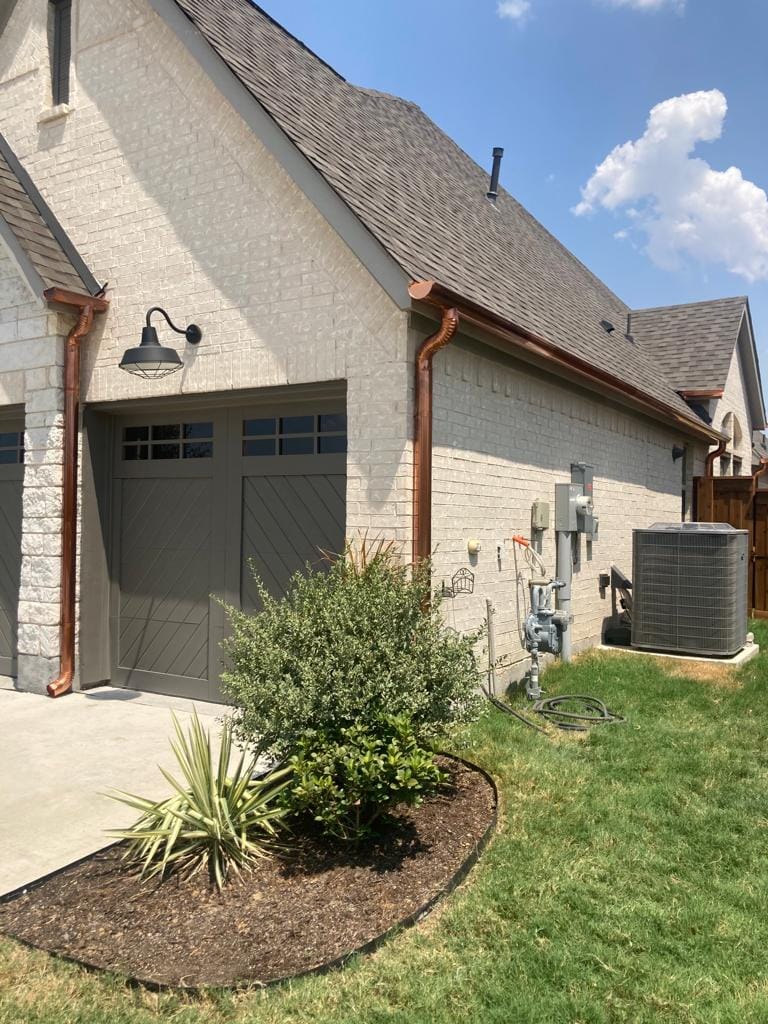
Downspouts carry rainwater from the gutters to the ground-level drainage system. When they work properly, roof runoff moves away from the home without overflowing, eroding the landscaping, or collecting near the foundation. When they become blocked, however, water may back up through the entire gutter system.
Clogged downspouts are not always easy to identify because the obstruction may be hidden inside an elbow, a vertical section, an underground pipe, or a connection. Recognizing the warning signs can help Mansfield homeowners address the problem before the next heavy Texas storm.
Why Downspouts Become Clogged
Most downspout clogs begin with debris entering the gutters. Rainwater carries this material toward the outlet, where it may become trapped.
Common causes include:
- Leaves and twigs
- Pine needles
- Seeds and flower petals
- Roofing granules
- Dirt and sediment
- Bird nests
- Insect nests
- Small pieces of roofing material
- Debris trapped inside an elbow
- Roots entering damaged underground pipes
A small obstruction can catch additional debris and gradually develop into a complete blockage.
1. Water Overflows From the Gutters
Overflow is one of the most common signs of clogged downspouts. If water cannot enter or move through the downspout, it backs up and eventually spills over the gutter’s edge.
Overflow may occur along the entire gutter run or only near the blocked outlet. During heavy rain, the water may look like a waterfall coming from the roofline.
However, overflow can also be caused by:
- Clogged gutter channels
- Gutters that are too small
- Incorrect gutter pitch
- Too few downspouts
- Damaged or sagging sections
- Debris covering gutter guards
The gutters and downspouts should be inspected together to identify the actual cause.
2. Little or No Water Leaves the Downspout
During steady rainfall, water should flow from the bottom of each downspout. If one outlet releases significantly less water than the others—or no water at all—it may be blocked.
Observe the system from a safe location at ground level. Do not inspect gutters from a ladder during wet or windy weather.
A lack of water at the outlet is especially suspicious when the gutter above it is overflowing.
3. Water Leaks From Downspout Connections
Downspouts are assembled using straight sections, elbows, and connectors. When water backs up behind a clog, it may leak from these joints.
You might notice:
- Water spraying from a seam
- Dripping around an elbow
- Water escaping from the connection beneath the gutter
- Stains along the exterior of the downspout
- Sections beginning to separate
Resealing the joint will not solve the problem if the leak is caused by pressure from a blockage. The clog must first be removed and the entire downspout checked for damage.
4. The Gutters Sag Near the Downspout
Blocked water and wet debris add considerable weight to the gutter system. If the clog remains, the gutter may begin to sag near the downspout opening.
Sagging can affect the gutter’s pitch and make drainage even less efficient. It may also loosen the hangers or pull the gutter away from the fascia.
A professional gutter repair service should examine sagging sections. Simply clearing the clog may not restore gutters that have become bent or misaligned.
5. Water Remains in the Gutters After Rain
Most water should leave the gutters shortly after rainfall ends. Small droplets may remain, but large areas of standing water indicate a problem.
Standing water near a downspout may mean that:
- The outlet is blocked
- The downspout is clogged
- The gutter pitch is incorrect
- Debris is restricting the flow
- The underground drainage connection is backing up
Persistent water can contribute to corrosion, leaks, insect activity, and premature gutter deterioration.
6. You Hear Dripping or Gurgling Sounds
A partially blocked downspout may produce unusual sounds as water tries to pass through a small opening.
Gurgling, splashing, or dripping noises can indicate that water is collecting inside an elbow or vertical section. You may also hear water long after the rain has stopped because it is draining slowly around the obstruction.
While sound alone cannot confirm a clog, it provides a useful reason to inspect the system.
7. Water Collects Around the Foundation
Downspout clogs can cause water to escape from joints or overflow above, depositing rainwater close to the house. This may create puddles, soft soil, erosion, or muddy areas near the foundation.
Water around the foundation can also occur when a clear downspout is too short or lacks an extension. After cleaning the system, confirm that the outlet carries water far enough away from the home.
Depending on the property, drainage improvements may include:
- Downspout extensions
- Splash blocks
- Underground drainage pipes
- Catch basins
- Surface drains
- French drains
- Grading corrections
A complete gutter and drainage inspection can determine whether a clog or an inadequate discharge route is causing the problem.
8. Soil or Mulch Is Washing Away
Overflowing gutters and leaking downspouts may direct concentrated streams of water into landscaping. Over time, this runoff can wash away soil, mulch, or gravel.
Look for channels in the soil, exposed roots, displaced decorative stone, or holes beneath gutter corners. These signs show where uncontrolled rainwater repeatedly hits the ground.
Removing the clog and improving the discharge point can help prevent continued erosion.
9. The Downspout Feels Heavy or Looks Swollen
A downspout packed with wet leaves and debris may feel unusually heavy. Thin metal or plastic sections can also bulge, split, or pull away from their mounting straps.
Do not strike the downspout forcefully to loosen the blockage, as this could dent the pipe or separate its connections. A professional can disconnect appropriate sections and remove the material without causing further damage.
10. Debris Is Visible at the Top or Bottom
Sometimes the blockage is visible. Leaves may be packed into the opening where the gutter meets the downspout, or mud and debris may be present at the lower outlet.
Removing visible material may restore some flow, but additional debris could remain inside an elbow. The downspout should be flushed after cleaning to confirm that water can pass through the entire system.
11. Water Backs Up From an Underground Connection
Some downspouts connect directly to underground drainage pipes. If the buried pipe is blocked or damaged, water may rise around the connection during rain.
Signs of an underground clog include:
- Water bubbling from the downspout connection
- Overflow despite a clear vertical downspout
- Soggy soil along the buried drain route
- Water emerging from an unexpected location
- Slow or absent flow at the final outlet
- Recurring backups shortly after cleaning
Underground pipes can become obstructed by compacted debris, sediment, roots, or collapsed sections. Specialized inspection or cleaning may be required.
12. Plants Are Growing in the Gutters
Plants growing from gutters indicate that organic material, dirt, and moisture have remained inside the system for an extended period. Their roots can make existing blockages denser and prevent water from reaching the downspout.
Pulling out the visible plant is not enough. The surrounding material should be removed, and the gutters and downspouts should be flushed.
How Professionals Check for Clogged Downspouts
A professional inspection generally begins by examining the gutters, outlet openings, elbows, and lower discharge points.
Depending on the system, the technician may:
- Remove loose debris from the gutters.
- Inspect the downspout opening.
- Disconnect accessible elbows or extensions.
- Flush the downspout with water.
- Use appropriate tools to loosen compacted debris.
- Check underground drain connections.
- Confirm that water reaches the final outlet.
- Inspect the gutters for sagging or damage.
If the downspout repeatedly clogs, the professional may recommend a larger downspout, improved outlet design, or suitable gutter guards.
Can You Clear a Clogged Downspout Yourself?
A minor blockage near the lower outlet may be accessible from the ground. However, avoid climbing ladders without suitable equipment and experience—particularly when the ground, roof, or gutters are wet.
Professional service is the safer choice when:
- The blockage is above ground level
- The home has more than one story
- The downspout is tightly attached
- The gutters are sagging or unstable
- Electrical lines are nearby
- The clog is inside an underground pipe
- Water continues backing up after cleaning
- You cannot identify the obstruction’s location
Never climb a ladder during rain or severe weather.
How to Prevent Future Downspout Clogs
Regular maintenance can reduce the risk of recurring blockages.
Useful preventive measures include:
- Cleaning gutters periodically
- Inspecting the system after storms
- Trimming hazardous overhanging branches
- Keeping roof valleys clear
- Installing suitable gutter guards
- Using properly sized downspouts
- Checking elbows and outlet openings
- Cleaning catch basins and surface drains
- Adding cleanouts to underground drainage lines
- Repairing damaged pipes promptly
Gutter guards can reduce debris entering the system, but they do not eliminate the need for inspection and cleaning.
When Is Gutter Repair Necessary?
Clearing clogged downspouts may reveal damage caused by standing water and excess weight. Gutter repair may be necessary when you find:
- Loose hangers
- Sagging gutter sections
- Leaking seams
- Damaged elbows
- Split downspouts
- Rotten fascia boards
- Separated underground connections
- Incorrect gutter pitch
Correcting both the obstruction and the resulting damage helps restore reliable drainage.
Keep Your Mansfield Downspouts Flowing
Clogged downspouts can cause gutter overflow, exterior stains, landscaping erosion, and standing water near the foundation. Warning signs such as low outlet flow, leaking joints, sagging gutters, and water backing up from underground connections should not be ignored.
Emerson Pro Services provides gutter cleaning, downspout repair, gutter maintenance, and drainage solutions in Mansfield. The team can identify blockages, assess the rest of the system, and recommend repairs or improvements to prepare your home for heavy Texas rainfall.
Contact Emerson Pro Services to schedule a professional gutter and downspout inspection.
For professional gutter installation, repair, maintenance, gutter guards, seamless gutters, and drainage solutions, contact Emerson Pro Services in Mansfield, Texas. Visit emersonproservices.com or call (817) 580-3475 to schedule an inspection and request an estimate for your home.
Frequently Asked Questions
How can I tell whether a downspout is clogged?
Common signs include overflowing gutters, little water leaving the outlet, leaking connections, standing water in the gutters, and water backing up from an underground drain.
Where do most downspout clogs occur?
Blockages commonly develop at the upper outlet, inside elbows, near the lower opening, or where the downspout connects to an underground drainage pipe.
Can a clogged downspout damage gutters?
Yes. Trapped water and wet debris add weight, which can cause gutters to sag, leak, or pull away from the fascia.
Will gutter guards prevent downspout clogs?
Gutter guards can reduce the amount of debris entering the system, but they cannot prevent every blockage. Routine inspections and cleaning are still required.
Why does my downspout keep clogging?
Recurring clogs may be caused by heavy tree debris, a narrow outlet, sharp elbows, an undersized downspout, or a blocked underground drain.
When should I call a professional?
Call a professional when the blockage is difficult to reach, the home has multiple stories, the gutters are unstable, or water continues backing up after accessible debris is removed.