

Brick, stone, stucco, concrete, and pavers are known for their strength, but Texas weather and soil conditions can still affect them over time. Intense sunlight, sudden rain, temperature changes, and expansive clay soil can place repeated stress on exterior masonry around Carrollton homes and businesses.
Understanding how local conditions affect masonry can help property owners recognize early warning signs and arrange timely maintenance. Professional inspections and masonry repair can address developing problems before they spread to larger areas.
Why Exterior Masonry Changes Over Time
Masonry materials are durable, but they are not completely rigid. Brick, mortar, concrete, stone, and pavers can expand, contract, absorb moisture, and respond to movement in the ground beneath them.
Common environmental pressures in North Texas include:
- Prolonged summer heat
- Direct ultraviolet exposure
- Rapid temperature changes
- Heavy rainfall and thunderstorms
- Periods of dry weather
- Expansive clay soil
- Drainage problems
- Ground settlement
The effects often develop gradually. Small cracks, loose mortar, uneven pavers, or water stains may be the first visible signs that a surface or structure needs attention.
How Texas Heat Affects Exterior Masonry
Masonry materials absorb heat when exposed to direct sunlight. During hot weather, their temperature can rise significantly. As materials heat up, they expand slightly. When temperatures fall, they contract.
Repeated expansion and contraction may place stress on:
- Mortar joints
- Brick walls
- Concrete patios
- Stucco finishes
- Paver surfaces
- Retaining walls
- Chimneys
- Masonry veneers
Different materials expand and contract at different rates. For example, brick, mortar, metal flashing, and concrete do not always respond to temperature changes in the same way. This difference can contribute to separation or cracking around connections.
Heat Can Dry and Weaken Mortar Joints
Long-term exposure to heat and sunlight may contribute to the drying and deterioration of mortar. Older or improperly mixed mortar can become brittle, powdery, or separated from nearby bricks.
Warning signs include:
- Recessed mortar joints
- Crumbling material
- Small gaps between bricks
- Loose masonry units
- Pieces of mortar collecting near the wall
Damaged mortar should be evaluated before moisture enters the gaps and causes additional deterioration. Professional masonry repair may involve removing weakened material and installing compatible replacement mortar.
How Rain Affects Masonry Surfaces
Brick, mortar, stucco, and some types of stone are porous. They can absorb a certain amount of water during rainfall. Properly built and maintained systems are designed to manage this moisture, but cracks, failed joints, poor flashing, and drainage problems can allow water to enter vulnerable areas.
Repeated moisture exposure may contribute to:
- Mortar deterioration
- Stucco damage
- Interior water stains
- Mold or mildew around damp areas
- White mineral deposits
- Rusting metal components
- Flaking or spalling surfaces
- Chimney leaks
Rain itself is not always the main problem. Damage often occurs when water cannot drain, dry, or exit the masonry assembly properly.
What Is Efflorescence?
Efflorescence is the white, powdery material that sometimes appears on brick, block, concrete, or stone. It forms when water moves through masonry, carries dissolved salts to the surface, and then evaporates.
Light surface efflorescence may be primarily cosmetic, but recurring deposits can indicate ongoing moisture movement. Cleaning the stain without identifying the water source may provide only a temporary improvement.
Potential sources include leaking gutters, failed flashing, poorly sealed joints, irrigation, and drainage that directs water toward the wall.
Rain Can Damage Chimneys and Flashing
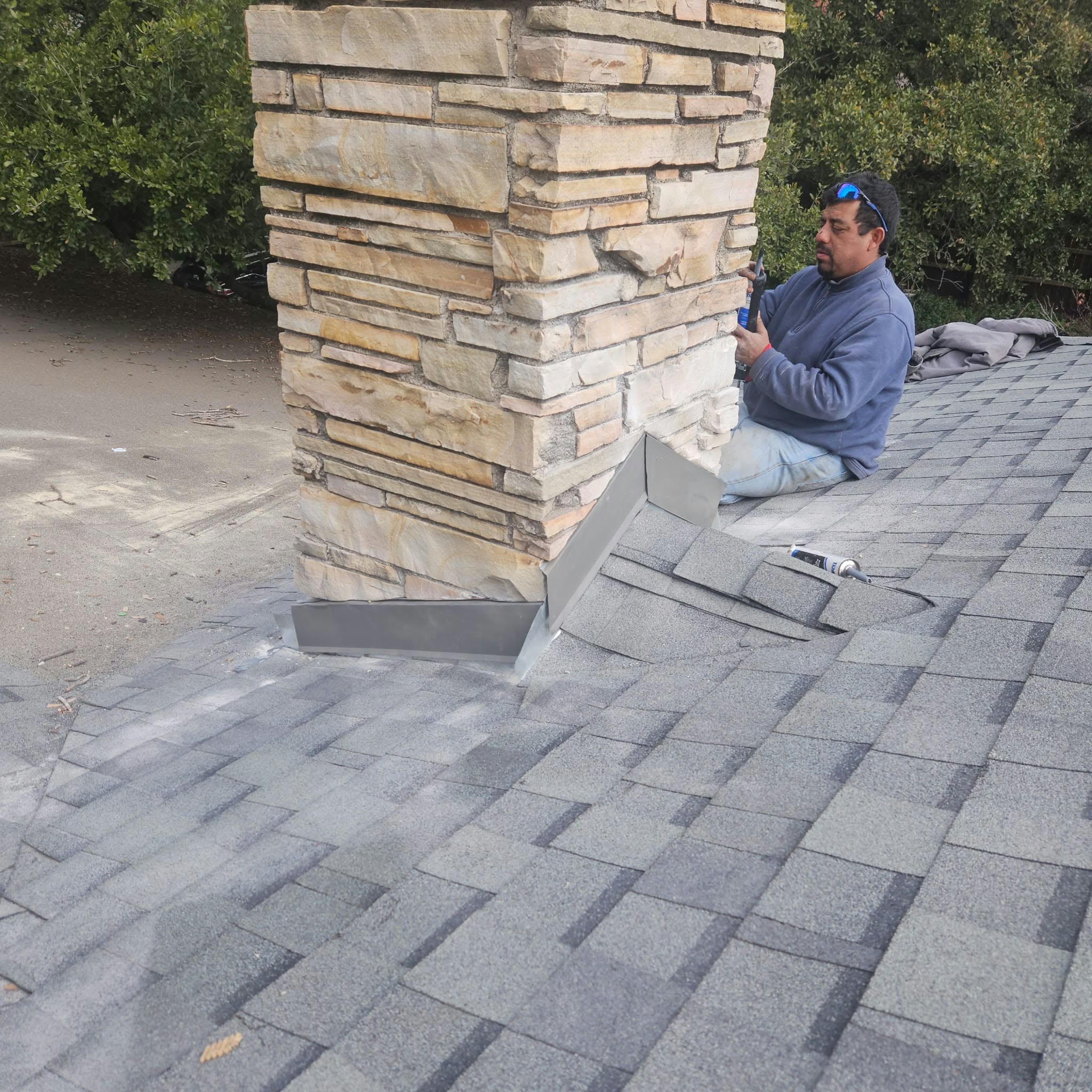
Chimneys receive direct exposure to rain from every side. Water may enter through cracked mortar joints, damaged bricks, a deteriorated chimney crown, or failed flashing.
Flashing seals the joint where the chimney meets the roof. If it becomes loose, corroded, separated, or improperly sealed, water may enter the attic, ceiling, or wall system.
Signs of chimney moisture problems include:
- Water stains near the fireplace
- Dampness in the attic
- Musty odors
- Cracked chimney mortar
- Flaking brick faces
- Rusted flashing
- Visible gaps along the roofline
Chimney and flashing repairs should address both the damaged masonry and the source of the water intrusion.
How Expansive Clay Soil Affects Masonry
Many North Texas properties have clay-rich soil that changes volume as its moisture level changes. Clay can expand when wet and shrink during dry periods.
This repeated movement may affect foundations, patios, driveways, retaining walls, and other masonry features. When the ground moves unevenly, the materials above it may crack, shift, sink, or separate.
Possible signs of soil-related movement include:
- Stair-step cracks in brick walls
- Cracks that reopen after repair
- Separation around windows or doors
- Sunken patio sections
- Uneven walkways
- Shifting pavers
- Leaning retaining walls
- Gaps between masonry and adjoining surfaces
A cosmetic patch may not last if the underlying soil, drainage, or structural cause remains unresolved.
The Effect of Soil Movement on Pavers
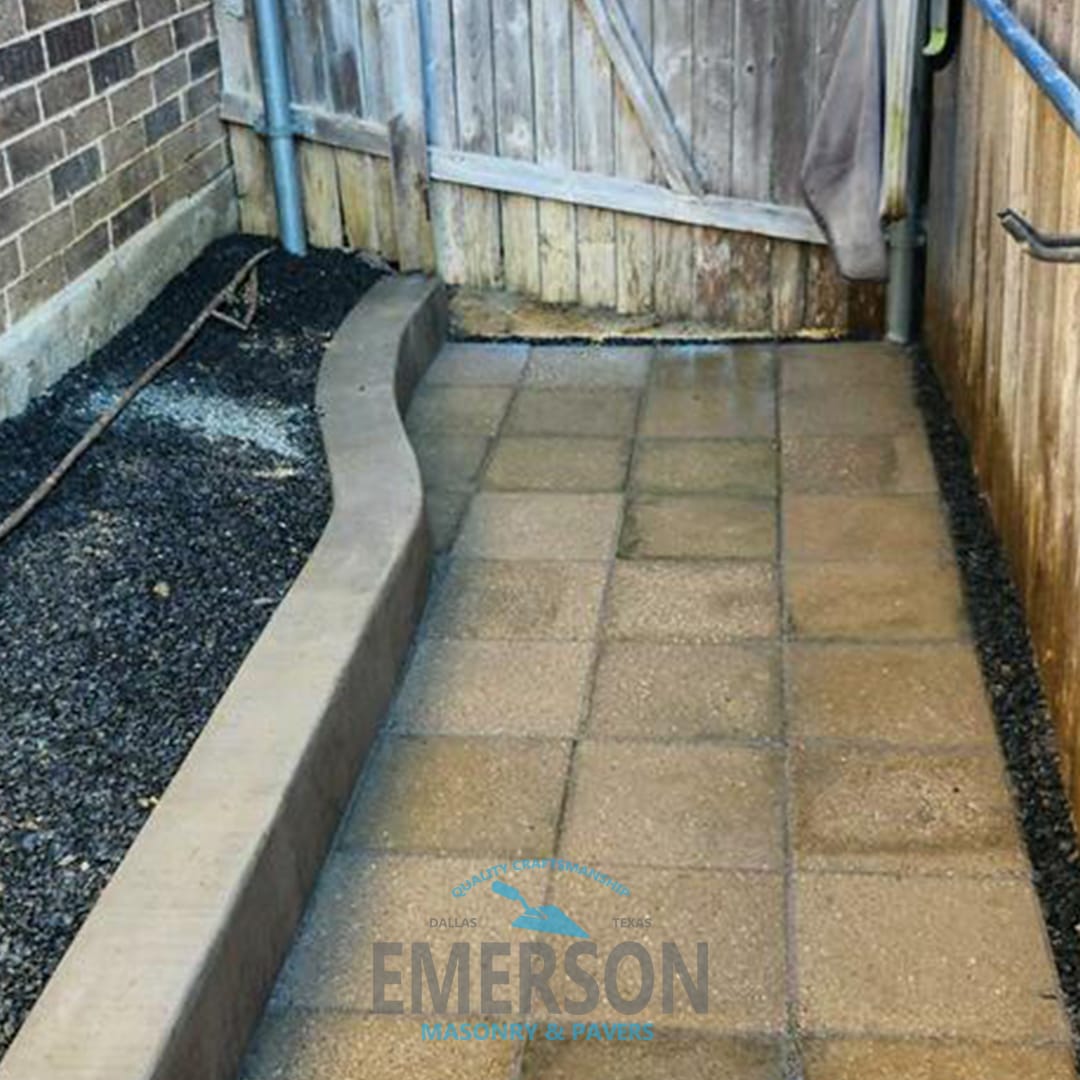
Paver systems consist of individual units installed over a prepared base. This segmented design may accommodate limited movement better than a continuous slab, but correct installation remains essential.
A weak, poorly compacted, or eroded base can cause concrete pavers to:
- Sink
- Shift sideways
- Develop uneven joints
- Create low areas
- Hold standing water
- Form tripping hazards
- Separate from edge restraints
Professional paver services should include an evaluation of the soil, base, grading, drainage, and intended load.
Protecting a Paver Driveway
A paver driveway must withstand repeated vehicle traffic, as well as weather and soil movement. Its performance depends heavily on the depth and compaction of the base beneath the pavers.
A durable installation generally requires:
- Proper excavation
- A stable subgrade
- An appropriate aggregate base
- Thorough compaction
- Accurate grading
- Suitable bedding material
- Pavers rated for vehicle loads
- Secure edge restraints
- Correctly filled joints
- Effective drainage
If driveway pavers become uneven, affected sections may sometimes be lifted and reset after the base problem is corrected.
How Clay Soil Affects Retaining Walls
Retaining walls are designed to hold back soil, but changing soil moisture can increase pressure against them. Poor drainage behind a wall can make this pressure worse.
Signs of retaining-wall distress include:
- Leaning
- Bulging
- Cracking
- Rotating sections
- Separating blocks
- Eroded soil
- Water collecting behind or below the wall
Proper wall construction may require a stable base, drainage aggregate, drainpipe, suitable backfill, reinforcement, and correctly selected wall materials. Taller or structurally significant walls may require additional design and permitting considerations.
Stucco Can Reveal Movement and Moisture Problems
Stucco may develop small surface cracks as materials respond to temperature and movement. However, wide, recurring, diagonal, or stained cracks deserve closer inspection.
Water entering behind stucco can damage underlying materials while leaving only limited evidence on the surface. Bulging, softness, discoloration, and crumbling may suggest more than a cosmetic issue.
Professional masonry services in Carrollton can evaluate whether the damage is limited to the finish or connected to movement, flashing, drainage, or moisture intrusion.
Concrete Surfaces Also Respond to Texas Conditions
Patios, driveways, sidewalks, slabs, and steps are exposed to the same heat, rain, and soil changes as other exterior materials. Professional concrete works in Carrollton should account for site preparation and drainage before concrete is placed.
Factors that affect performance include:
- Subgrade stability
- Base preparation
- Reinforcement
- Concrete thickness
- Joint placement
- Finishing
- Curing
- Surface drainage
- Nearby tree roots
Some cracking can occur as concrete shrinks and responds to environmental conditions. However, wide, uneven, or rapidly expanding cracks may indicate settlement or movement that should be evaluated.
Drainage Is Essential for Masonry Protection
Proper drainage is one of the most important ways to protect exterior masonry. Water should move away from walls, chimney connections, retaining walls, patios, and foundations.
Homeowners should regularly check:
- Gutters and downspouts
- Soil grading
- Patio slopes
- Paver drainage
- Retaining-wall outlets
- Irrigation direction
- Low areas near masonry
- Gaps around flashing and joints
Standing water and repeated saturation can weaken soil support, increase pressure behind walls, and keep masonry damp for extended periods.
Signs You May Need Masonry Repair
Contact a professional when you notice:
- Growing cracks
- Loose bricks or stones
- Crumbling mortar
- Stair-step cracking
- Bulging walls
- Repeated water stains
- Flaking brick or concrete
- Uneven pavers
- A leaning retaining wall
- Separation around flashing
- Movement after storms or drought
Timely masonry repair can restore damaged areas and help prevent moisture or movement from affecting nearby materials.
Why Professional Evaluation Matters
Similar-looking cracks can have very different causes. One may result from surface shrinkage, while another may indicate soil movement, water intrusion, or structural displacement.
Professional masonry and paver services should begin with an evaluation of:
- Crack location and pattern
- Condition of mortar and masonry units
- Drainage around the affected area
- Soil or base movement
- Flashing and water-entry points
- Previous repairs
- Condition of nearby structures
- Intended use and loading
The repair method should address the likely cause rather than covering only the visible damage.
Protect Your Exterior Masonry With Emerson Pro Services
Texas heat, rain, and clay soil can gradually affect brick, stucco, concrete, retaining walls, chimneys, and paver surfaces. Regular inspections and prompt repairs can help preserve their appearance and performance.
Emerson Pro Services offers professional masonry services in Carrollton, including masonry repair, chimney and flashing repair, retaining wall services, paver services, and concrete work. Whether you need to repair damaged brickwork, level concrete pavers, or restore a paver driveway, our team can evaluate the area and recommend an appropriate solution.
Contact Information
Emerson Masonry & Pavers
Phone: 469-398-8498
Address: 2201 Midway Rd, Ste F, Carrollton, TX 75006
Website: Emerson Pro Services – Masonry & Pavers in Carrollton
Contact Emerson Pro Services today to schedule an evaluation for your exterior masonry or paver project.
Frequently Asked Questions
How does Texas heat damage exterior masonry?
Heat causes masonry materials to expand, while cooling causes them to contract. Repeated temperature changes can place stress on mortar joints, stucco, concrete, brick, flashing, and connections between different materials.
Why does clay soil cause masonry cracks?
Clay-rich soil expands when it absorbs moisture and shrinks as it dries. Uneven soil movement can place stress on foundations, walls, patios, pavers, and retaining walls, sometimes causing cracks or displacement.
Are stair-step cracks in brick serious?
Stair-step cracks may be related to movement in the wall or supporting structure. Their significance depends on their width, location, progression, and cause. A professional evaluation is recommended, especially when the cracks are widening.
Can rain damage bricks and mortar?
Yes. Masonry can absorb moisture, particularly through cracks and deteriorated joints. Repeated saturation or trapped water may contribute to staining, mortar deterioration, surface flaking, and interior leaks.
Can sunken concrete pavers be repaired?
In many cases, sunken pavers can be removed and reinstalled after the underlying base is corrected. Drainage, erosion, soil movement, or poor compaction should also be addressed.
How often should exterior masonry be inspected?
Homeowners should visually check exterior masonry periodically and after severe storms, prolonged drought, or noticeable soil movement. Professional inspection is advisable when cracks, loose materials, water stains, or shifting surfaces appear.