


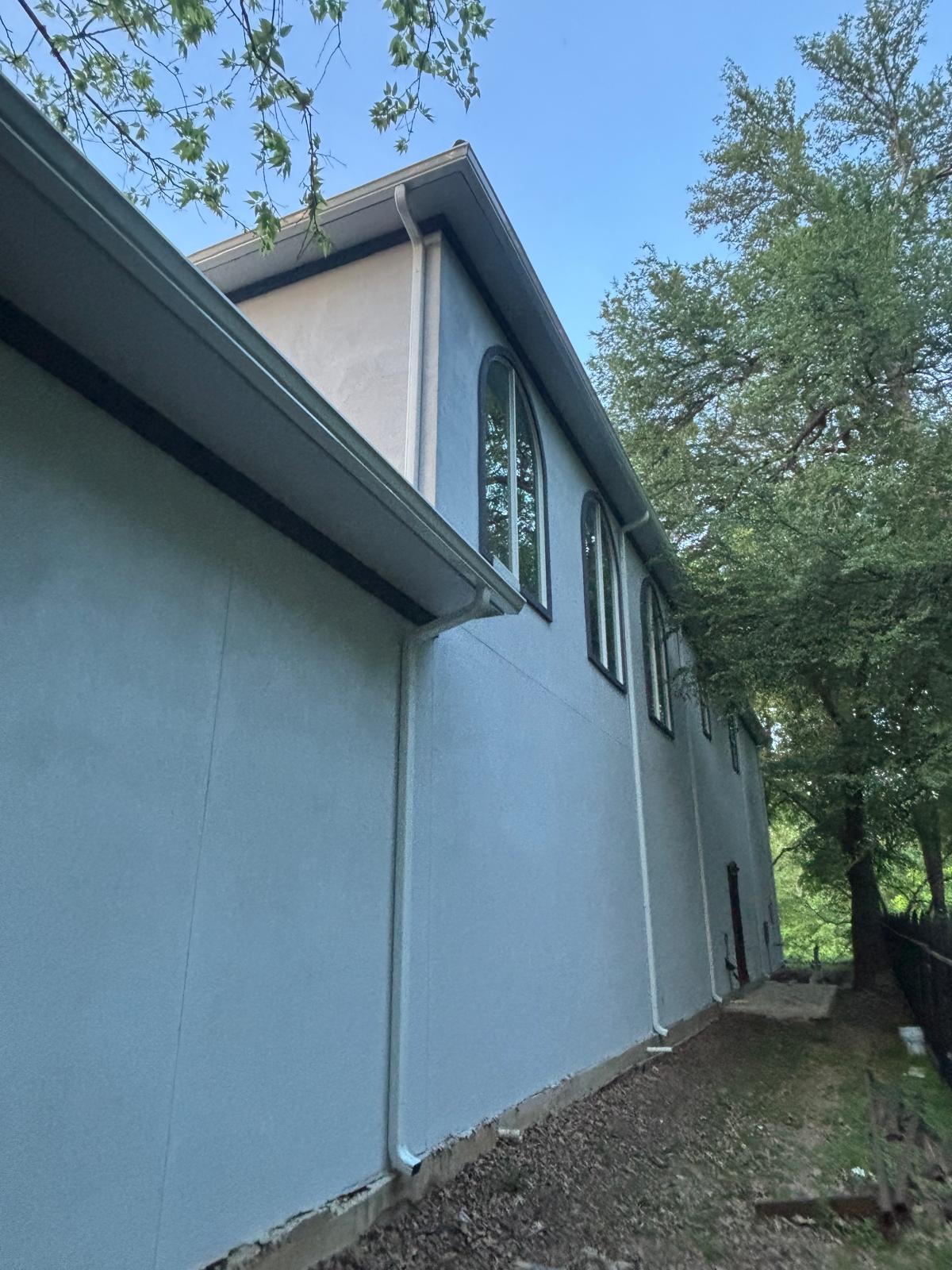
A dependable gutter system must be ready before heavy rain arrives. Leaves, roof granules, loose fasteners, clogged downspouts, and blocked underground drains can prevent runoff from moving safely away from the home. When these problems are ignored, water may overflow onto the siding, erode landscaping, and collect near the foundation.
Regular gutter maintenance in Garland helps homeowners find small problems before severe weather turns them into costly repairs. Instead of waiting for visible water damage, use a seasonal checklist to inspect, clean, and test every part of the gutter and drainage system.
Why Garland Gutters Need Seasonal Maintenance
Garland homes may experience intense heat, high winds, thunderstorms, hail, falling branches, and concentrated rainfall. These conditions can affect gutters in different ways throughout the year.
Seasonal weather may cause:
- Debris accumulation
- Loose hangers
- Separated joints
- Deteriorated sealant
- Bent gutter sections
- Damaged downspouts
- Blocked underground drains
- Shifting or buried outlets
- Water pooling near the foundation
A system that appears functional in dry weather may overflow during the first major storm. Professional gutter services in Garland can evaluate the complete water path from the roof edge to the final discharge area.
How Often Should Gutters Be Maintained?
Many homes benefit from gutter inspection and cleaning at least twice a year. Properties with large trees, recurring clogs, complicated rooflines, or gutter guards may require more frequent service.
Additional inspections are advisable after:
- Severe thunderstorms
- High winds
- Hail
- Falling branches
- Roof repairs
- Tree trimming
- Exterior remodeling
- Visible overflow
- Unusual foundation-area pooling
The correct schedule depends on the roof, surrounding vegetation, gutter design, and drainage history.
Spring Gutter Maintenance Checklist
Spring is a good time to remove winter debris and prepare the system for seasonal storms.
Remove Debris From Gutter Channels
Clear leaves, twigs, seed pods, roof granules, and other material from the entire channel. Pay particular attention to corners, valleys, and downspout outlets.
Debris can restrict water flow and add weight to the system. If it remains wet, it may form a dense layer that is difficult to remove.
Flush the Downspouts
Water should move freely through each downspout and exit at the intended outlet. Slow flow may indicate a blockage inside the visible downspout or underground pipe.
Inspect Joints and Corners
Look for water stains, failed sealant, corrosion, and separated connections. Leaks commonly develop around:
- Corners
- End caps
- Downspout outlets
- Sectional seams
- Transition fittings
Check Hangers and Fasteners
Gutters should remain firmly attached to the fascia. Loose hangers can create low sections that hold water instead of directing it toward the downspout.
Examine the Discharge Area
Confirm that extensions, splash blocks, underground outlets, and surface drains are not blocked by soil, grass, or mulch.
Summer Gutter Maintenance Checklist
Summer inspections should focus on storm damage, high heat, and drainage performance.
Observe the Gutters During Rain
When it is safe to do so, observe the system from ground level during rainfall.
Look for:
- Overflow
- Leaking seams
- Water flowing behind the gutter
- Downspout backups
- Water collecting beside the house
- Disconnected underground-drain fittings
- Erosion beneath outlets
Do not climb a ladder during a storm.
Check for Heat-Related Movement
Temperature changes can affect metal gutters, sealants, and connections. Inspect corners and long gutter runs for visible movement, separation, or distortion.
Remove Storm Debris
Strong wind may carry leaves, roofing material, and small branches into the gutters. A branch can also bend a section or loosen a downspout.
Check Drainage Around Landscaping
Summer watering and rainfall can reveal low areas around the foundation. Confirm that downspouts do not add concentrated roof runoff to already saturated soil.
Fall Gutter Maintenance Checklist
Fall cleaning is particularly important for properties surrounded by trees. Even a thin layer of leaves can block outlets when it becomes wet and compacted.
Remove Fallen Leaves
Do not wait until every nearby tree is bare if the gutters are already full. Some properties require more than one cleaning during heavy leaf drop.
Clear Gutter Guards
Gutter guards can reduce large debris, but leaves and seeds may collect on top. Fine particles and roof granules may also enter through the openings.
Check for:
- Debris mats
- Loose guard sections
- Bent screens
- Gaps around roof valleys
- Material accumulating beneath the guards
- Water flowing over rather than through the surface
Inspect Downspout Openings
Debris often collects at the transition from the gutter to the downspout. Clearing the upper outlet can prevent material from traveling deeper into the system.
Test Underground Downspout Drains
If the downspouts connect to buried pipes, confirm that the outlets remain accessible and water moves through the lines.
Winter Gutter Maintenance Checklist
Garland winters are generally milder than those in northern climates, but temperature changes, storms, and occasional freezing conditions can still affect drainage components.
Keep Gutters Free of Standing Water
Water remaining in the channels may indicate incorrect pitch, sagging, or a clogged outlet. Standing water adds weight and can worsen existing alignment problems.
Inspect for Cracks and Separation
Cold conditions can expose weak sealant and damaged fittings. Check corners, end caps, and downspout connections.
Monitor Freeze-Related Damage
Water trapped inside a clogged pipe may expand during freezing conditions. After the temperature rises, check for cracked fittings, leaks, or separated connections.
Keep Outlets Clear
Grass, soil, mulch, and debris can cover underground-drain outlets. An obstructed outlet may cause water to back up toward the house.
Inspect the Gutter Pitch
Gutters need a slight, consistent slope toward the downspouts. Incorrect pitch can cause water to remain in the channel or collect in low sections.
Signs of a pitch problem include:
- Standing water after rain
- Sediment collecting in one area
- Repeated overflow away from an outlet
- Visible sagging
- Water stains inside the gutter
- Loose or uneven hangers
Professional gutter repair in Garland may include adjusting hangers, correcting alignment, and repairing the supporting fascia.
Check the Fascia and Soffit
The fascia supports many gutter systems. Persistent leaks and overflow can expose it to moisture.
Look for:
- Peeling paint
- Dark staining
- Soft wood
- Swelling
- Cracks
- Rot
- Loose fasteners
- Insect activity
- Gaps behind the gutter
Reattaching a gutter to damaged fascia may provide only a temporary fix. The mounting surface should be repaired before the system is secured.
Inspect All Downspouts
Downspouts should remain firmly connected from the gutter outlet to the ground-level discharge point.
Inspect for:
- Loose brackets
- Dented sections
- Separated joints
- Missing fasteners
- Cracks
- Leaks
- Blockages
- Improper discharge
- Connections that pull apart during rain
A damaged downspout can release concentrated roof runoff beside the home even when the gutter itself is clean.
Maintain Downspout Extensions
An above-ground downspout extension should direct water away from the foundation without creating a tripping hazard.
Check whether the extension is:
- Connected securely
- Pointed away from the house
- Free of damage
- Long enough for the property
- Clear of landscaping debris
- Positioned where water can continue flowing
- Protected from lawn equipment
Extensions can be moved accidentally during mowing, landscaping, or exterior work. Include them in every seasonal inspection.
Maintain Underground Downspout Drains
Buried downspout pipes keep drainage routes out of sight, but they can develop hidden problems.
Signs of trouble include:
- Water backing up from the connection
- Wet soil above the pipe
- Sinking ground
- Little water reaching the outlet
- Overflow despite clean gutters
- Water emerging near the foundation
- Repeated clogging
- A buried or blocked outlet
Underground pipes may be obstructed by leaves, roof granules, sediment, roots, pipe collapse, or separated fittings.
Cleaning the visible gutter will not solve a damaged underground drainage system. The complete line should be evaluated.
Inspect Surface Drains and Catch Basins
Some Garland properties combine roof drainage with surface drains, catch basins, or channel drains.
Remove:
- Leaves
- Grass clippings
- Mulch
- Soil
- Trash
- Sediment
- Small stones
The surrounding grade should direct water toward the drain. If the inlet is too high, displaced, or outside the natural flow path, puddles may remain even when the pipe is clear.
Pay Attention to Roof Valleys
Roof valleys can send a concentrated stream of water into one gutter section. These areas are more likely to overflow if the gutter is clogged, undersized, or improperly positioned.
Inspect valley areas for:
- Heavy debris
- Water overshooting the gutter
- Loose splash guards
- Damaged gutter edges
- Repeated stains
- Overflow during moderate rainfall
A contractor can determine whether cleaning, alignment, additional capacity, or another solution is appropriate.
Do Gutter Guards Eliminate Maintenance?
No. Gutter guards may reduce the amount of large debris entering the channel, but they do not eliminate inspection or cleaning.
Maintenance is still needed because:
- Leaves can collect on top
- Seeds may enter openings
- Roof granules can accumulate underneath
- Water may overshoot the guard
- Guard sections may loosen
- Downspouts can still clog
- Organic buildup can reduce flow
The cleaning method depends on the guard design. Some products can be serviced without removal, while others require sections to be opened or detached.
Know the Difference Between Cleaning and Repair
Cleaning restores flow by removing debris. Repair corrects physical or performance problems.
| Condition | Likely service |
|---|---|
| Leaves in gutter channels | Gutter cleaning |
| Debris on gutter guards | Guard cleaning |
| Blocked downspout | Downspout clearing |
| Loose hanger | Gutter repair |
| Leaking corner | Sealing or component repair |
| Incorrect pitch | Realignment |
| Rotten fascia | Fascia repair and reattachment |
| Bent gutter section | Section repair or replacement |
| Crushed underground pipe | Drain repair |
| Widespread deterioration | Gutter replacement |
A maintenance visit may reveal problems that require gutter repair in Garland. Addressing them early can help prevent additional damage.
Signs You May Need New Gutter Installation
Maintenance cannot restore a system that is severely damaged, incorrectly sized, or near the end of its service life.
New gutter installation may be appropriate when:
- Several sections are corroded
- Leaks repeatedly return
- Gutters pull away in multiple areas
- Large sections are bent
- The system is too small for the roof
- Downspouts are insufficient
- Fascia damage is widespread
- Water frequently overshoots the gutters
- Repairs no longer provide lasting results
Replacement should include an evaluation of the downspouts and ground-level drainage. New gutters may deliver more water into underground lines that are already damaged or undersized.
How Gutter Maintenance Protects the Foundation Area
Gutters cannot prevent every foundation problem, but they help control roof runoff. When gutters overflow or downspouts release water too close to the house, surrounding soil may become excessively saturated.
Effective gutter and drainage maintenance can help reduce:
- Foundation-area pooling
- Soil erosion
- Landscape washout
- Uneven moisture near the house
- Water flowing across walkways
- Exterior staining
- Muddy areas beneath downspouts
The final discharge area matters as much as the gutter channel. Water should be transported to a location where it can continue moving without returning toward the building.
Safe DIY Gutter Maintenance
Some homeowners may be able to check low, accessible sections from a stable position. However, ladder work creates serious fall risks.
Before attempting DIY maintenance, consider:
- Gutter height
- Roof slope
- Ground conditions
- Ladder condition
- Nearby power lines
- Physical balance
- Weather
- Hidden roof damage
- The need to reach over obstacles
Never climb during high winds, rain, or unstable conditions. Do not lean a ladder against unsupported gutter material or reach beyond a safe working position.
Professional gutter services are advisable for multi-story homes, steep roofs, difficult access, visible damage, or homeowners who are not comfortable working at height.
Build a Gutter Maintenance Record
Keeping a simple record can help identify recurring problems.
Document:
- Cleaning dates
- Areas with heavy debris
- Leaking seams
- Loose hangers
- Downspout blockages
- Underground-drain backups
- Storm damage
- Completed repairs
- Gutter-guard condition
- Photos of problem areas
- Outlet locations
- Recommended follow-up service
If the same corner or downspout fails repeatedly, the issue may involve capacity, alignment, or drainage design rather than ordinary debris.
Professional Gutter Maintenance in Garland
Seasonal gutter maintenance helps keep rainwater moving from the roof to a safe discharge area. A complete maintenance plan should cover gutter channels, seams, hangers, downspouts, extensions, underground drains, surface drains, fascia, and outlets.
Emerson Pro Services provides gutter services in Garland, including gutter cleaning, gutter inspections, gutter repair, downspout services, drainage improvements, gutter guard solutions, and new gutter installation.
Whether you need seasonal cleaning or a comprehensive evaluation of recurring overflow issues, Emerson Pro Services can inspect your gutters and drainage system and recommend an appropriate solution.
Contact Emerson Pro Services to schedule a gutter and drainage maintenance for your property in Garland.
For gutter guards, gutter inspections, gutter cleaning, repairs, or residential and commercial gutter installations in Garland, Texas contact Emerson Pro Services. Visit emersonproservices.com or call
(214) 972-0811 to discuss your property’s gutter and drainage needs.
Frequently Asked Questions
How often should Garland homeowners clean their gutters?
Many homes benefit from cleaning at least twice a year. Properties surrounded by trees or affected by frequent storm debris may require additional service.
What is included in professional gutter maintenance?
Service may include debris removal, downspout clearing, inspection of seams and hangers, pitch evaluation, gutter-guard cleaning, and review of discharge areas.
Do gutter guards eliminate gutter cleaning?
No. Guards can reduce large debris, but leaves, seeds, roof granules, and organic material may still accumulate on or beneath them.
Why is water standing inside my gutters?
Standing water may indicate incorrect pitch, sagging, a blocked outlet, loose hangers, or a clogged downspout.
When does a gutter need repair instead of cleaning?
Repair is needed when the system has leaks, loose hangers, damaged sections, incorrect alignment, separated downspouts, or deteriorated attachment points.
How can I tell whether an underground downspout drain is clogged?
Possible signs include water backing up from the connection, gutter overflow, wet soil above the pipe, little water at the outlet, or water pooling near the foundation.
Should gutters be inspected after a storm?
Yes. High winds, hail, branches, and heavy rain can loosen gutters, block outlets, damage downspouts, or expose existing leaks.
When should gutters be replaced?
Replacement may be appropriate when deterioration is widespread, repairs repeatedly fail, or the system is incorrectly sized for the roof and expected rainfall.