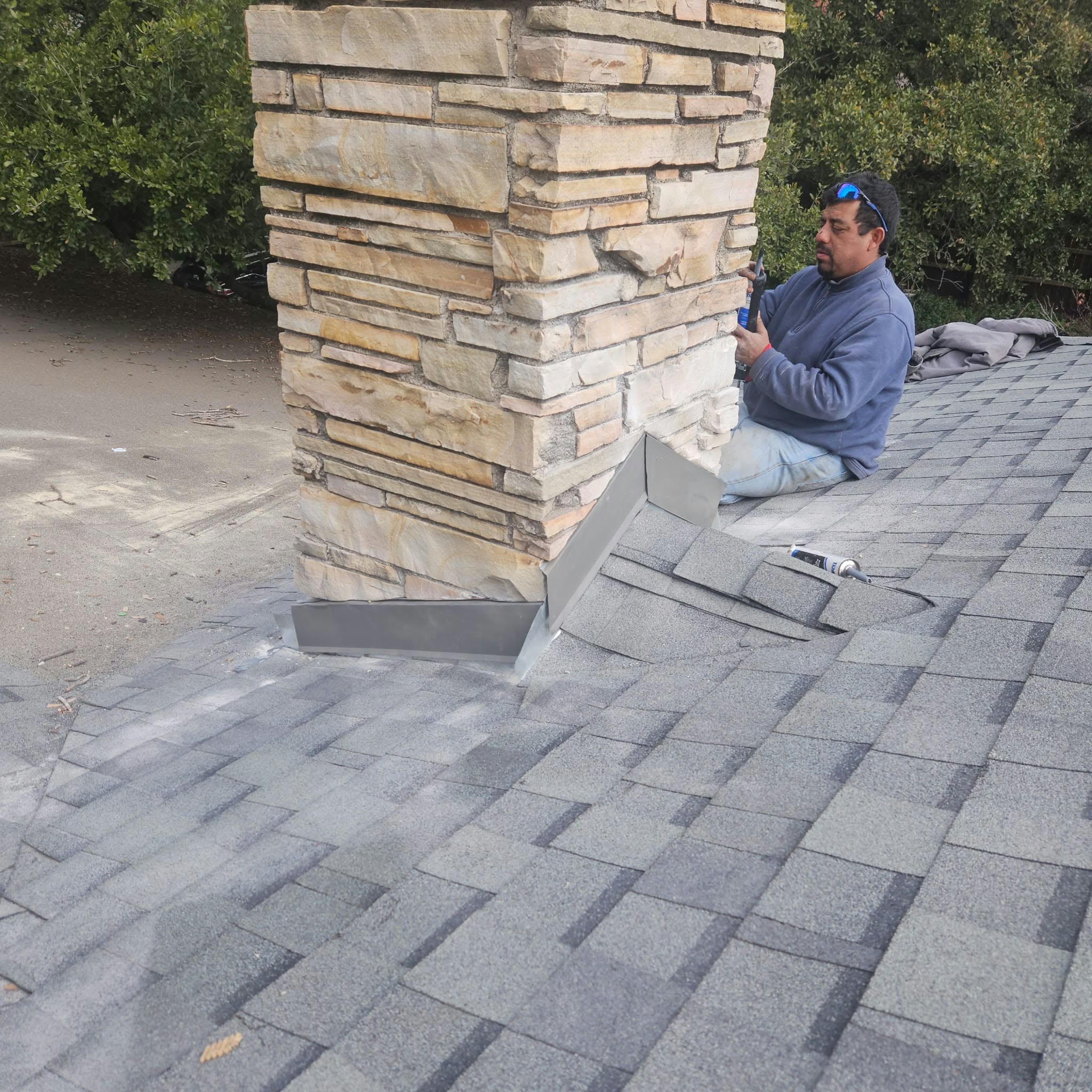


A roof leak near a fireplace does not always mean the roofing material itself has failed. In many New Jersey homes, damaged or incorrectly installed chimney flashing allows rainwater and melting snow to enter where the chimney passes through the roof.
Because water can travel along roof decking, rafters, insulation, and masonry before becoming visible, a flashing leak may appear several feet away from its actual source. Understanding how flashing works—and how it interacts with the roof and chimney—can help homeowners arrange the correct repairs before moisture causes more extensive damage.
What Is Chimney Flashing?
Chimney flashing is a system of metal pieces installed around the joint between a chimney and the roof. Its purpose is to direct water away from this vulnerable intersection while allowing the roof and chimney to move independently as temperatures change.
A complete flashing system may include:
- Base flashing: Installed along the lower areas where the chimney meets the roof
- Step flashing: Layered with roofing materials along the sides of the chimney
- Counterflashing: Installed into or over the masonry to cover the upper edges of the base and step flashing
- Back pan: Directs water around the uphill side of the chimney
- Cricket or saddle: A raised structure that diverts water around the back of a wide chimney
These parts must overlap in the correct sequence. If one piece is missing, loose, corroded, or improperly integrated with the roof, water may enter beneath the roofing system.
Why the Roof-to-Chimney Joint Is Vulnerable
A roof and masonry chimney are made from different materials. They expand, contract, and respond to weather differently. The joint between them must remain watertight without rigidly fastening the two structures together.
New Jersey weather can place additional stress on this connection through:
- Heavy seasonal rain
- Wind-driven storms
- Snow accumulation
- Melting snow
- Ice formation
- Repeated freeze-thaw cycles
- Falling branches and storm debris
- Temperature-related expansion and contraction
- Coastal wind and salt exposure in some communities
Over time, flashing can lift, corrode, separate, or develop gaps. Mortar joints holding counterflashing may also crack or erode.
How Damaged Chimney Flashing Causes Roof Leaks
Water normally flows down the roof and around the chimney. Properly installed flashing keeps that runoff above the roof covering and directs it toward the gutters.
When the system is damaged, water may enter through:
- Gaps between flashing and masonry
- Loose counterflashing
- Missing step-flashing sections
- Corroded metal
- Failed fasteners
- Cracked mortar joints
- Improperly sealed corners
- Open seams
- Roofing nails placed in vulnerable locations
- An inadequate back pan or cricket
- Roofing material installed over old flashing incorrectly
Once water enters, gravity and capillary action can carry it into the roof assembly. The moisture may then spread through wood, insulation, drywall, and nearby masonry.
Signs of a Chimney Flashing Leak
A flashing problem may be visible from outside or first appear inside the home.
Common warning signs include:
- Ceiling stains near the fireplace
- Damp walls around the chimney
- Peeling paint or wallpaper
- Discolored drywall
- Water dripping after heavy rain
- Musty odors in the attic
- Damp insulation
- Water stains on roof decking
- Mold or mildew near the chimney
- Rust on fireplace components
- Loose or bent flashing
- Cracked sealant around metal edges
- Gaps between flashing and masonry
- Leaks that appear during wind-driven rain
- Recurring repairs around the same area
The leak may become more noticeable during prolonged rain or when snow melts. However, the absence of visible dripping does not necessarily mean the surrounding materials are dry.
Is the Leak Coming From the Flashing or the Chimney?
Water near a chimney can enter through several components. Damaged flashing is common, but it is not the only possible source.
A professional inspection may evaluate:
- Chimney flashing
- Roof shingles or other roof coverings
- Chimney crown
- Chimney cap
- Brick and mortar joints
- Flue openings
- Roof underlayment
- Nearby vents
- Gutters and drainage
- Condensation inside the flue
- Masonry absorption
- Attic ventilation
Identifying the correct source is essential. Replacing the flashing will not stop water entering through a cracked crown, and applying chimney waterproofing will not correct improperly installed roof flashing.
Some chimneys have more than one leak source.
Chimney Flashing Leak vs. Masonry Leak
Flashing leaks and masonry leaks can produce similar indoor symptoms, but their causes are different.
Chimney Flashing Leak
A flashing leak occurs at the connection between the chimney and roof. It may be caused by loose metal, corrosion, failed seams, improper installation, or separation from the masonry.
Masonry Leak
Brick and mortar are porous. Cracks, missing mortar, spalled bricks, and a deteriorated crown may allow water to enter through the chimney structure itself.
Professional chimney leak repair should address every confirmed entry point. Repairing only the most visible defect may allow the leak to return during the next major storm.
Common Causes of Flashing Failure
Aging or Corroded Metal
Flashing can deteriorate after years of exposure to water, snow, sunlight, and temperature changes. Corrosion may create small openings that gradually become larger.
Improper Installation
Flashing must be integrated with the roof covering in the correct order. Problems may develop when installers rely primarily on exposed sealant or fail to install step flashing along the sides.
Failed Sealant
Roofing sealants can deteriorate under ultraviolet light and temperature changes. Sealant may be useful as part of certain flashing details, but it should not be the only layer preventing water entry.
Damaged Mortar Joints
Counterflashing is often secured into masonry joints. If the mortar cracks or erodes, the flashing may loosen and allow water behind it.
Roof Replacement Without New Flashing
Reusing flashing during roof replacement may be appropriate only when it remains compatible and in dependable condition. Installing new shingles around severely worn or poorly configured flashing can leave the original leak risk in place.
Chimney or Roof Movement
Normal building movement, settling, wind, and temperature changes can open gaps around the chimney. Significant movement may require structural evaluation in addition to flashing work.
Missing Chimney Cricket
A wide chimney located across the roof slope may collect water, leaves, snow, and debris on its uphill side. A properly designed cricket can help divide runoff and direct it around the chimney.
Whether one is needed depends on the chimney dimensions, roof slope, drainage conditions, and applicable requirements.
Why Caulk Alone Is Usually Not a Long-Term Repair
Applying roofing cement or caulk over a visible gap may temporarily reduce water entry, but it does not necessarily restore the flashing system.
Sealant-only repairs can fail because:
- Sunlight causes exposed material to deteriorate
- Temperature changes create movement
- Water may enter behind the patched area
- The underlying metal may remain corroded
- Missing step flashing remains uncorrected
- Thick sealant can conceal worsening damage
- Water may become trapped beneath the roof covering
A lasting repair should restore the overlapping drainage system and correct damaged roofing or masonry where necessary.
What Professional Chimney Flashing Repair May Include
The repair method depends on the condition of the existing roof, masonry, and flashing.
Professional work may include:
- Removing roofing material around the chimney
- Inspecting the roof decking and underlayment
- Replacing water-damaged wood when necessary
- Removing corroded or improperly installed flashing
- Installing new base and step flashing
- Installing or resetting counterflashing
- Repairing affected mortar joints
- Fabricating a back pan or cricket when appropriate
- Integrating new flashing with the roof covering
- Sealing required joints with compatible materials
- Testing or monitoring the repaired area
- Documenting related chimney defects
The contractor should explain whether the proposed work is a localized repair, complete flashing replacement, or part of a broader chimney repair project.
When Flashing Repair Is Enough
A focused flashing repair may be appropriate when:
- The leak source is limited to a small flashing defect
- Most metal components remain serviceable
- The surrounding roof is in good condition
- The roof decking has not sustained extensive damage
- The chimney masonry is structurally sound
- The crown and cap are functioning correctly
Complete replacement may be more practical when the flashing is extensively corroded, incorrectly configured, repeatedly leaking, or incompatible with a planned roof replacement.
When Additional Chimney Repair Is Necessary
Damaged flashing frequently appears alongside other chimney problems. Additional repairs may be needed if an inspection finds:
- Cracked or missing mortar
- Spalling bricks
- A deteriorated chimney crown
- A missing or damaged cap
- Failed masonry joints around counterflashing
- Rusted metal components
- A damaged flue liner
- Deteriorated fireplace masonry
- Structural movement
- Previous repairs that are separating
Correcting these conditions may be essential to prevent water from entering through another area after the flashing is repaired.
How Fireplace Masonry Can Be Affected
Water entering near the chimney may eventually reach the smoke chamber, firebox, hearth, or surrounding fireplace masonry.
Possible signs include:
- Damp or discolored firebrick
- Loose mortar joints
- Crumbling masonry
- Rusted dampers
- White mineral deposits
- Musty fireplace odors
- Water pooling in the firebox
- Staining above or beside the fireplace
Firebox and smoke-chamber damage should be evaluated before the fireplace is used. Ordinary household mortar and general-purpose caulk are not suitable substitutes for materials designed for high-temperature fireplace applications.
The Role of Chimney Waterproofing
After flashing, crown, cap, and masonry defects have been corrected, chimney waterproofing may help reduce water absorption through suitable exterior masonry.
A professional water-repellent treatment should be intended for chimney masonry and allow water vapor to escape. Applying non-breathable paint or an unsuitable coating can trap moisture and contribute to additional deterioration.
Waterproofing cannot repair:
- Loose flashing
- Missing metal components
- Open roof seams
- Cracked chimney crowns
- Missing mortar
- Structurally damaged bricks
- Failed roof underlayment
It is a preventive treatment, not a replacement for physical repairs.
Can Chimney Cleaning Stop a Leak?
Chimney cleaning removes soot, creosote, animal nesting material, and other debris from accessible areas of the chimney. It does not repair damaged flashing.
However, cleaning and inspection may reveal moisture-related conditions inside the flue, such as:
- Damp soot
- Rust
- Flue obstructions
- Animal nesting
- Liner deterioration
- Unusual deposits
- Persistent odors
Cleaning may be needed as part of broader chimney and fireplace services, but a flashing leak requires targeted roof and chimney work.
Why Delaying a Flashing Repair Can Be Expensive
A small opening around the chimney may allow water to enter gradually for months before a ceiling stain appears. By that time, moisture may have affected concealed materials.
Untreated leaks can contribute to:
- Rotted roof decking
- Damaged rafters
- Wet insulation
- Ceiling and wall deterioration
- Mold or mildew
- Corroded fasteners
- Damaged chimney masonry
- Rusted fireplace components
- Reduced energy efficiency
- Recurring interior repairs
Painting over a water stain before stopping the leak can conceal the symptom temporarily, but the damage may continue behind the finished surface.
What to Do When You Notice a Leak
If water appears near the chimney:
- Move furniture and belongings away from the wet area.
- Place a container beneath active dripping when it is safe to do so.
- Photograph visible stains and water entry.
- Note whether the leak occurs during rain, wind, or snowmelt.
- Avoid climbing onto a wet, icy, or steep roof.
- Arrange a professional roof and chimney inspection.
- Allow affected materials to dry after the source is repaired.
- Evaluate insulation, drywall, and wood for moisture damage.
- Complete interior repairs only after the leak has been corrected.
Homeowners should not enter an attic where electrical components are wet or where the walking surface is unsafe.
How Chimney Maintenance Helps Prevent Flashing Leaks
Routine chimney maintenance makes it easier to identify deterioration before water enters the home.
A maintenance plan may include:
- Inspecting flashing and roof intersections
- Checking mortar joints around counterflashing
- Monitoring the chimney crown
- Confirming that the cap is secure
- Looking for spalled bricks
- Removing leaves and debris behind the chimney
- Checking the attic after severe storms
- Watching for ceiling discoloration
- Scheduling chimney cleaning when deposits require removal
- Arranging prompt repairs for small defects
The system should also be evaluated after roof replacement, chimney reconstruction, major storms, or work performed by another trade near the chimney.
Questions to Ask Before Approving Chimney Leak Repair
A clear written proposal should explain:
- The confirmed or suspected leak source
- Whether the roof, chimney, or both require repair
- Which flashing components will be replaced
- How flashing will be integrated with the roofing
- Whether counterflashing will be set into masonry
- Whether damaged roof decking is included
- Whether mortar repair is required
- Whether a cricket is recommended
- How unexpected damage will be documented
- What cleanup and debris removal are included
- Which warranties apply
- What work is excluded
Be cautious of proposals that promise to stop a complex chimney leak by applying exposed sealant without evaluating the surrounding roof and masonry.
Choosing Chimney Services in New Jersey
When comparing chimney services in New Jersey, look for a provider that evaluates the complete roof-to-chimney connection.
A qualified service provider should offer:
- A thorough exterior inspection
- Interior or attic evaluation when accessible
- Photographs of visible damage
- A clear explanation of the leak path
- Experience with roof flashing and masonry
- Written repair recommendations
- Appropriate materials
- Safe roof-access procedures
- Defined warranty information
- Guidance on future maintenance
Homeowners seeking fireplace services in New Jersey should also confirm that the contractor can evaluate fireplace masonry, caps, crowns, liners, and other components affected by moisture.
Schedule Chimney and Fireplace Services in New Jersey
Damaged chimney flashing can allow water to reach the roof deck, attic, walls, insulation, and fireplace. The most effective solution begins with locating the actual entry point and determining whether the flashing, roofing, masonry, crown, or cap requires repair.
Emerson Pro Services provides chimney and fireplace services in New Jersey, including chimney repair, chimney cleaning, chimney leak repair, fireplace masonry work, chimney waterproofing, and ongoing chimney maintenance.
Call Emerson Pro Services at 732-647-9850, visit emersonproservices.com, or request service at 769 Route 9, Unit 3A, Bayville, New Jersey 08721.
Frequently Asked Questions
How can I tell whether chimney flashing is leaking?
Common signs include ceiling stains near the chimney, damp attic materials, peeling paint, water dripping during rain, visible gaps around flashing, and recurring moisture after previous sealant repairs. An inspection is needed to confirm the source.
Can chimney flashing be repaired without replacing the roof?
Yes, in some cases. Localized flashing can often be repaired or replaced while preserving most of the existing roof. The feasibility depends on the roof material, its condition, and the extent of water damage.
Does chimney waterproofing repair damaged flashing?
No. Waterproofing reduces moisture absorption through suitable masonry. It does not replace loose, corroded, missing, or incorrectly installed flashing.
Why does my chimney leak only during heavy rain?
Wind-driven or high-volume rain may push water through gaps that do not leak during light rainfall. Heavy runoff can also overwhelm an inadequate back pan or collect behind the chimney.
Can roofers repair chimney flashing?
Some roofing contractors perform flashing work, while some chimney professionals coordinate both flashing and masonry repairs. The provider should understand how the roof, flashing, counterflashing, and chimney masonry work together.
Is caulking around chimney flashing enough?
Caulk may be appropriate for specific joints, but it is rarely a dependable substitute for properly installed base flashing, step flashing, and counterflashing. The underlying defect should be identified first.
Can damaged flashing affect fireplace masonry?
Yes. Water entering around the chimney can travel downward and contribute to stains, loose mortar, rusted dampers, damaged firebrick, and other moisture problems around the fireplace.
When should chimney flashing be inspected?
It should be checked during routine chimney or roof inspections and after severe storms, roof replacement, chimney reconstruction, visible leaking, or repeated freeze-thaw weather.