






Texas soil presents unique challenges for homeowners—especially in areas like Carrollton, where expansive clay soil can shift, crack, and retain moisture. When installing retaining walls, choosing the right material is essential for long-term durability, drainage control, and curb appeal. Two of the most popular options are concrete and stone retaining walls, but which one performs better in North Texas conditions?
Let’s break it down.
Understanding Texas Soil Conditions
Much of North Texas sits on expansive clay soil, which expands when wet and contracts during dry periods. This constant movement puts pressure on hardscape structures and can lead to cracking, leaning, or failure if the retaining wall isn’t designed correctly.
That’s why professional concrete construction, proper drainage, and expert installation matter more than aesthetics alone.
Concrete Retaining Walls: Strength and Stability
Concrete retaining walls are a popular choice for Texas homes due to their structural reliability and versatility.
Advantages of Concrete Retaining Walls
- Exceptional strength for handling soil pressure
- Ideal for taller or load-bearing retaining walls
- Can be reinforced to resist soil movement
- Works well with integrated drainage systems
- Low maintenance compared to natural materials
Concrete is especially effective when paired with professional masonry repair and proper grading. In areas prone to erosion or foundation concerns, concrete retaining walls offer long-term peace of mind.
Considerations
While durable, concrete walls may develop surface cracks over time if not installed correctly. Professional installation and ongoing inspection help prevent costly masonry repair down the line.
Stone Retaining Walls: Natural Beauty with Purpose
Stone retaining walls bring a timeless, natural look to outdoor spaces and are often chosen for their aesthetic appeal.
Advantages of Stone Retaining Walls
- Enhances curb appeal and landscape design
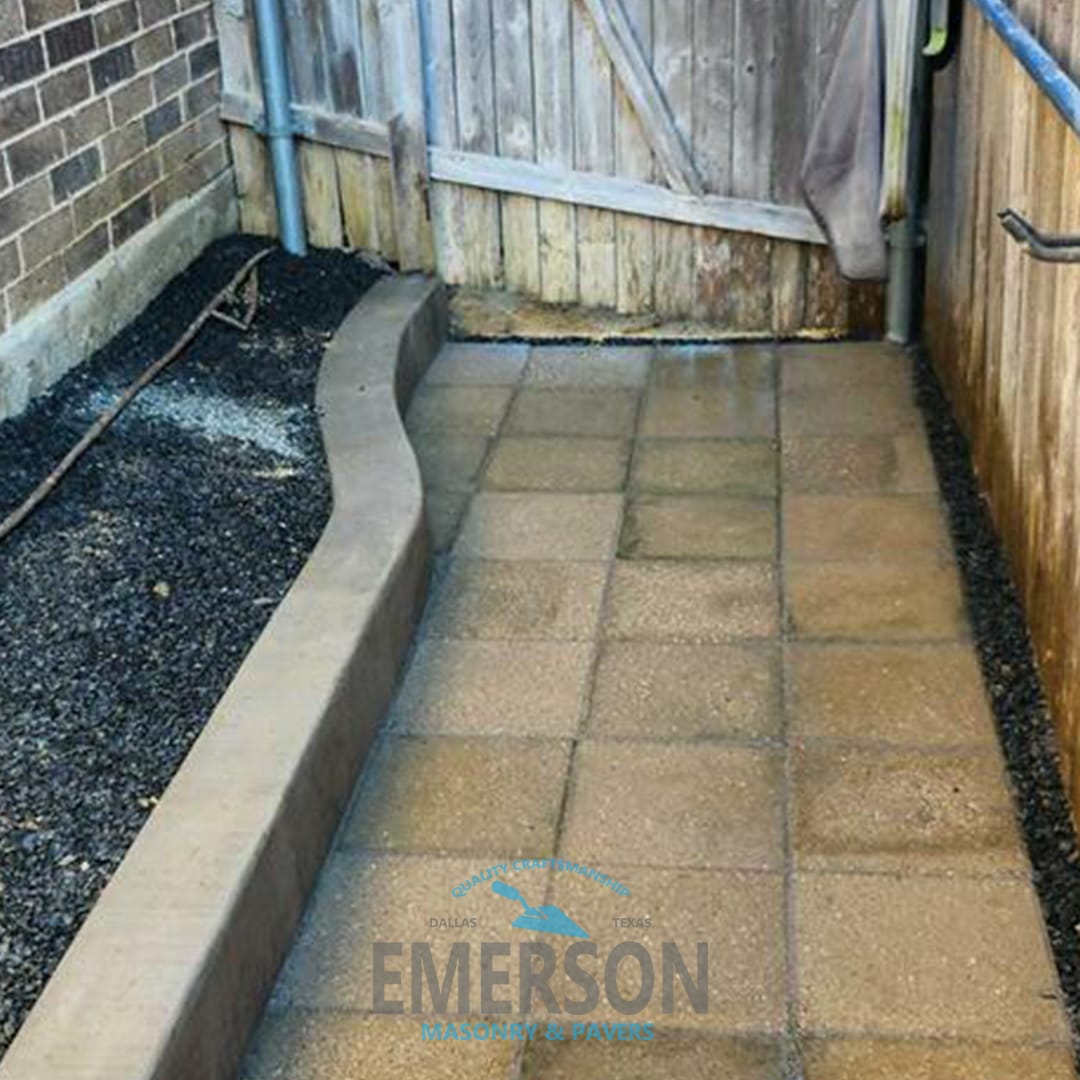
- Complements paver services and outdoor living areas
- Allows for natural drainage between stones
- Works well for decorative or low-height walls
Stone walls are often paired with brick repair or stucco repair in homes seeking a cohesive exterior design.
Considerations
Stone retaining walls may require more frequent maintenance in Texas soil, particularly if the base or drainage system isn’t properly constructed. Without professional planning, soil shifting can cause uneven settling.
Drainage: The Deciding Factor
Regardless of material, drainage is critical. Poor drainage is one of the leading causes of retaining wall failure. Proper backfill, weep holes, and grading help protect both concrete and stone walls from water pressure buildup.
At Emerson Pro Services, retaining wall projects are approached as complete systems—not just standalone structures.
Which Retaining Wall Is Best for Carrollton Homes?
The right choice depends on your property’s needs:
- Choose concrete retaining walls if you need structural strength, soil stabilization, or taller walls.
- Choose stone retaining walls if aesthetics, landscape integration, and lower wall heights are your priority.
In many cases, a hybrid solution combining concrete support with stone or brick finishes offers the best of both worlds.
Trust Emerson Pro Services for Retaining Wall Solutions
Whether your project involves retaining walls, concrete construction, paver services, or exterior masonry repair, Emerson Pro Services delivers expert craftsmanship tailored to Texas soil conditions. From design to installation, every detail is handled with durability and long-term performance in mind.
At Emerson Masonry & Pavers, we offer a wide range of high-quality pavers and professional installation and repair services for your outdoor space. Located at 2201 Midway Rd Suite E, Carrollton, TX, you can contact us today at 469-398-8498 or visit www.emersonproservices.com to get started on your project. With our wide range of materials and design options, masonry and pavers allow you to create a home that is both visually appealing and built to withstand the test of time.