

New Jersey homeowners experience changing weather throughout the year, from spring rain and summer thunderstorms to autumn leaves, winter snow, and repeated freeze-thaw cycles. Each season places a different type of stress on a home’s gutter system.
When gutters are properly sized, securely installed, and regularly maintained, they help direct roof runoff away from siding, landscaping, walkways, and areas near the foundation. When they are clogged, damaged, or poorly positioned, New Jersey weather can quickly expose the system’s weaknesses.
Understanding these seasonal effects can help homeowners schedule timely gutter cleaning, gutter repair, and drainage improvements before minor problems become more difficult to manage.
Why Gutters Matter in New Jersey
A gutter system collects rainwater and melting snow from the roof, carries it through the gutter channels, and releases it through downspouts. The discharge point should then move water away from the home through suitable grading, extensions, or other drainage solutions.
If any part of this path is blocked or damaged, water may:
- Spill over the gutter edge
- Run down siding and exterior trim
- Collect near the foundation
- Wash away mulch or soil
- Create puddles on walkways
- Stain masonry or siding
- Freeze around entrances and high-traffic areas
- Back up near the roof edge
Because the gutter and drainage system works as a connected path, problems at the downspout or discharge area can affect performance even when the gutters themselves appear clear.
Spring Rain Can Overwhelm Clogged Gutters
Spring often brings frequent rain along with pollen, seeds, twigs, and debris left from winter. If the gutters were not cleaned after autumn or inspected after freezing weather, water may have limited space to flow.
During a heavy rain, clogged gutters can fill rapidly and overflow. Water may run behind the gutter, soak the fascia, or fall directly beside the home.
Spring is a good time to check for:
- Debris inside gutters and downspout openings
- Loose hangers or fasteners
- Sections that sag or hold standing water
- Leaking seams and end caps
- Downspouts that drain slowly
- Soil erosion near discharge points
- Damage caused by snow or ice
Professional gutter cleaning can restore the water path and create an opportunity to identify repair needs before spring storms become more frequent.
Summer Thunderstorms Test Gutter Capacity
New Jersey summer storms can deliver substantial rainfall over a short period. A system that appears adequate during light rain may overflow when roof runoff increases quickly.
Several factors determine whether gutters can manage stormwater effectively:
- Roof size and pitch
- Gutter dimensions
- Number and placement of downspouts
- Gutter slope
- Outlet size
- Presence of roof valleys
- Condition of the underground or surface drainage path
Roof valleys concentrate water in specific areas. If the gutter is undersized, clogged, or incorrectly pitched, water may overshoot the edge. Adding a guard or splash diverter without evaluating the overall design may not correct the underlying capacity problem.
Experienced gutter contractors can assess whether cleaning, adjustment, larger downspouts, targeted gutter repair, or a redesigned system is the most appropriate solution.
Autumn Leaves Create Blockages
Fall is one of the most demanding seasons for gutters in tree-filled New Jersey neighborhoods. Leaves, pine needles, seed pods, and small branches can collect inside the channels and around downspout openings.
A blockage prevents water from moving freely. As additional debris accumulates, wet organic material becomes heavier and may contribute to sagging or separation from the fascia.
Common signs of fall clogs include:
- Plants growing from gutters
- Water spilling over one section
- Little or no flow from a downspout
- Staining below the roof edge
- Visible debris at the top of the downspout
- Gutters pulling away from the house
Schedule gutter cleaning after the majority of nearby leaves have fallen. Homes under heavy tree cover may require more than one cleaning during the season.
Winter Snow Adds Weight
Snow can accumulate on the roof and along the gutter line. As it melts, the gutter system must carry the water away. If gutters already contain leaves or standing water, freezing conditions can turn the contents into a heavy mass.
Excess weight may strain:
- Gutter hangers
- Fascia connections
- Seams and corners
- Downspout attachments
- Older or weakened gutter sections
Sagging can change the gutter’s slope, causing water to remain in low areas after temperatures rise. Homeowners should not pull on frozen gutters or attempt to remove heavy ice from a ladder. A professional can inspect the system when conditions are safe.
Freeze-Thaw Cycles Can Worsen Small Defects
New Jersey temperatures may move above and below freezing during winter. Water trapped inside a seam, crack, or low section can freeze and expand. When it thaws, it may enter the same opening again. Repeated cycles can enlarge leaks, loosen joints, and worsen damaged seals.
Freeze-thaw activity can also affect downspouts and underground drains. Water that cannot exit may freeze inside the drainage path and cause backups during the next melt or rain event.
Timely gutter repair is important because small leaks in autumn may become more noticeable after winter. Maintaining correct slope and open outlets helps reduce standing water that can freeze inside the system.
Ice Dams and Gutters Are Related—but Different
Ice dams form near the roof edge when melting snow refreezes before leaving the roof. Gutters do not cause every ice dam, and new gutters alone will not correct attic heat loss, insulation problems, or inadequate ventilation.
However, clogged or frozen gutters can make winter drainage more difficult. Water may have nowhere to go as snow melts, adding to ice accumulation around the eaves.
If ice repeatedly forms along the roof edge, the home may need a broader assessment involving roofing, insulation, ventilation, gutters, and drainage. Treating the gutter alone may leave the primary cause unresolved.
Wind Can Loosen Gutters and Carry Debris
Strong winds can deposit leaves, twigs, and roofing granules into gutters. They may also loosen already weakened hardware or shift lightweight accessories.
After a significant storm, visually inspect the system from the ground. Look for:
- Hanging or disconnected downspouts
- Bent gutter sections
- Loose corners or end caps
- Guards that have lifted or shifted
- Sections that are no longer level
- Water stains suggesting a new leak
Avoid climbing during wet, windy, icy, or otherwise unsafe conditions. Professional inspection is preferable when the system is high, difficult to access, or visibly unstable.
Coastal Conditions May Increase Corrosion Risks
Homes near the New Jersey coast may face additional exposure to wind-driven rain, salt in the air, and severe coastal storms. Metal fasteners, joints, and gutter materials should be inspected for corrosion or coating failure.
Material selection and installation details matter in these locations. A professional gutter installation should account for the home’s exposure, roof design, drainage volume, and local conditions.
Corrosion that begins around seams or fasteners can eventually lead to leaks or weakened connections. Early repairs may extend the life of the system, while widespread deterioration may make replacement more practical.
How Seamless Gutters Help Reduce Leak Points
Seamless gutters are formed in long continuous sections that are sized for the home. Because they use fewer joints along straight runs than sectional systems, there are fewer locations where leaks may develop.
Potential benefits include:
- Fewer seams along the gutter channel
- A tailored fit for the roofline
- A clean, consistent appearance
- Reduced reliance on multiple sectional joints
- Compatibility with different downspout and guard options
Seamless does not mean maintenance-free. Corners, outlets, end caps, and downspouts still require inspection, and debris can still create clogs. Proper slope and secure fastening remain essential.
Can Gutter Guards Handle New Jersey Weather?
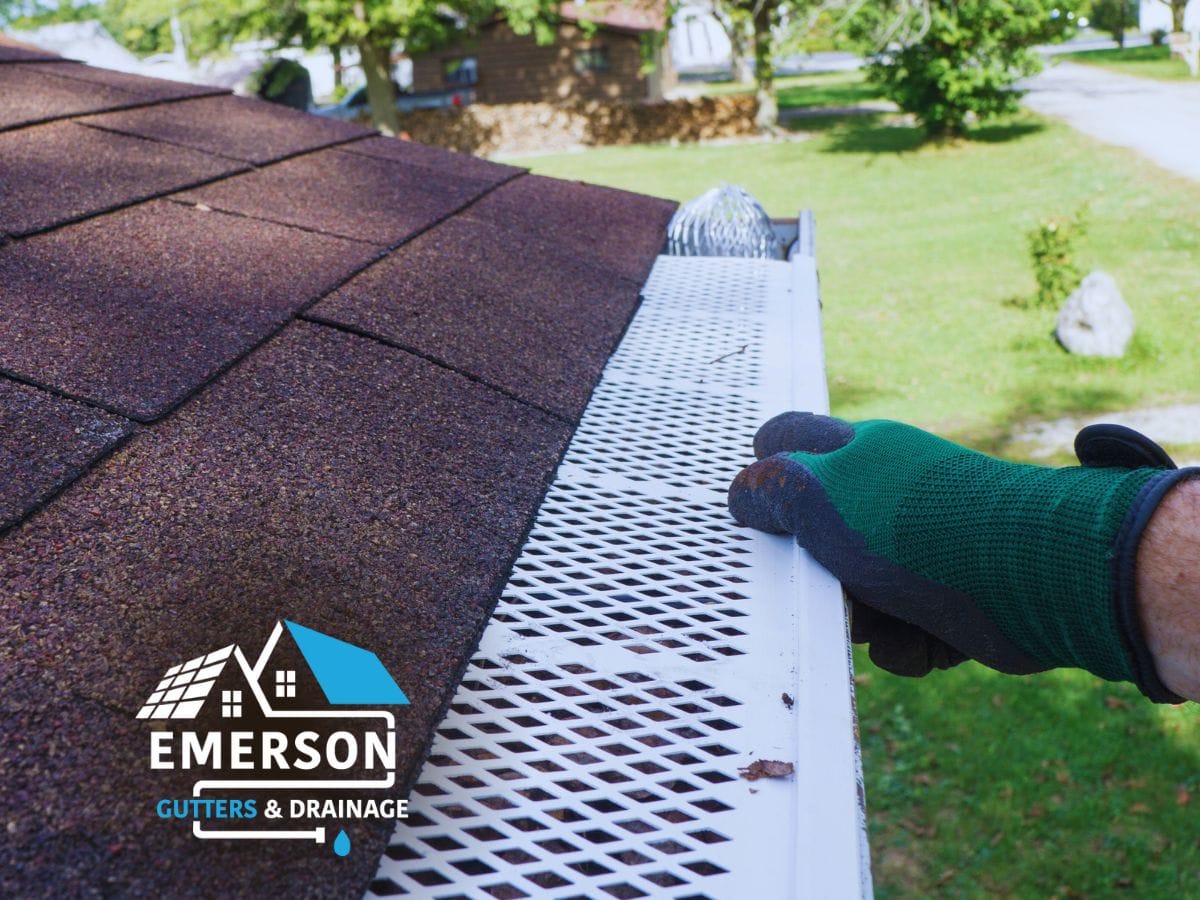
Gutter guards can reduce the amount of leaves and larger debris entering the system. They may be especially useful for homes surrounded by deciduous trees or pines.
However, guards do not eliminate maintenance. Fine debris, roof granules, pollen, and small seeds may pass through or collect on top. Snow and ice can also accumulate at the roof edge regardless of whether guards are present.
Before installing gutter guards, homeowners should confirm that:
- The gutters are correctly sized
- Existing leaks and sagging are repaired
- Downspouts are open
- The gutter slope is correct
- The guard is compatible with the roof and gutter
- The product can be inspected and cleaned when needed
The best guard depends on tree coverage, roof pitch, gutter type, and maintenance expectations.
Gutter and Drainage Must Work Together
Moving water off the roof is only the first step. The complete gutter and drainage plan must also carry that water away from the home.
If downspouts release water next to the foundation, the property may experience pooling, erosion, muddy areas, or runoff across walkways. The appropriate correction depends on the grading, soil, available discharge path, and local site conditions.
Possible drainage solutions may include:
- Properly positioned downspout extensions
- Catch basins
- Surface drains
- Underground drainage lines
- French drains in appropriate locations
- Grading adjustments
- Additional downspouts
No single solution works for every property. An evaluation should consider where the water originates, how it moves across the lot, and where it can be discharged safely.
Signs Your Gutter System Needs Repair
Seasonal weather can gradually damage gutters, even when no single storm appears severe. Arrange an inspection if you notice:
- Gutters sagging or pulling away from the fascia
- Water remaining after the rain stops
- Leaks at seams, corners, or end caps
- Peeling paint or decay around the roof edge
- Rust, cracks, dents, or holes
- Water overflowing during moderate rain
- Disconnected or crushed downspouts
- Erosion near downspout outlets
- Water collecting close to the home
- Repeated ice buildup in the same areas
Some problems require only targeted gutter repair, while extensively damaged or poorly designed systems may require replacement.
Seasonal Gutter Maintenance Checklist
Spring
- Remove winter debris
- Check for damage from snow and ice
- Test downspout flow
- Inspect seams, corners, and fasteners
- Confirm water moves away from the home
Summer
- Observe performance during heavy rain from a safe location
- Look for overflow at valleys
- Remove storm debris
- Check drainage outlets for erosion
- Repair loose downspouts
Fall
- Schedule gutter cleaning after leaf drop
- Clear roof-valley debris where safely accessible
- Check gutter guards
- Confirm downspouts are open before freezing weather
- Repair leaks and sagging sections
Winter
- Monitor gutters from the ground
- Watch for unusual sagging or separation
- Avoid pulling on frozen gutters
- Note recurring ice areas for later evaluation
- Arrange safe professional help when needed
When to Consider a New Gutter Installation
Repair may be practical when damage is limited to a few joints, hangers, or short sections. A new gutter installation may be more appropriate when:
- Corrosion or cracking is widespread
- Multiple sections sag or leak
- Gutters are too small for the roof runoff
- The system has poor downspout placement
- Water repeatedly overflows despite cleaning
- The fascia can no longer hold the hardware securely
- The existing design does not support effective drainage
A professional plan should consider more than gutter appearance. Roof area, pitch, valleys, runoff concentration, downspout capacity, discharge points, and local weather exposure all influence performance.
Choosing a Gutter Company in New Jersey
When selecting a gutter company in New Jersey, ask for a complete evaluation rather than a product-only recommendation. Reliable gutter contractors should inspect the roofline, fascia, gutter slope, downspout placement, drainage path, and signs of water-related damage.
Ask whether the proposed work includes:
- Removal of the existing system, if needed
- Repair of accessible mounting surfaces
- On-site fabrication of seamless gutters
- Correct gutter sizing and slope
- Appropriate downspout quantity and placement
- Cleanup and disposal
- Testing of water flow
- Written product and workmanship details
A clear scope helps homeowners compare recommendations and understand how the new or repaired system will handle seasonal conditions.
Protect Your New Jersey Home With Emerson Pro Services
Rain, leaves, snow, ice, wind, and changing temperatures can all affect a gutter system. Regular cleaning and timely repairs help keep water moving, but the best results come from treating gutters, downspouts, and property drainage as one connected system.
Emerson Pro Services provides gutter and drainage solutions for New Jersey homeowners, including gutter cleaning, gutter repair, seamless gutter installation, gutter guards, downspout improvements, and drainage planning.
Contact Emerson Pro Services to schedule an inspection and determine what your home needs to better manage New Jersey weather.
Contact Details:
769 US-9 Hwy Unit 3B, Berkeley Township, New Jersey
732-913-3871 / 732-647-9850
Frequently Asked Questions
How often should gutters be cleaned in New Jersey?
Many homes benefit from cleaning at least twice a year, commonly in spring and after autumn leaf drop. Properties with heavy tree coverage may require more frequent service.
Can winter weather damage gutters?
Yes. Snow weight, trapped ice, freeze-thaw cycles, and blocked downspouts can strain hangers, widen leaks, and cause gutters to sag or pull away.
Are seamless gutters better for New Jersey homes?
Seamless gutters have fewer joints along straight runs, which can reduce potential leak points. Their performance still depends on correct sizing, slope, fastening, downspout placement, and maintenance.
Do gutter guards eliminate gutter cleaning?
No. Gutter guards reduce larger debris but still need periodic inspection and cleaning. Fine debris can enter the gutter or collect on top of the guard.
Why do my gutters overflow during heavy rain?
Possible causes include clogs, undersized gutters, too few downspouts, improper slope, blocked outlets, roof-valley runoff, or drainage backups. An inspection can identify the specific issue.
When should gutters be repaired instead of replaced?
Repair may be suitable for isolated leaks, loose hangers, or limited damage. Replacement may be more cost-effective when corrosion, sagging, poor design, or leaks affect much of the system.