

Heavy rainfall can reveal every weakness in a home’s gutter system. Leaking seams, clogged downspouts, incorrect gutter slopes, and undersized channels may cause water to spill over the roofline and collect near the property. For Garland homeowners, these problems can damage fascia boards, exterior walls, landscaping, and soil surrounding the foundation.
Professionally installed seamless gutters provide a dependable way to manage roof runoff. Their continuous design contains fewer joints than traditional sectional gutters, reducing potential leak points while creating a system customized to the home.
What Are Seamless Gutters?
Seamless gutters are formed from long, continuous pieces of material. Instead of assembling several short sections along each side of the roof, an installer uses specialized equipment to create gutter runs based on the home’s measurements.
These systems are not entirely free of joints. Connections are still needed at corners, end caps, and downspout outlets. However, they contain far fewer seams than sectional gutters.
The primary advantages include:
- Fewer potential leak points
- Custom lengths for the roofline
- Reduced risk of sections separating
- A smooth and consistent appearance
- Less debris collecting at gutter joints
- Lower joint-maintenance requirements
These features make seamless construction especially useful in areas that experience intense rainfall.
Fewer Seams Reduce the Risk of Leaks
The joints in sectional gutters can weaken over time. Sealants deteriorate, fasteners loosen, and connected pieces may shift as temperatures change.
During heavy rain, water can escape through these openings and reach:
- Fascia boards
- Exterior siding
- Brick or stucco
- Windows and doors
- Flower beds
- Walkways
- Soil near the foundation
Because seamless gutters contain fewer joints, they provide fewer locations where leaks can develop. Corners and outlet connections must still be inspected, but long gutter runs have a more continuous path for water.
Custom Sizing Helps Manage Heavy Rain
The gutter system must be large enough to collect runoff from the roof. If its capacity is insufficient, water may overflow even when the channels are clean.
Professional gutter installation considers:
- Roof surface area
- Roof pitch
- Number of roof levels
- Position of roof valleys
- Length of gutter runs
- Number and size of downspouts
- Areas receiving concentrated runoff
A steep or complex roof may send large amounts of water toward a single gutter section. Larger gutters or additional downspouts may be recommended to accommodate that volume.
Custom fabrication allows the installer to design each run around the property instead of relying on standard, pre-cut pieces.
Proper Gutter Pitch Keeps Water Moving
Gutters may appear level, but they require a slight slope toward the downspouts. This pitch allows water to leave the system rather than remaining inside the channels.
Incorrect slope can cause:
- Standing water
- Debris accumulation
- Added weight
- Sagging sections
- Corrosion
- Mosquito activity
- Water spilling over low areas
During seamless gutter installation, professionals carefully position the hangers to create a consistent slope. This supports efficient drainage while maintaining a clean appearance along the roofline.
Secure Fastening Helps Gutters Withstand Storms
Rainwater and wet debris add considerable weight to gutters. Strong winds may place even more pressure on the system.
If hangers are too widely spaced or attached to deteriorated fascia, the gutters may pull away from the house. Once the system becomes misaligned, water may flow behind it or collect in low sections.
Professional installers inspect the fascia and use suitable hangers and fasteners. Damaged wood should be addressed before the new gutters are installed.
Secure attachment helps the system remain aligned and functional during Garland’s heavy storms.
Larger Downspouts Improve Drainage
Even high-capacity gutters will overflow if water cannot leave quickly enough. Downspouts must be properly sized and placed to handle the runoff collected from the roof.
A professional may recommend:
- Larger downspouts
- Additional downspouts
- Wider outlet openings
- Fewer sharp downspout bends
- Extended discharge points
- Underground drainage connections
Downspouts should release water far enough from the home that it does not collect beside the foundation. When the existing components are damaged, professional downspout repair can restore the drainage path.
Seamless Gutters Help Protect Fascia Boards
Fascia boards run behind the gutters along the roof edge. Overflowing or leaking gutters can repeatedly expose these boards to water, eventually causing stains, peeling paint, or wood deterioration.
Water may also enter behind the gutter when:
- The system is installed too low
- The gutter is pulling away from the house
- The drip edge is damaged
- Hangers have become loose
- Debris forces water over the back edge
A properly positioned seamless system helps collect water as it leaves the roof and directs it toward the downspouts. Fewer gutter joints also reduce opportunities for water to leak against the fascia.
Effective Drainage Helps Protect the Foundation
Gutters are only the first part of rainwater management. After runoff enters the downspouts, it must be directed to a safe discharge area.
If water is released beside the house, it can saturate the surrounding soil. Repeated moisture changes may contribute to erosion, standing water, and drainage concerns around the foundation.
Depending on the property, professional drainage services may include:
- Downspout extensions
- Underground downspout drains
- Catch basins
- Surface drains
- French drains
- Channel drains
- Yard-grading improvements
The best solution depends on how the property slopes, where water collects, and where runoff can be safely discharged.
Seamless Gutters Can Reduce Debris Buildup at Joints
Leaves, twigs, seeds, and roof granules can become trapped around the connections in sectional gutters. As debris accumulates, it may restrict water flow and contribute to clogs.
Seamless systems have fewer joints along each run, creating a smoother path toward the downspouts. This does not make them maintenance-free, but it can reduce the number of places where debris catches.
Homes surrounded by trees may also benefit from compatible gutter guards. The guards should be selected based on the types of debris around the property and the volume of rainwater the roof produces.
Routine Cleaning Is Still Necessary
Even the best gutters require regular gutter cleaning. Leaves and sediment can block downspout outlets, while small particles may collect inside the channels.
Cleaning should include:
- Removing debris from the gutter runs.
- Clearing downspout openings.
- Checking elbows for blockages.
- Flushing the system to confirm water flow.
- Inspecting underground drainage connections.
- Removing debris from gutter guards.
- Checking for leaks or loose fasteners.
Many homes benefit from cleaning once or twice per year. Properties with heavy tree coverage may need more frequent service, particularly after storms or seasonal leaf fall.
Gutter Maintenance Extends System Life
Regular gutter maintenance helps preserve the system and identify minor concerns before they become expensive repairs.
A maintenance visit may include:
- Inspecting corners and outlet connections
- Tightening loose hangers
- Checking the gutter slope
- Examining the fascia
- Looking for dents or storm damage
- Confirming downspout flow
- Checking drainage discharge areas
- Sealing isolated leaks
Homeowners should also observe the gutters from a safe location during rainfall. Overflow, dripping connections, or water collecting near the house may indicate that service is needed.
When Do Seamless Gutters Need Repair?
Although seamless systems have fewer leak points, they can still sustain damage from falling branches, ladders, wind, hail, or long-term wear.
Contact a gutter repair professional if you notice:
- Leaking corners
- Loose hangers
- Sagging sections
- Gutters pulling away from the fascia
- Dented or crushed areas
- Detached downspouts
- Standing water
- Overflow after cleaning
- Water leaking behind the gutters
Prompt gutter repair may restore the system before the damage spreads. If the gutters are extensively deteriorated or incorrectly sized, replacement may be the more practical solution.
Seamless Gutters Improve Curb Appeal
Gutters are primarily functional, but they also affect the appearance of the home. Multiple joints, mismatched sections, and visible sealant can make an older system look uneven.
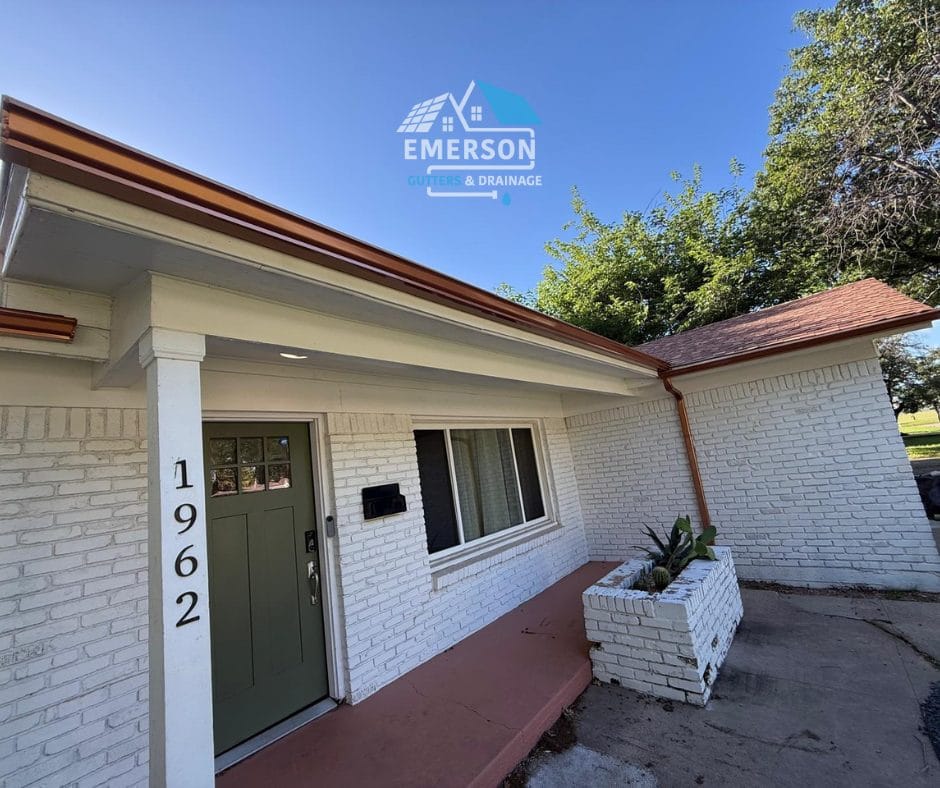
Seamless gutters create a cleaner line along the roof edge. Aluminum systems are available in various colors and can often be coordinated with the roof, trim, siding, or brick.
A customized fit gives the home a finished appearance while improving rainwater management.
Why Professional Installation Matters
Seamless systems require specialized machinery and cannot be assembled from standard pieces like traditional DIY gutters. Their performance depends on precise measurement and correct installation.
Common installation errors include:
- Insufficient gutter slope
- Poor hanger spacing
- Inadequate downspouts
- Gutters positioned incorrectly beneath the roof
- Downspouts discharging too close to the foundation
- Failure to repair damaged fascia
- Undersized gutters for the roof area
Professional gutter services in Garland should begin with an inspection of the roofline and surrounding drainage conditions. The installer can then recommend the appropriate gutter size, material, hanger placement, and downspout configuration.
Protect Your Garland Home With Seamless Gutters
Garland’s heavy rain can overwhelm gutters that are leaking, undersized, clogged, or poorly installed. Seamless gutters offer fewer potential leak points, a customized fit, reliable water flow, and a clean exterior appearance.
Emerson Pro Services offers gutter services in Garland, including seamless gutter installation, repair, cleaning, maintenance, downspout repair, and drainage services. The team can evaluate the entire rainwater path—from the roof to the final discharge area—and recommend a solution suited to your property.
Contact Emerson Pro Services to schedule an inspection and prepare your home for the next heavy Texas storm.
For gutter guards, gutter inspections, gutter cleaning, repairs, or residential and commercial gutter installations in Garland, Texas, contact Emerson Pro Services. Visit emersonproservices.com or call
(214) 972-0811 to discuss your property’s gutter and drainage needs.
Frequently Asked Questions
Are seamless gutters better for heavy rain?
Seamless gutters can perform well during heavy rain because they have fewer joints where leaks may develop. They must still be correctly sized, pitched, and connected to adequate downspouts.
Are seamless gutters completely free of seams?
No. Joints are still required at corners, end caps, and downspout outlets. However, long gutter runs are created from continuous pieces and contain fewer seams than sectional gutters.
Do seamless gutters require cleaning?
Yes. Leaves, roof granules, seeds, and other debris can still collect inside them. Routine cleaning helps prevent clogs and keeps water moving toward the downspouts.
Can seamless gutters be repaired?
Many isolated problems can be repaired, including leaking corners, loose hangers, and damaged downspouts. A severely bent or deteriorated run may require replacement.
How do downspouts protect a home during heavy rain?
Downspouts move water out of the gutters and toward a suitable discharge point. If they are too small, clogged, or poorly positioned, the gutters may overflow.
Do new gutters solve every drainage problem?
No. New gutters manage roof runoff, but additional drainage improvements may be necessary when the yard has poor grading, standing water, or inadequate discharge routes.