

Well-planned masonry and paver upgrades can improve a Frisco property’s appearance, functionality, safety, and marketability. Features such as a welcoming paver walkway, an attractive patio, repaired brickwork, or a properly constructed retaining wall may help a home make a stronger impression while creating outdoor areas that homeowners can use every day.
However, no exterior project guarantees a specific increase in appraisal value or resale price. The results depend on the quality of the installation, the condition of the property, neighborhood expectations, material selection, maintenance, and current market conditions. The most valuable upgrades generally combine visual appeal with practical improvements.
Why Exterior Improvements Matter to Frisco Homeowners
Exterior surfaces are among the first features prospective buyers notice. Cracked concrete, uneven pavers, deteriorated mortar, and damaged brick may suggest that a property requires substantial maintenance. Clean, coordinated hardscaping can create a more favorable first impression.
Professional masonry services in Frisco may improve a property by:
- Creating more attractive entrances
- Expanding usable outdoor living space
- Repairing visible masonry deterioration
- Improving access around the property
- Reducing trip hazards
- Supporting landscaping and drainage
- Updating an aging exterior
- Making outdoor areas easier to maintain
- Creating architectural consistency
- Correcting neglected concrete or paver surfaces
The best project depends on the home’s condition and the improvements buyers commonly expect in its price range.
How Masonry and Paver Projects Create Value
The value of a masonry project is not limited to its appearance. A well-designed improvement may contribute to several aspects of the property.
Improved Curb Appeal
A new walkway, driveway border, masonry mailbox, or repaired brick facade can make the exterior look more complete and cared for.
Greater Functionality
A paver patio, outdoor kitchen foundation, or expanded seating area may provide space for dining, entertaining, and relaxing.
Safer Access
Repairing uneven concrete or displaced pavers can reduce tripping hazards around entrances, walkways, steps, and patios.
Better Property Organization
Walkways, retaining walls, borders, and paved seating areas help define how different parts of the yard should be used.
Reduced Visible Maintenance
Completed brick repair, mortar restoration, and concrete repairs may prevent buyers from immediately identifying unfinished exterior work.
Improved Marketability
An attractive outdoor area can help a property stand out, especially when competing homes have basic or poorly maintained exteriors.
A Paver Walkway Can Strengthen the Entrance
The route from the driveway or sidewalk to the front door shapes a visitor’s first experience of the property. A narrow, cracked, or uneven path may make the entrance feel neglected.
A professionally installed paver walkway can create:
- A clear route to the front door
- Better visual connection between the home and landscaping
- A wider and more comfortable walking surface
- Decorative patterns that complement the exterior
- Defined edges around lawns and planting beds
- Easier replacement of individual damaged units
- Improved access to side yards and outdoor spaces
Pavers are available in numerous colors, shapes, textures, and laying patterns. The selected design should coordinate with the home’s brick, stone, roof, trim, and existing concrete.
An overly elaborate walkway may look disconnected from a modest exterior. The strongest design usually appears as though it was planned with the house rather than added later.
Paver Driveways and Driveway Accents
A driveway occupies a large portion of many front elevations. Its condition can significantly affect curb appeal.
A complete paver driveway may offer a distinctive appearance, but it requires careful base preparation, edge restraint, grading, compaction, and joint stabilization. Vehicle loads make preparation particularly important.
Homeowners who do not want to replace an entire driveway may consider:
- Paver borders
- A decorative driveway apron
- Paver bands between concrete sections
- A coordinated walkway connection
- Masonry columns near the driveway entrance
- Repairing cracked or deteriorated concrete sections
These improvements may update the entrance without requiring a complete driveway reconstruction.
Before modifying a driveway, the contractor should evaluate drainage, slope, soil conditions, vehicle access, and the condition of the existing surface.
A Paver Patio Expands Usable Living Space
A functional backyard can make a home more appealing to people who enjoy outdoor dining and entertaining. A paver patio creates a defined surface for furniture, grills, shade structures, and outdoor activities.
A well-designed patio should account for:
- Available yard space
- Access from the house
- Furniture dimensions
- Sun and shade exposure
- Drainage
- Cooking equipment
- Walkways
- Landscaping
- Privacy
- Future additions
- Maintenance requirements
A patio that is too small may feel crowded once furniture is added. One that is too large may overwhelm the yard or require more maintenance than the homeowner wants.
The goal should be to create an outdoor area that is proportional to the house and easy to use.
Outdoor Kitchens and Masonry Seating
North Texas homeowners often use patios as extensions of their indoor living areas. Masonry can provide permanent structure for outdoor kitchens, built-in seating, fire features, and decorative walls.
Possible features include:
- Masonry grill surrounds
- Outdoor countertops
- Stone or brick islands
- Built-in seating walls
- Fire-pit surrounds
- Raised planting areas
- Columns for lighting
- Privacy walls
- Equipment enclosures
- Steps between patio levels
These features may make an outdoor area more functional, but they require detailed planning. Gas, electricity, water, drainage, ventilation, clearances, and local requirements may affect the design.
Homeowners should consider how frequently each feature will be used. A simple, spacious patio may provide more practical value than an elaborate installation that consumes most of the available yard.
Brick Repair Protects Existing Property Value
Not every valuable masonry project involves adding something new. Repairing existing deterioration may be equally important.
Professional brick repair may address:
- Cracked bricks
- Loose masonry units
- Missing mortar
- Deteriorated joints
- Localized displacement
- Gaps around openings
- Previous incompatible repairs
- Damaged steps or entry features
- Moisture-related staining
- Separation around masonry details
Damaged masonry can make an otherwise attractive home appear poorly maintained. Timely masonry repair may improve the exterior while helping prevent localized problems from spreading.
The cause of the damage should be investigated before repairs begin. Cracks may be related to moisture, corrosion, impact, installation problems, soil movement, or structural conditions. Replacing the brick without addressing the source may result in recurring damage.
Retaining Walls Add Structure and Function
Properly designed retaining walls can help manage changes in elevation, support landscaping, define planting areas, and create more usable sections of a sloped yard.
Potential benefits include:
- Better-defined landscape beds
- Reduced soil movement
- More organized drainage
- Additional level areas
- Integrated seating
- Improved transitions between elevations
- Stronger visual structure in the yard
A retaining wall is more than a decorative border. Wall height, soil pressure, drainage, footing preparation, reinforcement, and the material used all affect performance.
Water collecting behind a wall can create substantial pressure. Professional design and installation should provide an appropriate drainage path rather than trapping water behind the structure.
Concrete Works Support Masonry Improvements
Professional concrete works often form the foundation of larger masonry and paving projects. Concrete may be used for patios, walkways, steps, driveway sections, equipment pads, footings, and transitions between outdoor surfaces.
Concrete projects require attention to:
- Soil and base preparation
- Surface elevation
- Drainage slope
- Reinforcement
- Joint placement
- Surface texture
- Edges and transitions
- Curing conditions
- Connections to existing concrete
- Access around the property
Decorative concrete may also be coordinated with masonry and pavers. For example, a concrete patio can include a paver border, or a paver walkway can connect to concrete steps.
Good coordination helps prevent awkward changes in height, poor drainage, and mismatched finishes.
Chimney and Flashing Repair Can Prevent Larger Problems
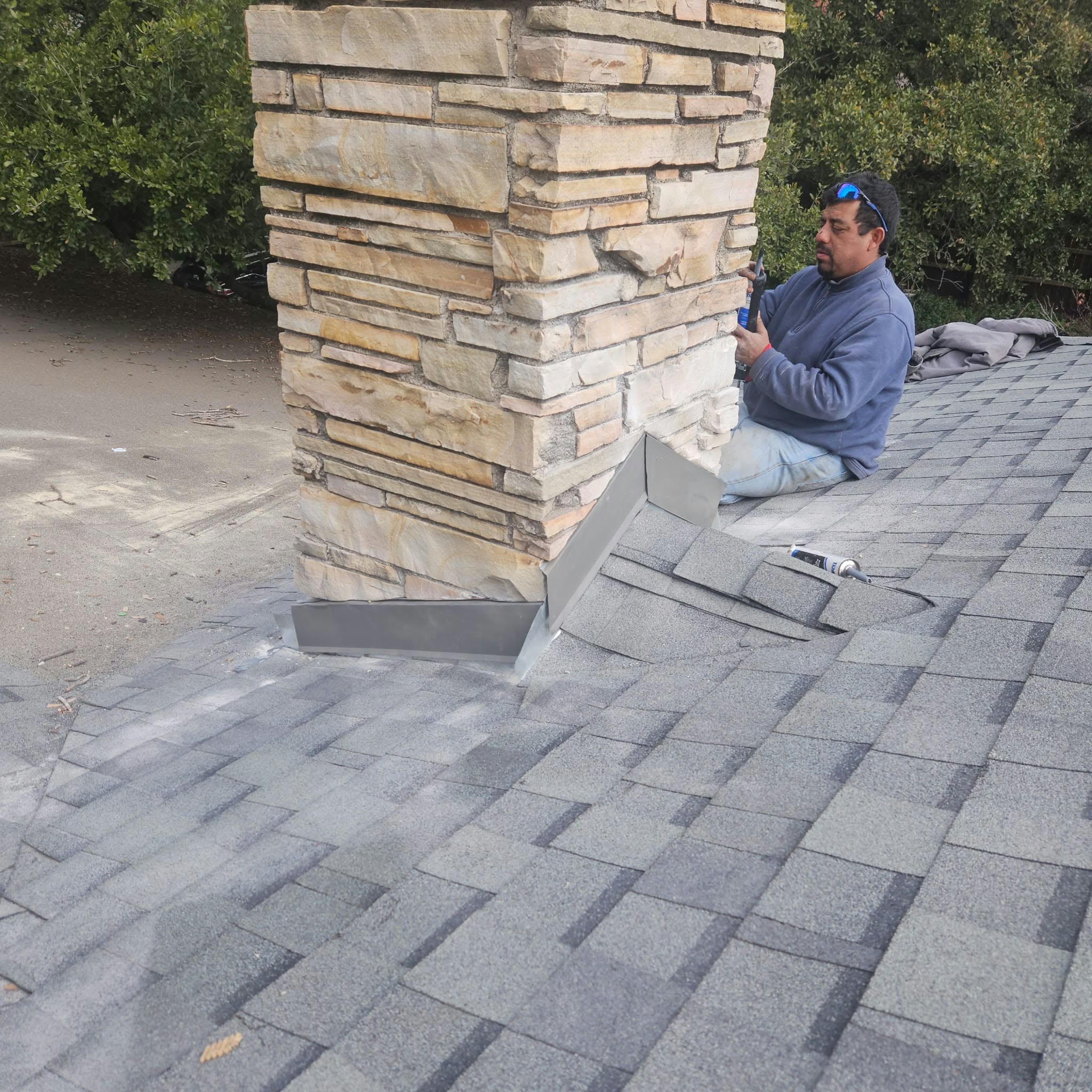
A chimney is both an architectural feature and a vulnerable part of the exterior. Cracked mortar, damaged masonry, deteriorated caps, and failed flashing may allow moisture to enter the chimney or surrounding building materials.
Professional chimney and flashing repair may involve evaluating:
- Mortar joints
- Cracked or displaced bricks
- Chimney crowns or caps
- Flashing connections
- Roof intersections
- Visible moisture staining
- Sealant around penetrations
- Nearby roofing materials
Addressing chimney deterioration may protect the home from additional moisture damage. It can also improve the appearance of a highly visible exterior feature.
Roofing and masonry components must work together. Repairing only the brick may not solve a leak caused by damaged flashing, while replacing flashing may not correct severely deteriorated masonry.
Hardscaping Can Improve Drainage—When Designed Correctly
A new patio or walkway changes how water moves across a property. If the surface is installed at the wrong elevation or slope, runoff may collect near the house, flow toward a neighboring property, or remain on the paved area.
Professional hardscape installation should consider:
- Existing property grading
- Roof downspout locations
- Soil conditions
- Low areas
- Nearby foundations
- Landscape beds
- Drainage outlets
- Surface slope
- Patio and walkway elevations
- Connections to other paved areas
Frisco and the surrounding North Texas region contain areas with expansive soils. Changes in soil moisture may contribute to movement beneath outdoor surfaces. Proper excavation, base preparation, compaction, drainage, and joint design can help the finished project perform more reliably.
Pavers Offer Repair and Design Flexibility
One advantage of interlocking pavers is that individual units may sometimes be removed and replaced if they become damaged or if underground work is required.
Pavers also provide flexibility in:
- Color
- Shape
- Texture
- Pattern
- Border design
- Surface size
- Curved layouts
- Material combinations
However, pavers are not maintenance-free. Joint material may need attention, weeds can appear if maintenance is neglected, and settlement can occur when the base is inadequate.
Quality paving services in Frisco should include more than placing pavers on the ground. The long-term result depends on excavation, base depth, compaction, edge restraint, drainage, bedding material, and joint stabilization.
Choose Improvements That Match the Home
An upgrade does not need to be the most expensive option to create value. Materials and features should suit the property’s architecture, size, neighborhood, and expected use.
Before selecting a project, consider:
- Does the material complement the home?
- Is the scale appropriate for the yard?
- Will the improvement be used regularly?
- Does it solve an existing problem?
- Is the surface easy to maintain?
- Does the design improve circulation?
- Will drainage remain functional?
- Are future repairs practical?
- Does the project fit neighborhood expectations?
- Will the finished space look integrated?
Overbuilding can reduce the project’s practical return. A very elaborate patio or outdoor kitchen may not provide proportionate value if it consumes the entire yard or exceeds what buyers expect for the property.
Maintenance Helps Preserve the Investment
Even professionally installed masonry and pavers require routine care. Maintenance needs depend on the material, exposure, drainage, and type of installation.
A practical maintenance plan may include:
- Removing leaves and debris
- Cleaning stains promptly
- Monitoring mortar joints
- Replacing damaged pavers
- Correcting developing settlement
- Keeping drainage paths clear
- Controlling vegetation near masonry
- Checking retaining-wall drainage
- Inspecting chimney masonry and flashing
- Using compatible cleaning products
- Resealing materials when appropriate
- Addressing minor cracks before they expand
Homeowners should ask their contractor for material-specific care instructions. Aggressive pressure washing, unsuitable chemicals, or incompatible sealers may damage some surfaces.
Repair Before Adding Decorative Features
When planning an exterior renovation, existing safety, drainage, and structural concerns should be addressed before decorative upgrades.
Priorities may include:
- Correcting active water problems
- Repairing unstable steps or walkways
- Evaluating significant masonry cracks
- Addressing displaced brick or stone
- Correcting drainage near the foundation
- Repairing damaged chimney masonry or flashing
- Stabilizing retaining walls
- Completing cosmetic improvements
Installing new pavers beside deteriorated masonry may make the older damage more noticeable. Coordinating repair and installation can produce a more consistent finished appearance.
Comparing Masonry and Paving Estimates
Estimates may vary because contractors use different materials, base depths, reinforcement methods, preparation procedures, and project assumptions.
When comparing proposals, review:
- The exact work area
- Demolition and removal
- Excavation depth
- Base material and compaction
- Paver or masonry specifications
- Edge restraints
- Drainage provisions
- Concrete reinforcement
- Joint materials
- Cleanup
- Permit responsibility
- Project schedule
- Warranty coverage
- Repair exclusions
A lower estimate may omit preparation or drainage work included in another proposal. Compare the complete scope rather than looking only at the final price.
Work With a Masonry Contractor in Frisco
A qualified masonry contractor in Frisco should inspect the property before recommending materials or construction methods. The contractor should evaluate the existing surfaces, grading, drainage, soil conditions, architecture, and intended use of the space.
Emerson Pro Services provides masonry and paver services in Frisco, including patios, walkways, retaining walls, stone seating, outdoor kitchens, custom hardscapes, masonry repairs, and related exterior improvements.
A coordinated plan can help homeowners choose upgrades that improve curb appeal and outdoor functionality without creating unnecessary maintenance or drainage problems.
Call Emerson Pro Services at 469-414-9195 to request an onsite estimate for concrete or masonry work in Frisco.
Frequently Asked Questions
Do masonry and paver upgrades always increase home value?
No project guarantees a specific increase in appraisal or resale value. The effect depends on workmanship, material selection, property condition, neighborhood expectations, maintenance, and market conditions. Improvements that enhance appearance and practical use may strengthen buyer appeal.
Which masonry upgrade provides the most value?
The best upgrade depends on the property. Repairing damaged brick may be the highest priority for one home, while another may benefit more from a paver patio, safer walkway, improved driveway entrance, or functional retaining wall.
Is a paver patio a good investment in Frisco?
A well-designed paver patio can expand usable outdoor living space and improve backyard appeal. Its value depends on the size, location, drainage, material quality, installation, and how well it fits the home and yard.
Are pavers better than concrete?
Neither material is best for every project. Pavers provide design flexibility and allow individual units to be replaced. Concrete can create a continuous, practical surface. Base preparation and drainage are essential for both.
Can pavers be installed over existing concrete?
Pavers may be installed over certain stable concrete surfaces, but the existing slab must be evaluated for cracks, movement, elevation, drainage, and clearance. Covering unstable concrete will not correct the underlying problem.
Should brick cracks be repaired before selling a home?
Visible brick or mortar damage should be professionally evaluated. Timely repairs may improve appearance and reduce buyer concerns, but the cause of significant or recurring cracks should be identified before cosmetic work begins.
Do retaining walls add home value?
A properly designed retaining wall may improve landscaping, manage elevation changes, and create more usable space. Its contribution depends on whether it solves a real property problem and whether drainage and construction are handled correctly.
How do I maintain a paver walkway or patio?
Keep the surface clean, control vegetation, monitor joint material, correct settlement, replace damaged units, and maintain surrounding drainage. Follow the contractor’s recommendations for cleaning and sealing.
- masonry and paver services
- masonry contractor in Frisco