

Professional concrete services in Frisco can improve a property with durable driveways, patios, walkways, steps, slabs, foundations, and outdoor living features. However, successful concrete construction depends on far more than pouring and finishing a mixture.
Frisco’s expansive soil, high summer temperatures, heavy storms, changing moisture levels, and occasional freezes can affect both installation and long-term performance. Proper planning must address excavation, soil preparation, drainage, reinforcement, concrete specifications, joint placement, finishing, and curing.
Understanding these factors can help homeowners compare estimates, avoid shortcuts, and choose concrete work suited to their property.
Why Concrete Construction Requires Careful Planning
Concrete is strong in compression, but it can crack when subjected to tension, settlement, shrinkage, thermal movement, or inadequate support. A durable slab therefore depends on the entire system beneath and within the concrete.
Site preparation, base material, compaction, reinforcement, thickness, concrete mixture, placement conditions, finishing, joints, and curing all influence performance. Drainage is equally important because water can erode the supporting soil or create uneven moisture conditions.
A high-strength concrete mixture cannot compensate for an unstable base or poor drainage. Professional masonry services in Frisco should evaluate these conditions before construction begins.
How Frisco Soil Affects Concrete
Much of North Texas contains expansive clay soil. This soil can swell when it absorbs moisture and shrink when it dries.
Seasonal movement may place stress on patios, walkways, driveways, retaining walls, and other concrete structures. If the soil beneath a slab is poorly compacted or contains inconsistent moisture, sections may settle or lift at different rates.
The contractor should evaluate the project area, remove unsuitable material when necessary, and prepare a stable base. The required method depends on the soil, project type, expected load, drainage, and surrounding construction.
No preparation method can guarantee that concrete will never crack, but good site work can reduce preventable movement and settlement.
Common Residential Concrete Services
Concrete can be used for many structural and decorative applications. Each project requires different dimensions, reinforcement, surface treatments, and drainage considerations.
Common concrete services include:
- Concrete driveways
- Patios and outdoor living areas
- Sidewalks and garden paths
- Front entry walkways
- Steps and landings
- Equipment pads
- Shed slabs
- Garage slabs
- Concrete foundations
- Pool-deck areas
- Retaining-wall footings
- Concrete curbs
- Decorative concrete
- Slab extensions
- Removal and replacement of damaged concrete
The intended use should be defined before the slab is designed. A patio that supports furniture has different requirements from a driveway that regularly carries vehicles.
Concrete Driveway Installation
A driveway must withstand vehicle loads, weather exposure, water runoff, and repeated daily use. The design should consider slab thickness, base preparation, reinforcement, joints, slope, and transitions to the garage and street.
The contractor should also evaluate whether downspouts or neighboring surfaces direct water across the driveway. Concentrated runoff can stain the concrete, erode soil along the edges, or contribute to settlement.
Control joints should be placed to encourage shrinkage cracks to occur in planned locations. Isolation joints may also be needed where the driveway meets fixed structures.
The surface finish should provide adequate traction without being unnecessarily rough or difficult to clean.
Concrete Patios
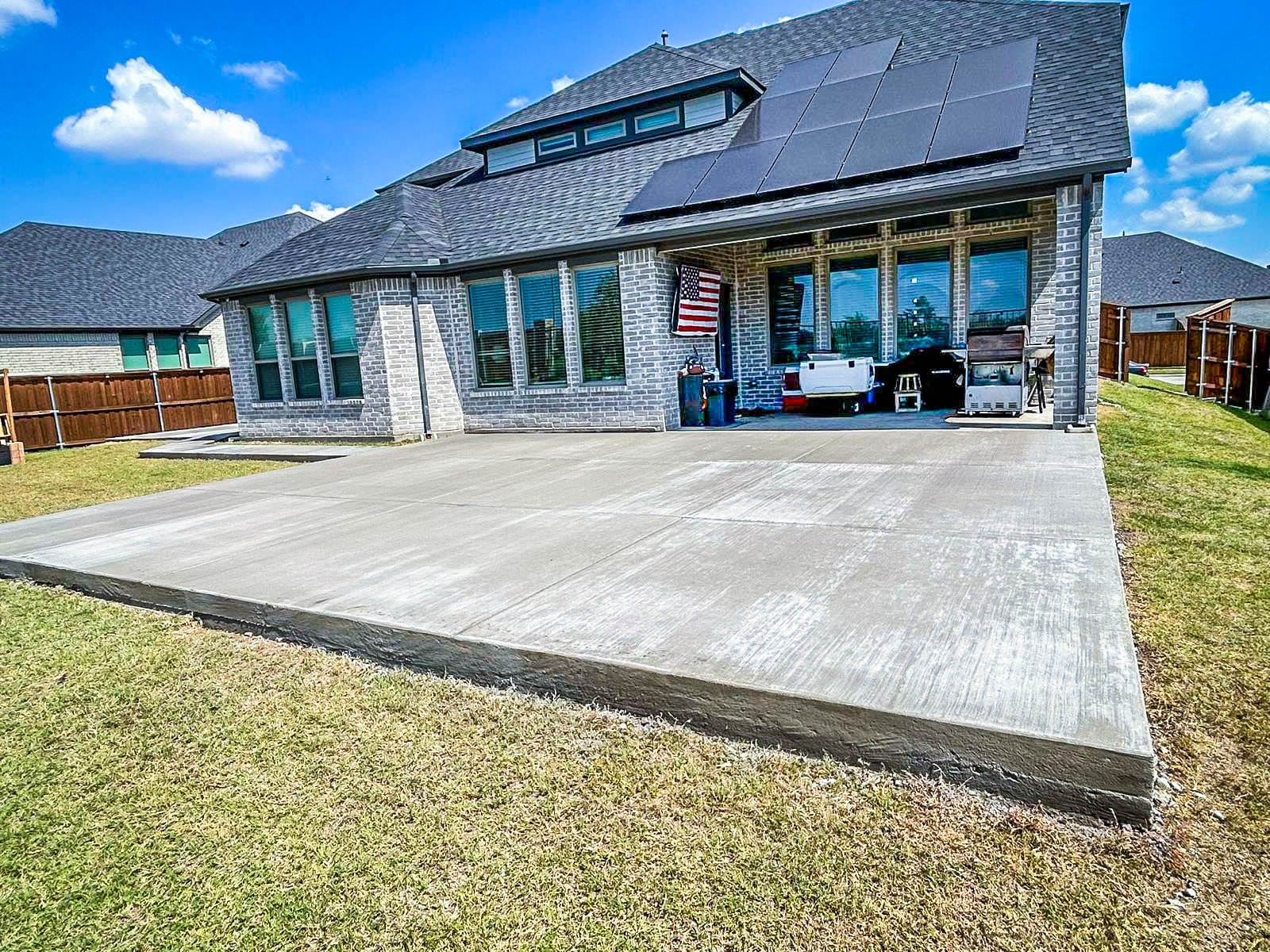
A concrete patio can create a stable surface for furniture, grills, planters, and outdoor gatherings. Before construction, homeowners should consider the patio’s size, elevation, slope, access, and relationship to doors and the foundation.
The finished patio should generally direct water away from the house. If the new surface blocks an existing drainage path or sits too high against the wall, runoff may collect near the foundation or enter through door openings.
Outdoor kitchens, pergolas, fireplaces, and patio covers should be included in the master plan. These features may require thicker sections, separate footings, utility sleeves, electrical preparation, or reinforced equipment pads.
Planning those components before placement can prevent cutting into new concrete later.
Concrete Walkways and Steps
Walkways should provide a stable route between entrances, driveways, patios, gates, and outdoor spaces. The width, slope, surface texture, and transitions should suit the people who will use them.
Standing water, abrupt elevation changes, and uneven settlement can create tripping or slipping hazards. Concrete steps also require consistent dimensions, stable support, and safe connections to adjoining landings.
A walkway should not be installed over loose fill, buried organic material, or an active drainage route without proper preparation. The contractor may need to improve the base or redirect water before placing the concrete.
Concrete Slabs and Equipment Pads
Concrete pads may support air-conditioning units, generators, sheds, trash enclosures, hot tubs, or other equipment. The load and manufacturer’s installation requirements should be known before the pad is designed.
A pad must have suitable dimensions, thickness, reinforcement, and support. It should also remain accessible for maintenance and avoid directing water toward the building.
Heavy equipment or structures may require engineering or specialized foundation work. Homeowners should not assume that every small slab can be installed using the same method as a simple garden walkway.
Decorative Concrete Options
Concrete can be finished in several ways to complement brick, stone, siding, and landscape materials.
Decorative options may include:
- Broom-finished concrete
- Exposed aggregate
- Integral color
- Surface-applied color
- Stamped patterns
- Decorative saw cuts
- Borders and contrasting sections
- Selected sealers
Decorative treatments affect more than appearance. Texture influences slip resistance and cleaning, while dark colors may absorb more heat in direct sunlight.
Stamped concrete requires careful planning and experienced installation. Pattern depth, release products, color consistency, joints, and curing can affect the final appearance.
Before choosing a finish, homeowners should ask how it performs when wet, how hot it becomes in sunlight, and what maintenance it requires.
Why Base Preparation Matters
The soil and base beneath the concrete help support the entire slab. If the base settles, washes away, or expands unevenly, the concrete above may crack or shift.
Preparation may involve excavation, removal of soft soil, moisture conditioning, compaction, and installation of an appropriate granular base. The required depth and material depend on the project and site.
The contractor should also identify utility lines, irrigation components, roots, old foundations, and buried debris before construction.
Placing concrete directly over disturbed or poorly compacted soil may reduce installation time, but it can increase the likelihood of future settlement.
The Role of Reinforcement
Reinforcement can help hold cracked sections together and distribute stress. Common options include steel reinforcing bars, welded wire reinforcement, and fibers incorporated into the concrete mixture.
Reinforcement does not prevent every crack. Its effectiveness depends on the design, size, spacing, support, and placement within the slab.
Reinforcement left on the ground or pushed into the concrete inconsistently may not perform as intended. Chairs or other supports may be used to maintain the specified position during placement.
The appropriate reinforcement depends on the slab’s dimensions, expected loads, support conditions, and structural requirements.
Choosing the Concrete Mixture
Concrete is made from cementitious materials, water, aggregates, and, when specified, admixtures. The proportions affect strength, workability, setting time, shrinkage, and durability.
Adding excessive water at the job site may make concrete easier to place but can reduce quality and increase shrinkage. The mixture should be appropriate for the weather, application, delivery time, and finishing method.
The contractor should specify concrete based on the project rather than relying on a single mixture for every residential application.
Structural foundations, driveways, decorative patios, steps, and repair patches may require different specifications.
Concrete Placement During Hot Weather
Frisco’s high temperatures can make concrete installation more difficult. Heat, wind, low humidity, and direct sunlight may cause surface moisture to evaporate rapidly.
Fast moisture loss can reduce workable time and contribute to finishing difficulties, plastic shrinkage cracking, and inadequate curing.
Hot-weather planning may involve scheduling placement during cooler hours, preparing the base, coordinating delivery, protecting the surface from wind and sunlight, and beginning curing promptly.
Adding uncontrolled amounts of water to the surface is not a substitute for proper hot-weather procedures.
Why Concrete Curing Is Essential
Fresh concrete needs moisture and suitable temperature conditions so the cement can hydrate and the material can develop strength.
Curing may involve water-retaining coverings, curing compounds, controlled moisture, or other methods appropriate for the project. The contractor should protect the concrete from rapid drying, heavy rain, premature traffic, and damaging temperature conditions.
Concrete continues gaining strength after it initially hardens. A surface that can be walked on may not be ready for vehicles, heavy furniture, construction equipment, or concentrated loads.
Homeowners should follow the contractor’s instructions about when the new concrete can be used.
Control Joints and Concrete Cracking
Concrete naturally changes volume as it cures and responds to temperature and moisture. Control joints create planned weak locations where shrinkage cracks are more likely to form.
Joint spacing, depth, timing, and layout influence how well the system performs. Joints should account for slab dimensions, corners, columns, steps, and changes in shape.
Isolation joints may be used where a slab meets a wall, foundation, column, or other fixed structure. Expansion and movement must be considered before the concrete is placed.
Although joints help manage cracking, they do not guarantee a completely crack-free surface.
Concrete Drainage and Slope
Concrete surfaces should direct water toward an appropriate drainage area. Water should not remain against the foundation, flow into a garage, or collect in low spots.
The contractor should establish finished elevations before excavation begins. Door thresholds, adjoining patios, landscaping, downspouts, property boundaries, and street connections must all be considered.
A large concrete surface can change how runoff moves across the property. A patio or driveway that replaces absorbent soil may increase the amount of surface water reaching another location.
Drainage may require surface slope, channel drains, catch basins, downspout piping, or coordinated landscape grading.
Concrete Repair vs. Replacement
Not every damaged slab requires complete replacement. The best approach depends on the type of damage and its cause.
Localized repairs may be appropriate for small chips, broken edges, isolated surface defects, or certain stable cracks. Resurfacing may improve selected worn surfaces when the underlying slab remains suitable.
Replacement may be more practical when concrete has widespread settlement, severe displacement, extensive cracking, poor drainage, unstable support, or damage throughout its depth.
A patch placed over actively moving concrete may crack or separate. Professional concrete works should begin with an evaluation of the base, drainage, movement, and intended use.
Understanding Common Concrete Cracks
Narrow shrinkage cracks may develop as concrete loses moisture and changes volume. They do not always indicate structural failure.
Settlement cracks may occur when the supporting soil or base moves. These cracks can be accompanied by uneven elevations or voids beneath the slab.
Heaving may lift sections of concrete as soil moisture changes or roots grow. Structural cracks may involve heavier loads, inadequate design, reinforcement issues, or movement of the supporting structure.
Crack width alone does not identify the cause. Direction, displacement, location, timing, and surrounding conditions must also be considered.
Concrete Spalling and Surface Deterioration
Spalling occurs when the concrete surface flakes, chips, or breaks away. Potential causes include water penetration, freezing conditions, corrosion of embedded reinforcement, impact, poor finishing, incompatible repair products, or inadequate curing.
Scaling affects the surface layer and can create a rough or patchy appearance. Pop-outs are small surface failures that may be associated with certain aggregates or contaminants.
The repair method depends on the depth, extent, and cause of the deterioration. Applying a thin coating over unsound concrete may not provide a lasting solution.
Loose material should be removed, and the remaining concrete should be evaluated before a repair product is selected.
Retaining Walls and Concrete Construction
Concrete may be used for reinforced retaining walls, foundations beneath masonry walls, footings, or structural components within segmental wall systems.
Retaining walls must resist soil and water pressure. Drainage behind the wall is therefore as important as the concrete itself.
A wall may require free-draining backfill, filter fabric, perforated drainpipe, weep openings, reinforcement, and a suitable outlet. The exact design depends on the wall height, slope, loads, and soil conditions.
Surface crack repair will not correct a retaining wall that is leaning because of inadequate drainage or structural design.
Concrete and Paver Projects
Homeowners often compare concrete with a paver patio or paver walkway. Both systems can create attractive, usable outdoor surfaces, but they perform differently.
Concrete forms a continuous slab and can provide a clean, uniform appearance. Pavers are individual units installed over a prepared base and may be easier to lift and reset when localized movement occurs.
Neither option succeeds without proper base preparation and drainage. Pavers can settle over an inadequate base, while concrete can crack or tilt.
The best choice depends on the desired appearance, maintenance preferences, budget, drainage, anticipated movement, and future repair expectations.
Coordinating Concrete With Brick and Stone
Concrete frequently meets brick walls, stone veneer, masonry columns, steps, and retaining walls. These transitions require careful planning because the materials may move differently.
The contractor should consider joint placement, flashing, finished elevations, moisture control, and how the concrete connects to existing construction.
New concrete should not cover brick weep openings or bridge required drainage gaps. It should also avoid trapping water against exterior masonry.
If nearby brick is cracked or loose, brick repair may need to be completed before or in coordination with the concrete project.
Concrete Around Chimneys and Exterior Walls
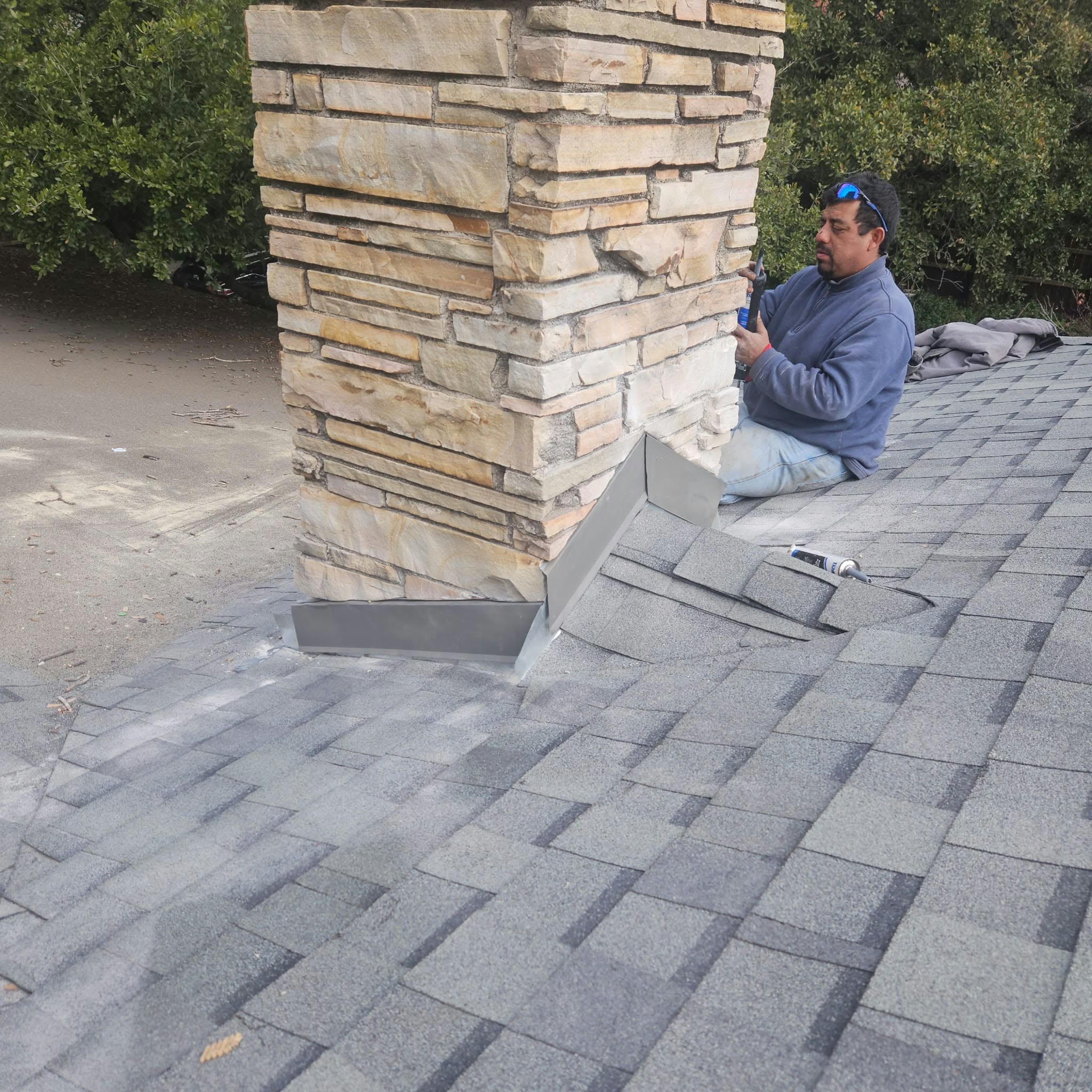
Concrete patios, walkways, and slabs may affect drainage near chimneys and masonry walls. A surface that slopes toward the building can increase water exposure at flashing, mortar joints, and wall bases.
If moisture problems already exist, chimney and flashing repair may be necessary before the surrounding hardscape is modified.
The project should preserve access to drainage openings and avoid raising the soil or slab level too close to vulnerable wall components.
What to Expect From a Concrete Estimate
A detailed estimate should identify the project dimensions, excavation, base preparation, concrete thickness, mixture specifications, reinforcement, joints, finish, slope, curing, and cleanup.
It should also address demolition and disposal of existing material, access requirements, utility conflicts, permits, drainage components, and restoration of surrounding landscaping.
Decorative work should specify the selected color, pattern, texture, border, and sealer. Homeowners should request samples or a small mockup when appearance is particularly important.
If estimates vary significantly, compare the complete construction methods rather than only the total price.
Questions to Ask a Concrete Contractor
Before approving the work, ask how the soil and base will be prepared. Confirm the proposed thickness, reinforcement, concrete specifications, joint layout, slope, and curing method.
Ask how the contractor will manage hot weather, unexpected rain, restricted access, and concrete delivery. You should also understand how long the new surface must remain unused.
For repair projects, ask whether the proposed work addresses the cause of the damage or only improves its appearance.
A professional concrete service provider in Frisco should be able to clearly explain each part of the scope.
How to Maintain New Concrete
Routine maintenance helps preserve the surface and surrounding drainage.
Keep joints and drainage channels clear. Remove leaves, soil, and other materials that trap moisture against the concrete. Avoid allowing irrigation systems to repeatedly saturate slab edges or supporting soil.
Clean stains using products and methods suitable for the finish. Avoid aggressive chemicals or pressure washing that can damage decorative surfaces.
Sealers may need periodic renewal depending on the product, exposure, and traffic. Homeowners should follow the installer’s maintenance instructions rather than assuming every concrete surface requires the same treatment.
When to Schedule a Concrete Inspection
Request an inspection when you notice widening cracks, uneven elevations, rocking sections, recurring ponding, spalling, exposed reinforcement, rust stains, or settlement near the foundation.
An inspection is also useful before installing a patio, driveway extension, outdoor kitchen, retaining wall, or other improvement. Early planning can identify drainage, access, utility, and soil concerns before construction begins.
If the condition may involve foundation movement or structural failure, the concrete contractor may recommend an engineer or another qualified specialist.
Professional Masonry and Concrete Services in Frisco
Well-planned concrete construction can improve curb appeal, outdoor living, accessibility, drainage, and everyday function. Successful results depend on matching the design and installation method to the property’s soil, weather exposure, intended use, and surrounding construction.
Emerson Pro Services provides masonry and paver services in Frisco, including concrete patios, walkways, driveways, slabs, retaining walls, paver installation, masonry repair, brick repair, and chimney and flashing repair.
Call Emerson Pro Services at 469-414-9195 to request an onsite estimate for concrete or masonry work in Frisco.
Frequently Asked Questions
What concrete services are available for Frisco homes?
Residential services may include driveways, patios, walkways, steps, equipment pads, shed slabs, slab extensions, foundations, retaining-wall components, decorative concrete, and replacement of damaged surfaces.
Why does concrete crack in North Texas?
Concrete may crack because of shrinkage, temperature changes, expansive soil, settlement, inadequate support, poor drainage, heavy loads, unsuitable joint placement, or construction problems.
Can concrete be poured during hot Texas weather?
Yes, but hot-weather placement requires careful scheduling, delivery coordination, moisture control, finishing, protection, and curing. Rapid evaporation can create installation problems if conditions are not managed.
How long should new concrete cure before use?
The appropriate waiting period depends on the mixture, weather, slab design, and expected load. Walking may be allowed before vehicles or heavy equipment. Follow the contractor’s project-specific instructions.
Is reinforcement necessary for a concrete patio?
Reinforcement may be recommended depending on the patio’s size, thickness, support, loads, and local conditions. It can help control separation after cracking but does not prevent every crack.
Should I choose a concrete patio or paver patio?
Concrete offers a continuous surface, while pavers provide individual replaceable units and design flexibility. The better choice depends on the desired appearance, budget, drainage, soil movement, and maintenance preferences.
Can cracked concrete be repaired?
Some stable cracks, chips, and surface defects can be repaired. Replacement may be more practical when the slab has extensive cracking, major settlement, severe displacement, unstable support, or widespread deterioration.
Why is drainage important around concrete?
Poor drainage can create standing water, erode the supporting base, saturate nearby soil, and direct runoff toward the foundation. Surface elevations and drainage routes should be planned before installation.